



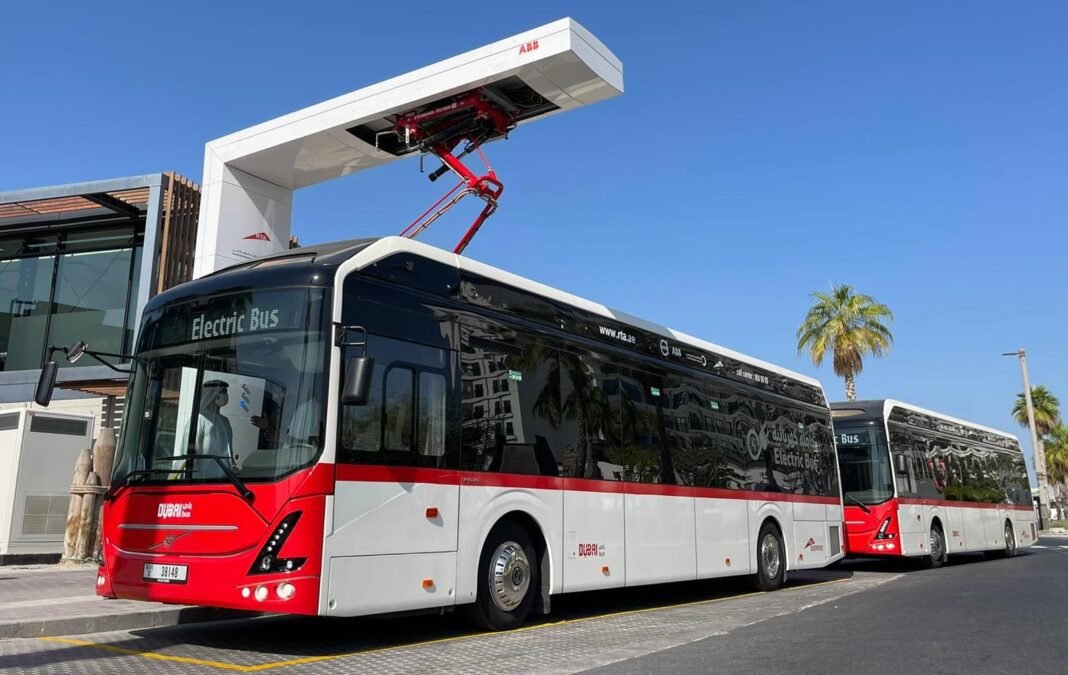
Dubai has strengthened its public transport network with the arrival of 250 new buses, including the UAE’s largest fleet of electric vehicles. This deployment marks a major leap in the city’s green mobility plans and supports long-term sustainability objectives. Dubai electric buses will also improve commuting efficiency while reducing carbon emissions.
The first batch is part of a larger contract for 735 buses that meet Euro 6 low-emission standards. Among these, 40 are electric buses built for the UAE’s climate, while the remainder will arrive by the end of 2026. Dubai electric buses are designed to operate on urban routes with high safety and efficiency.
Mattar Al Tayer, Director General and Chairman of RTA, inspected the fleet alongside Ahmed Hashem Bahrozyan, CEO of the Public Transport Agency. He noted that each electric bus can travel up to 280 kilometres per charge, completing a full day’s service without returning to the depot. The buses feature 434 kilowatt-hour batteries supported by 360-kilowatt chargers.
The 12-metre-long buses accommodate up to 70 passengers and come with 360-degree camera systems. Testing in Dubai for three months demonstrated energy efficiency, braking performance, and system reliability, achieving 95% satisfaction among drivers and passengers.
Al Tayer said the project follows directives from His Highness Sheikh Mohammed bin Rashid Al Maktoum and Crown Prince Sheikh Hamdan bin Mohammed. Their vision prioritizes sustainable, flexible, and high-quality public transport to strengthen Dubai’s global competitiveness and quality of life.
Furthermore, the initiative aligns with RTA’s Zero-Emission Public Transport Strategy 2050. Under this plan, all buses, taxis, and limousines will transition to electric or hydrogen power. Dubai electric buses form a critical step toward reducing the city’s carbon footprint and achieving climate neutrality by 2050.
The contract also includes 549 conventional buses, 76 double-decker Volvo buses, and 70 articulated Isuzu buses. These additions expand coverage to new districts, enhance capacity on high-density routes, and improve comfort and accessibility for all passengers.
Advanced smart technology supports safety and efficiency across the fleet. Features include Driver Behaviour Monitoring, Automated Passenger Counting, low-floor entrances for People of Determination, Wi-Fi, mobile charging, and ergonomic seating. Dubai electric buses also meet global safety standards, ensuring a modern commuting experience.
By integrating electric and high-tech buses, Dubai is positioning itself as a global leader in sustainable urban mobility. Residents and visitors will benefit from reliable, eco-friendly, and future-ready public transport.
Looking ahead, RTA plans to gradually expand the electric bus fleet and further integrate smart transport solutions across the city. This approach supports both operational efficiency and Dubai’s environmental, economic, and urban development goals.

