

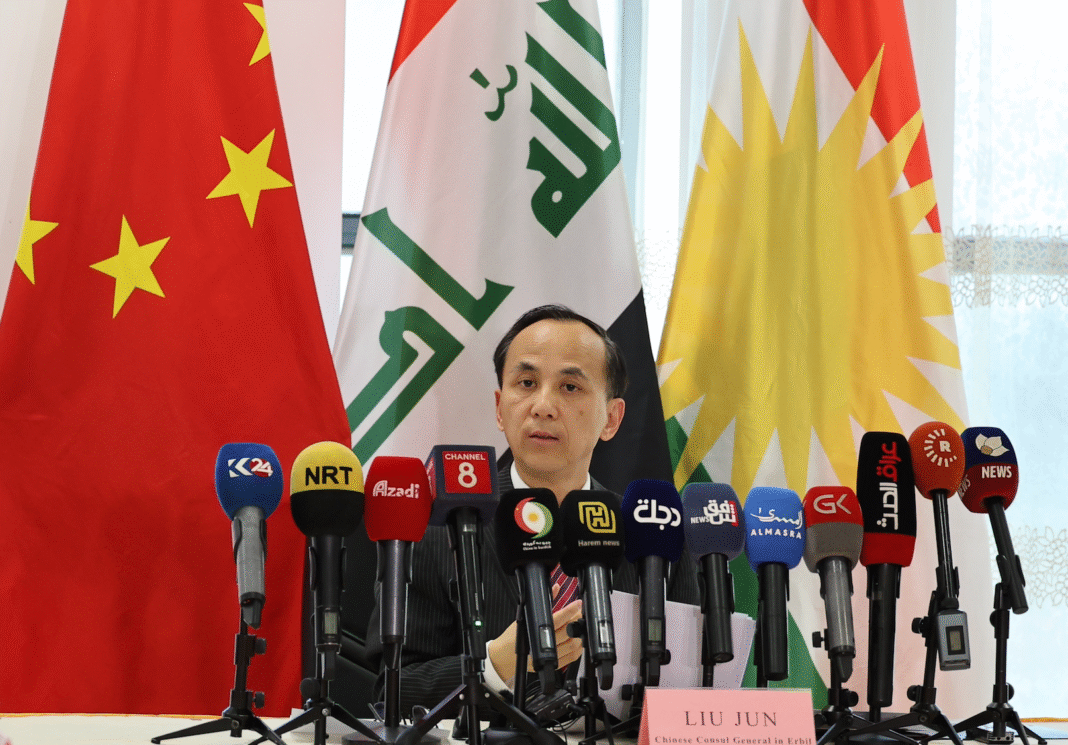
China’s Consul General in Erbil, Liu Jun, visited Duhok Governorate in the Kurdistan Region of Iraq. The visit highlights China-Kurdistan Cooperation and ongoing development partnerships.
During his visit, CG Liu met with Duhok Governor Dr. Ali Tatar. Liu presented China’s achievements in modernization and shared insights on practical cooperation and people-to-people exchanges with the Kurdistan Region. He also explained China’s vision of a community with a shared future for mankind and its four Global Initiatives.
Governor Ali welcomed China’s engagement and noted the positive impact of Chinese participation in KRI’s development. He also expressed interest in applying China’s development experience and expanding future cooperation projects in Duhok.
Later, CG Liu visited the Zakho Independent Administration and met with Mr. Gohdar Shekho, Head of Zakho. He learned about the area’s economic growth, social development, and natural resources. Furthermore, they discussed potential cooperation projects and improvements at the Ibrahim Khalil border crossing.
In addition, CG Liu toured the KDP Duhok Provincial Headquarters. There, he met with Mr. Sarbast Lazgeen Sindory, Head of the KDP organizational bureau in Duhok, and other departmental representatives. He gained insights into grassroots party operations and exchanged views on strengthening collaboration.
Observers note that China Kurdistan Cooperation extends beyond economic ties. People-to-people exchanges, capacity-building programs, and policy discussions form a key part of China’s engagement in the region. These efforts aim to support long-term stability and sustainable development in Duhok and the broader KRI.
The visit also demonstrates China’s commitment to deepening bilateral relations with regional authorities. Officials from both sides emphasized the importance of continued dialogue, joint development initiatives, and shared learning from governance and infrastructure practices.
Looking forward, China and the Kurdistan Region are expected to pursue further investment projects, exchange expertise in public administration, and explore trade opportunities. Experts believe these steps will strengthen economic and social links and enhance regional cooperation.