



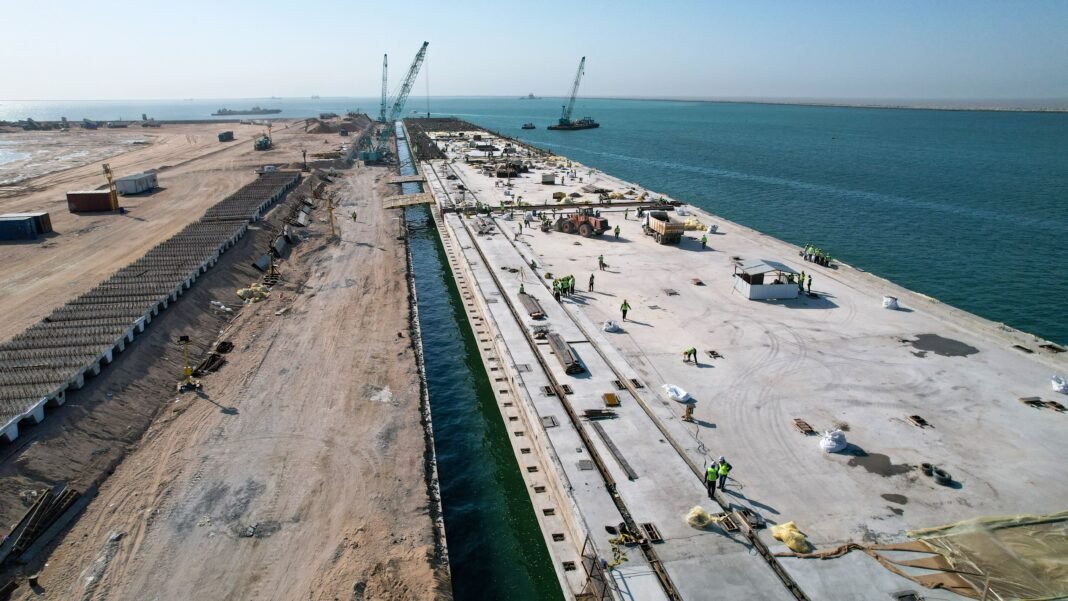
Baghdad – Iraq is charting a new economic path with the Development Road project, aiming to transform the nation’s role beyond its traditional reliance on oil. The initiative, led by the Iraq Development Fund, could redefine the country’s geography into a major national security and economic asset.
Mohammed al-Najjar, Executive Director of the Iraq Development Fund, described the project as a milestone that could surpass the discovery of oil in national importance. He explained that Iraq’s unique location between the Gulf and Europe positions it to become a critical transit hub. As a result, global powers may actively protect Iraq’s stability to ensure uninterrupted trade flows.
Al-Najjar emphasized that the Development Road will end Iraq’s historic geographic isolation. By integrating rail, highway, and energy pipelines, the project will create a multimodal network linking Iraq internally and externally. This network is expected to enhance trade, logistics, and investment opportunities across the region.
A core aspect of the plan involves reclaiming Iraq’s western territories. The road will traverse the desert, far from current urban centers. This approach opens 20–30 kilometers of previously unused land along the route. Authorities plan to establish smart cities, industrial zones, and agricultural projects in these areas, creating new economic clusters. Consequently, the project could generate up to 1.6 million jobs over the next 30 years, according to al-Najjar.
Moreover, the Development Road will complement Iraq’s historical infrastructure. Officials plan to revitalize the Old Road, which stretches from Basra through Mosul and into Syria before reaching Turkey. This secondary line will carry high-capacity goods traffic and relieve pressure on the new route. By leveraging the existing route, Iraq can save costs while maximizing transportation efficiency.
Experts suggest that the project’s scale and strategic location could attract foreign investment and strengthen Iraq’s regional influence. By linking energy, trade, and industrial corridors, Iraq could emerge as a key logistics and economic hub in the Middle East. Additionally, the integration of desert lands into productive use aligns with long-term sustainability and urban planning goals.
Al-Najjar highlighted that the Development Road also strengthens national security. By populating and economically activating western territories, the project reduces regional vulnerabilities and expands the country’s controllable infrastructure. Furthermore, the initiative reflects Iraq’s broader vision to diversify its economy, reduce dependence on oil, and create sustainable growth for future generations.
Looking ahead, Iraq plans to combine public and private investment to accelerate construction and operational readiness. The government expects phased implementation over the next decade, gradually opening economic zones, smart cities, and transportation links. If successful, the Development Road could redefine Iraq’s global role and provide a model for long-term national development in the region.

