



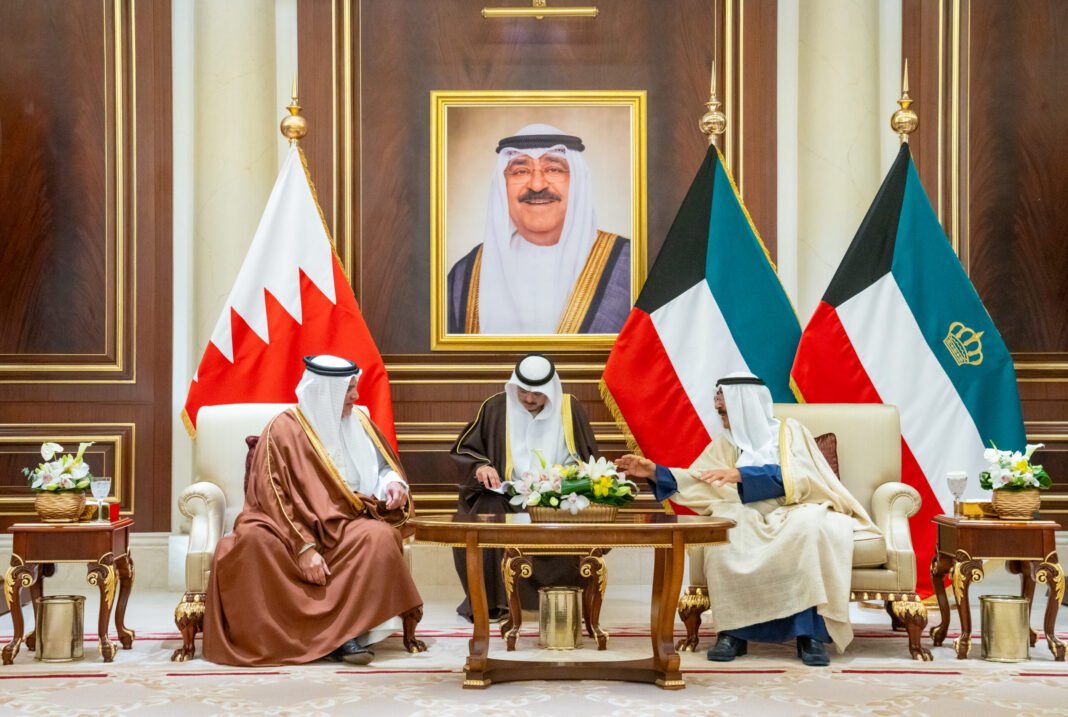
Bahrain and Kuwait are expanding their long-standing partnership through high-level discussions in Kuwait on February 3, 2026. The talks focused on deepening cooperation across economic, political, and social sectors.
Prince Salman bin Hamad Al Khalifa, Crown Prince and Prime Minister of Bahrain, met with His Highness Shaikh Meshal Al-Ahmad Al-Jaber Al-Sabah, the Amir of Kuwait. The meeting reinforced the historic and strong ties between the two nations.
Prince Salman highlighted the importance of advancing strategic cooperation to benefit both countries and their citizens. He noted that collaboration across multiple sectors has already shown positive results.
He also conveyed greetings from King Hamad bin Isa Al Khalifa to the Amir of Kuwait. Prince Salman expressed his best wishes for Kuwait’s continued progress and prosperity. In response, Shaikh Meshal sent greetings to King Hamad. He also wished for Bahrain’s further advancement and development.
The leaders discussed ways to enhance trade, investment, energy, education, and cultural cooperation. Both sides agreed that stronger ties would boost economic growth and social well-being.
Prince Salman affirmed Bahrain’s commitment to expanding relations at all levels. He said deeper cooperation will also promote stability and prosperity across the Gulf Cooperation Council region.
The meeting included Sabah Al-Khaled Al-Hamad Al-Mubarak Al-Sabah, Crown Prince of Kuwait. Officials confirmed that follow-up meetings and committees will implement agreements and explore new joint projects.
Analysts noted that the meeting shows Bahrain and Kuwait’s shared vision for regional unity. By strengthening historic ties, they aim to accelerate economic growth and cultural exchange.
In addition, both governments plan to launch initiatives to improve digital transformation and technological collaboration. These efforts will benefit businesses and public services.
Furthermore, cultural exchanges will expand, including art, heritage, and educational programs. Leaders believe these activities will strengthen people-to-people connections.
Meanwhile, joint economic councils will monitor ongoing projects and report progress quarterly. This approach ensures accountability and maximizes benefits for both countries.
Looking ahead, the two countries plan to announce joint initiatives to boost trade, infrastructure, and innovation. This renewed dialogue signals their commitment to a stable and prosperous Gulf future.

