



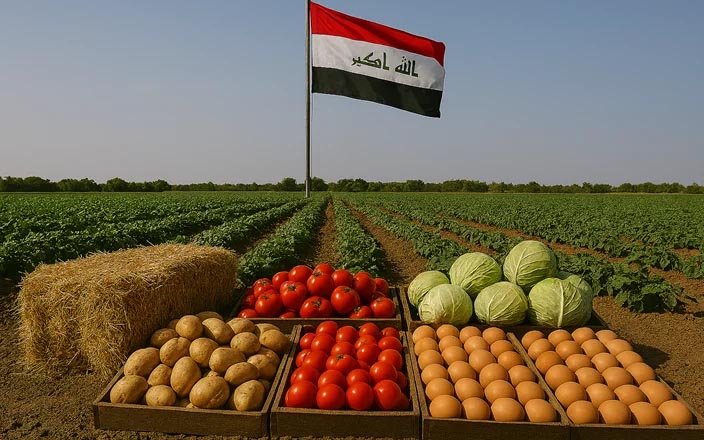
Iraq has taken a decisive step to protect local farmers by halting imports of more than ten crops. On Monday, the Ministry of Agriculture suspended imports of fifteen crops at all border crossings nationwide. This move signals a stronger push toward food security, market stability, and domestic production support.
According to the ministry, the ban targets crops that violate official import rules and disrupt local markets. Officials confirmed that Iraq already produces enough apples, bananas, kiwis, grapes, pears, watermelons, pomegranates, tomatoes, potatoes, onions, beans, cucumbers, green peppers, eggplants, and garlic. Therefore, continued imports caused oversupply and pushed prices down. As a result, Iraqi farmers struggled to sell their harvests and reported losses during peak seasons.
Moreover, authorities said many banned crops entered through the Kurdistan Region and were sold as local products. However, officials stressed that some of these crops cannot grow in the region at all. Despite this, traders offered them at competitive prices, which increased pressure on local producers. Although the ministry had issued earlier bans, weak enforcement allowed imports to continue.
Meanwhile, the government raised customs tariffs on imported goods to boost non-oil revenues. In addition, officials strengthened border inspections to reduce illegal trade. However, the tariff increase sparked protests in Baghdad and other provinces, as traders and consumers warned of rising prices. Despite criticism, officials defended the Iraq crop import ban, saying it balances farmer protection with market regulation.
Economists expect the decision to stabilize rural incomes and encourage agricultural investment. At the same time, traders warn of short-term supply gaps and temporary price increases. Nevertheless, officials insist that local production can meet demand. They also plan regular reviews based on harvest cycles and promise to lift bans if shortages appear.
Overall, the Iraq crop import decision reflects broader reform goals. The policy aims to reduce import dependence, strengthen food security, and support rural employment. If enforcement improves, analysts expect better price stability and renewed farmer confidence in local markets.

