



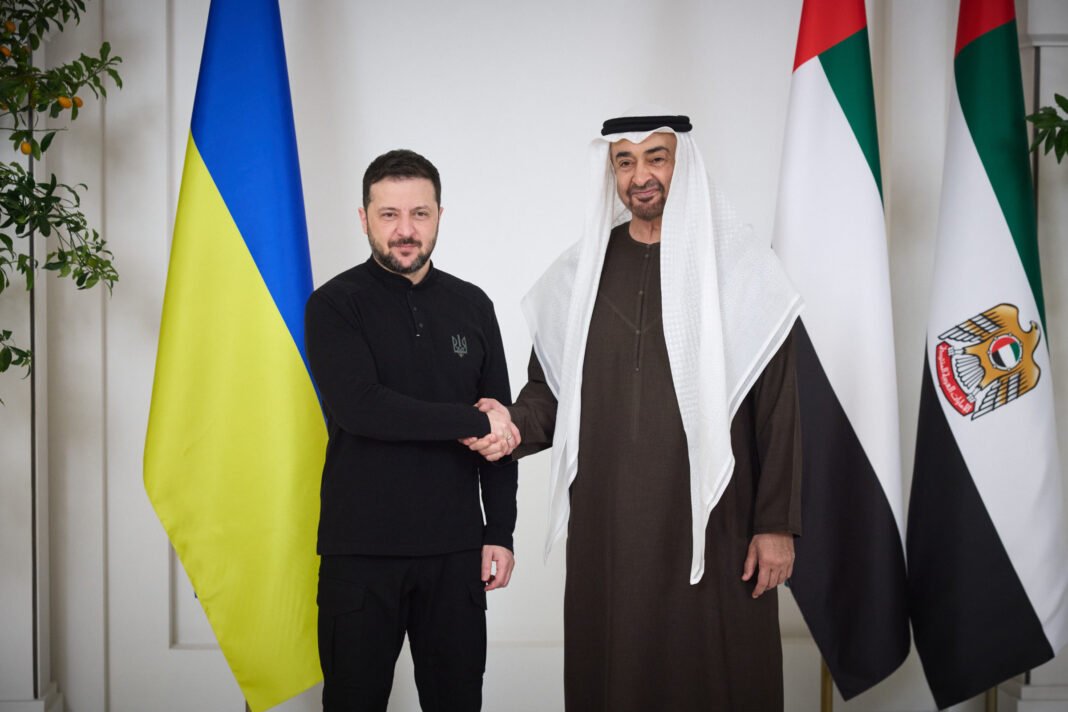
Air defense cooperation between Ukraine and the UAE is gaining momentum as regional tensions continue to rise. Ukrainian President Volodymyr Zelensky confirmed ongoing efforts to expand joint security initiatives during his Gulf visit.
Zelensky met UAE President Mohammed bin Zayed Al Nahyan to discuss strengthening defense systems. Moreover, both leaders focused on improving protection against drone and missile threats. These talks reflect growing urgency as conflict in the region intensifies.
Ukraine has already deployed military experts to support air defense in the UAE. These teams help counter recent drone and missile attacks linked to ongoing regional conflict. As a result, cooperation between the two countries continues to expand.
In addition, Ukraine offers its experience in intercepting advanced threats. Zelensky stated that Ukrainian systems have achieved high success rates against enemy drones and missiles. Therefore, the country now shares this expertise with international partners.
The air defense cooperation also includes plans for long-term collaboration. Both sides aim to develop joint production of defense systems and upgrade infrastructure protection. Furthermore, they plan to secure critical and social facilities across the UAE.
At the same time, officials continue to finalize the details of upcoming agreements. While the full framework remains under discussion, both governments show strong commitment to deeper ties. Consequently, the partnership is expected to grow in the coming months.
Zelensky’s visit to the Gulf also included talks with Saudi Arabia. He recently signed a separate defense agreement with Saudi leaders to enhance regional security. This step highlights Ukraine’s broader strategy to expand its global defense partnerships.
Meanwhile, the ongoing conflict involving Iran continues to influence regional dynamics. The situation has disrupted stability and increased security risks across the Gulf. Therefore, countries are seeking stronger alliances to protect their infrastructure.
Leaders also discussed the impact of the Strait of Hormuz blockade. This disruption has pushed global oil prices higher and affected supply chains. As a result, both Ukraine and Gulf countries face rising economic pressure.
In Ukraine, higher fuel and fertilizer costs are already affecting businesses and farmers. Consequently, economic challenges are increasing alongside security concerns. This situation adds urgency to international cooperation efforts.
Looking ahead, Ukraine and the UAE aim to strengthen coordination in both defense and economic sectors. The air defense cooperation may expand into broader technological and investment partnerships. Therefore, both countries position themselves for long-term strategic collaboration.
This partnership reflects a shift in global alliances and security priorities. As tensions persist, countries continue to rely on shared expertise and cooperation to manage evolving threats.

