



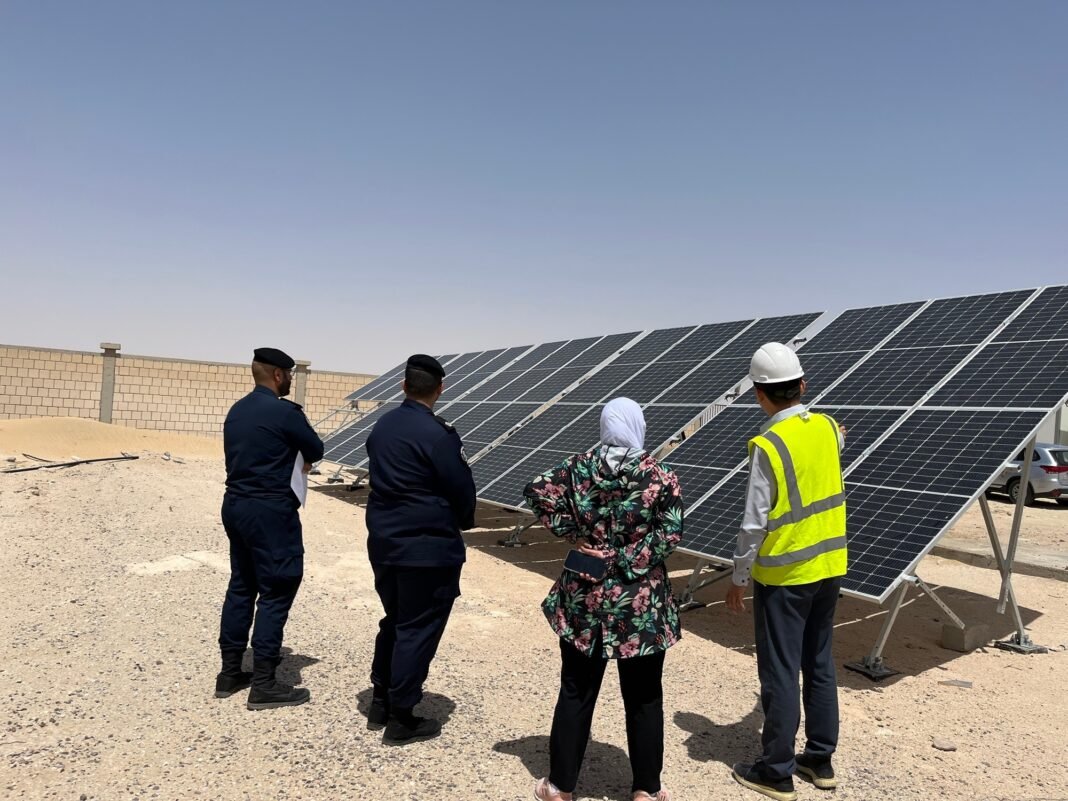
Kuwait solar bids shape the country’s renewable energy direction as major projects move toward award stages in 2026. Kuwait prepares to announce key decisions on large solar and power developments. Moreover, authorities push forward with multiple tenders across generation and water projects. In addition, investors closely track progress on these strategic energy plans.
Kuwait Authority for Partnership Projects manages the procurement process for these developments. It issued requests for proposals for the 1.1GW Al Dibdibah Power and Al Shagaya Renewable Energy Phase III Zone 1 project. Furthermore, it invited prequalified international consortia to compete for the contract. These steps reflect Kuwait’s broader plan to expand clean energy capacity.
The bidding process included major global energy players. For instance, consortia led by ACWA Power, Masdar, and EDF Renewables submitted technical proposals. However, only a limited number of prequalified bidders completed submissions. Consequently, competition narrowed during the evaluation stage. Authorities then moved toward detailed technical assessments before financial review.
Kuwait solar bids also cover additional phases of renewable expansion. In particular, the second phase of the Al Shagaya project targets 500MW of capacity. Meanwhile, officials extended submission deadlines to allow broader participation. Likewise, the Al Khairan Phase 1 independent water and power project continues to progress through revised timelines. These extensions support structured evaluation and stronger investor engagement.
Officials expect bid closures soon for both the 500MW Shagaya expansion and the Al Khairan IWPP. Additionally, the government signaled that award announcements may follow in the coming months. As a result, developers continue preparing final technical and financial documentation. Moreover, ministries aim to maintain momentum across infrastructure and energy diversification goals.
Kuwait solar bids highlight the country’s growing focus on renewable energy investment. At the same time, policymakers aim to reduce reliance on conventional power generation. Therefore, large-scale solar projects play a central role in long-term planning. In addition, partnerships with international developers strengthen technical expertise and project delivery capacity.
The Shagaya complex remains one of Kuwait’s most important renewable energy hubs. Similarly, the Al Khairan IWPP supports integrated power and water supply needs. Together, these projects align with national infrastructure expansion goals. Furthermore, they attract strong interest from global energy investors seeking stable long-term returns.
Kuwait solar bids continue to evolve as the country advances toward award decisions. Ultimately, these projects signal a broader transformation in Kuwait’s energy landscape. Consequently, stakeholders expect continued growth in solar and hybrid energy investments across the coming years.