


Iraq aims to raise non-oil revenues as part of a broad strategy to diversify the economy and reduce dependence on crude oil exports. The initiative forms part of a long-term development plan designed to strengthen financial sustainability and support stable economic growth.
Prime Minister’s Advisor for Financial Affairs Mazhar Saleh said the government has placed economic diversification at the center of its development agenda. He explained that Iraq seeks to create stronger links between non-oil revenues and overall economic growth through comprehensive fiscal reforms.
Iraq aims to raise non-oil revenues by improving the structure of public finances and expanding revenue sources beyond the oil sector. At the same time, authorities seek to increase the contribution of non-oil activities to the country’s gross domestic product.
The initiative forms part of the Iraq 2035 Vision, which the Iraqi Cabinet approved in May. The plan combines fiscal reforms with social market economy principles. As a result, authorities expect to create a more resilient economic structure over the coming decade.
A key objective of the strategy involves increasing government income from non-oil sources. Officials believe stronger tax collection, improved public services, and expanded economic activity can help achieve this goal. In addition, the government plans to strengthen financial management and improve revenue administration.
The plan also focuses on expanding the role of the private sector. Currently, private businesses contribute around 37 percent of Iraq’s gross domestic product. Under the new vision, authorities aim to raise that figure to 53 percent by 2035.
Government leaders believe a stronger private sector can create jobs, attract investment, and stimulate innovation. Consequently, Iraq is seeking to improve the business environment and encourage entrepreneurship across various industries.
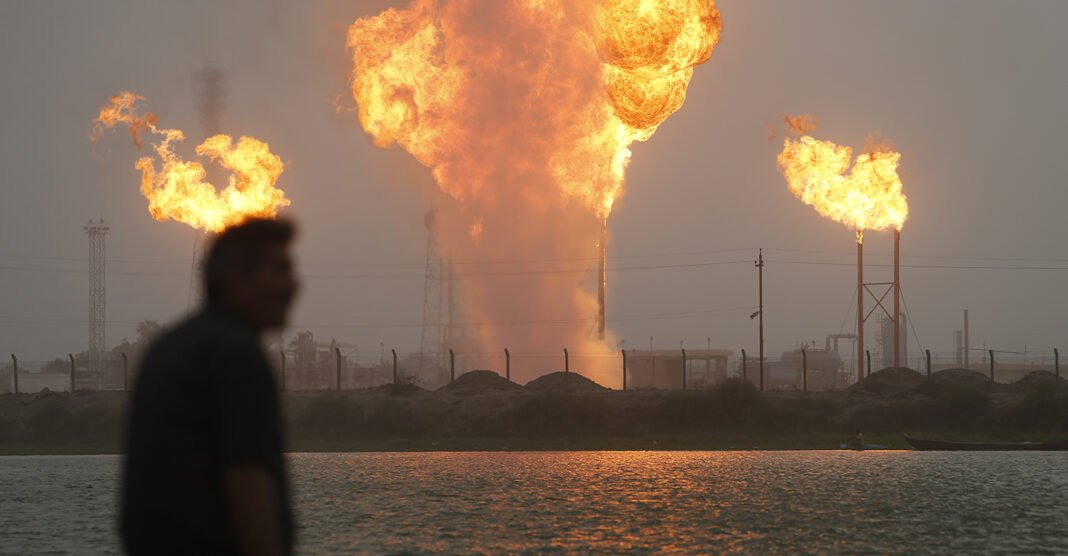
Economic diversification has become increasingly important as regional challenges continue affecting energy markets. Oil price volatility often creates uncertainty for public finances. Therefore, officials want to reduce exposure to fluctuations in global crude markets.
Recent regional instability has highlighted the risks associated with heavy dependence on oil exports. Disruptions to major shipping routes and energy supply chains can quickly affect government revenues and economic performance.
International institutions have also warned about potential challenges. The International Monetary Fund recently indicated that regional tensions could affect economic growth, inflation levels, and public budgets across several countries, including Iraq.
The government believes that expanding agriculture, manufacturing, logistics, technology, and services will help create new revenue streams. These sectors can support economic growth while reducing dependence on energy exports.
Furthermore, officials expect stronger non-oil industries to increase employment opportunities. A broader economic base could also encourage foreign investment and improve long-term competitiveness.
Iraq’s diversification strategy reflects a wider trend among resource-rich economies seeking sustainable growth models. By strengthening non-oil sectors, the country hopes to build a more stable and balanced economy.
As Iraq moves toward its 2035 goals, policymakers will continue implementing reforms aimed at boosting private-sector participation, increasing non-oil revenues, and supporting long-term economic development.