



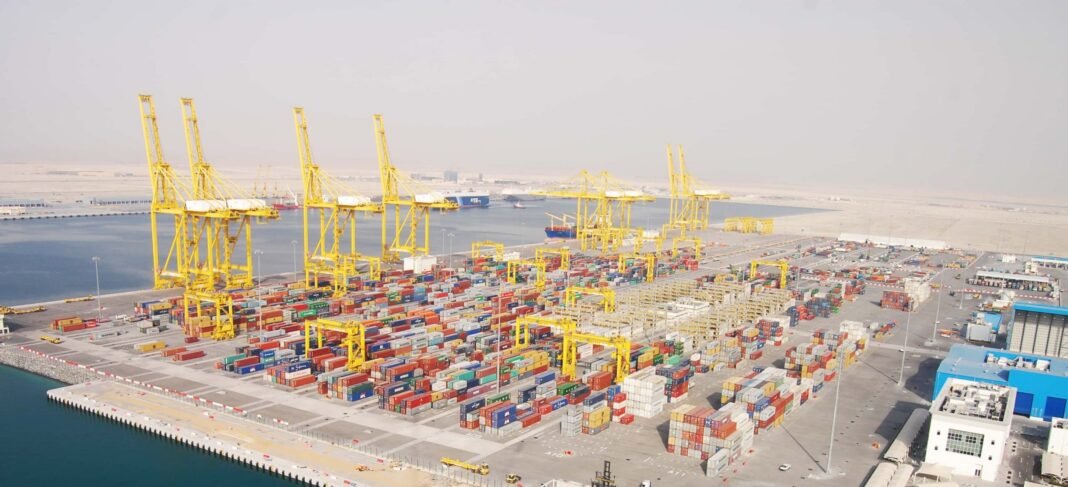
Qatar port growth continued in June as container traffic and vessel activity increased across the country’s main seaports. The latest data shows stronger trade momentum supported by rising imports, exports, and logistics demand.
Mwani Qatar reported that Qatar’s three commercial ports handled 78,002 twenty-foot equivalent units during June. This figure represents a 13 percent increase compared with May, showing steady monthly expansion in container movement.
Vessel arrivals also increased during the same period. The ports received 121 ships in June, which marks a 21 percent rise from the previous month. This growth reflects improved shipping schedules and higher regional trade activity.
The country’s port network includes Hamad Port, Doha Port, and Al-Ruwais Port. These facilities play a central role in supporting Qatar’s supply chains and connecting domestic markets with global trade routes.
Qatar port growth also appeared in cargo performance. General cargo volumes reached nearly 23,000 tonnes in June. Meanwhile, bulk cargo exceeded 67,000 tonnes, recording a strong 40 percent monthly increase.
This expansion reflects higher demand across industrial supplies, construction materials, and imported goods. It also highlights the resilience of Qatar’s logistics sector amid changing regional trade conditions.
On a broader scale, first-half 2026 figures show sustained momentum. The ports handled more than 493,105 TEUs between January and June. This performance confirms consistent container throughput across the national port system.
During the same period, general cargo volumes reached around 273,325 tonnes. Bulk cargo also surpassed 325,000 tonnes, reflecting steady industrial and commercial activity throughout the year.
In addition, the ports processed about 25,000 roll-on/roll-off units. Livestock imports also remained significant, reaching more than 112,000 head across 866 vessels.
Qatar port growth continues to support the country’s long-term economic strategy. Authorities aim to strengthen logistics infrastructure under national development plans and diversify trade channels.
The sector also benefits from ongoing improvements in port operations and digital systems. These upgrades help reduce processing times and improve overall efficiency across terminals.
Regional shipping conditions remain under close observation due to geopolitical tensions in surrounding waters. Despite this, Qatar has maintained stable operations and consistent supply chain performance.
Strong results from 2025 provide a solid foundation for current growth. Last year, the ports handled more than 3,000 vessels and around 1.46 million containers.
Cargo volumes also reached approximately 1.85 million tonnes of general goods. Roll-on/roll-off traffic exceeded 122,000 units, reinforcing the sector’s expanding role in trade facilitation.
Qatar port growth is expected to continue in the coming months as global trade demand strengthens. Ongoing infrastructure development and improved logistics capacity will likely support further increases in container and cargo volumes.

