



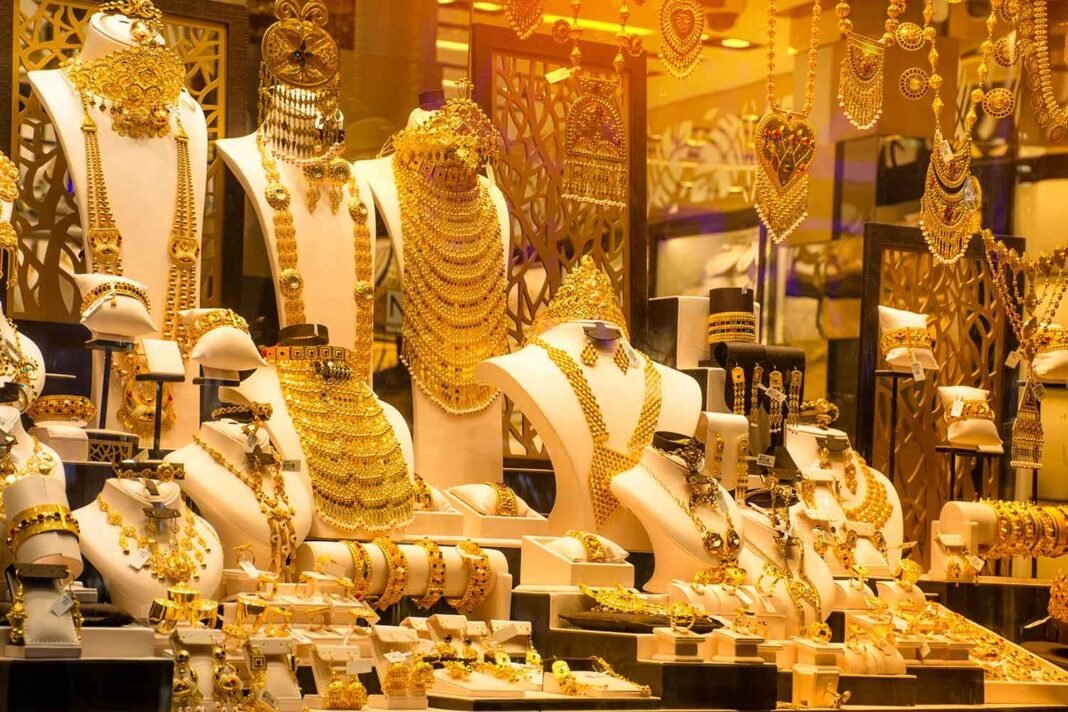
Gold prices climbed in Dubai on Monday as investors assessed the Federal Reserve’s monetary policy outlook and the latest US economic signals. The increase extended gold’s recovery after the precious metal recently retreated from record levels. The move also reflected broader gains across international precious metals markets as investors balanced expectations for interest rates, inflation, and economic growth.
The 24-karat gold rate reached Dh529.25 per gram at Monday’s market opening, compared with Dh527.50 during the previous session. Meanwhile, 22K gold traded at around Dh490 per gram, while 21K reached Dh470. The 18K rate stood at approximately Dh402.75, while 14K gold reached Dh314.25 per gram.
Internationally, spot gold traded near $4,392.04 per ounce around 9am UAE time, gaining approximately 0.31%. Silver also advanced, reaching around $65.44 per ounce after rising 0.92%. The gains reflected continued investor interest in precious metals as markets assessed the direction of US monetary policy.
Recent gold weakness has not significantly changed the broader market outlook. Analysts have largely viewed the decline as profit-taking following a strong rally that pushed gold toward $4,500. Investors secured gains after the sharp increase, creating temporary selling pressure. However, the latest recovery suggests that demand remains supported by expectations surrounding interest rates and economic conditions.
Market attention has now shifted toward upcoming US economic data. Investors are seeking clearer signals about the Federal Reserve’s future policy decisions. Recent inflation data has generally remained close to expectations, while several labour market indicators have shown signs of moderation. Consequently, markets see less pressure for further monetary tightening.
Interest rates remain important for gold because the metal does not generate interest income. Higher rates can make interest-bearing assets more attractive, while expectations for lower rates reduce the opportunity cost of holding gold. Therefore, changes in Federal Reserve expectations can have a significant impact on precious metals prices.
Upcoming consumer spending figures could provide further clues about the strength of the US economy. Strong spending could reduce expectations for rapid monetary easing, while weaker activity could increase expectations for future rate cuts. Inflation will also remain important, as renewed price pressures could limit the Federal Reserve’s ability to reduce rates.
The US dollar will also influence gold’s direction. A stronger dollar can make gold more expensive for international buyers, potentially limiting demand. Conversely, a weaker dollar can support gold by making it more affordable for investors using other currencies. As a result, currency movements could amplify or limit future price gains.
The Dubai market continues responding to international gold prices, currency movements, and regional demand. Higher prices could influence jewellery purchases, while investors may continue monitoring global economic developments before making new decisions. Dubai’s role as a major regional gold market means local prices can respond quickly to changes in international markets.
For now, investors will closely watch inflation, employment, consumer spending, and Federal Reserve signals. Weaker economic data could strengthen expectations for lower interest rates and support gold, while stronger figures could strengthen the dollar and create temporary pressure on precious metals.
Ultimately, gold prices remain closely linked to expectations for US monetary policy and the broader economic outlook. If expectations for lower interest rates strengthen, gold could extend its recovery. However, stronger economic data or renewed inflation could create volatility and limit further gains.

