



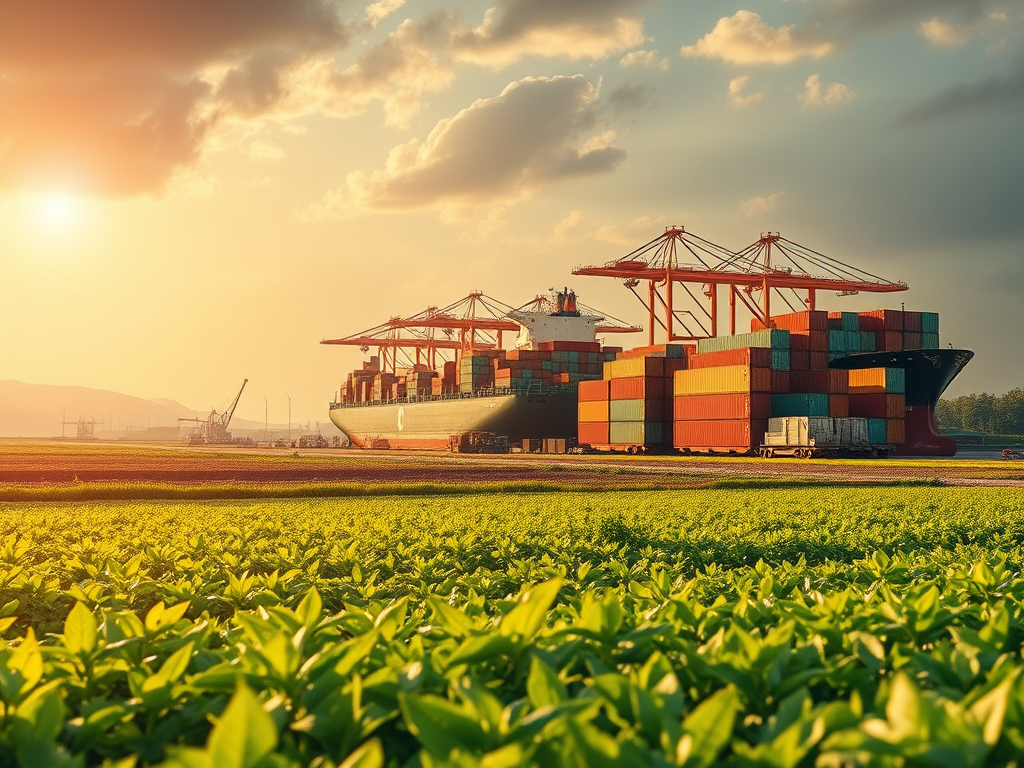
Gulf food security is becoming an increasingly important investment opportunity as governments seek stronger and more reliable food supplies. The region imports much of its food, creating significant exposure to global agricultural risks.
For years, Gulf countries focused mainly on supply contracts and overseas farming projects. However, investors are now examining the financial risks facing farms that supply regional markets.
Akash Bhojwani, founder and managing director of Arclight Capital, believes agricultural finance could strengthen the Gulf’s food supply. He argues that protecting farmers could become an important part of regional infrastructure.
Agricultural producers face several challenges that can threaten food supplies. Many farms lack adequate insurance, while smaller producers often struggle to access affordable financing.
Globally, about 75 percent of agricultural risk remains uninsured. In Asia, only around one in five small farmers has crop insurance.
These gaps create significant risks for farmers and food buyers. Moreover, traditional insurance products often involve high distribution costs and lengthy claims processes.
Farmers also receive income according to seasonal harvest cycles. However, insurance premiums often require regular payments throughout the year.
Consequently, many small producers find traditional financial products difficult to access. This situation creates an opportunity for technology to improve agricultural finance.
Digital infrastructure could help financial companies assess farms more efficiently. It could also connect farmers with lenders and insurers through faster and more accessible systems.
India has developed extensive digital payment and data infrastructure. The country also represents one of the Gulf’s most important food trading relationships.
Its digital payment network now handles a significant share of retail transactions. Meanwhile, consent-based data systems allow people to share financial information securely.
These developments could help financial institutions understand agricultural businesses more accurately. Better data could also allow lenders to evaluate individual harvest cycles.
Satellite technology could provide another important tool for the agricultural finance sector. Insurers could use satellite information to monitor weather conditions and agricultural performance.
For example, automated systems could identify severe weather events affecting crops. Insurers could then process eligible claims much faster than traditional systems.
This approach could reduce financial uncertainty for farmers. At the same time, it could provide greater confidence for companies that depend on agricultural supply chains.
The UAE-India economic relationship could play an important role in this development. Bilateral trade between the two markets exceeds $85 billion.
Dubai also provides an important connection between Gulf investors and Indian businesses. Therefore, the region could become a major hub for agricultural financial technology.
Gulf food security requires more than maintaining supplies at ports and warehouses. It also requires stronger farms that can withstand financial and environmental shocks.
Investment in agricultural technology could therefore support both economic and strategic objectives. Furthermore, stronger insurance coverage could help farmers recover after extreme weather events.
Digital financing could also improve access to working capital. Farmers could use faster financial services to manage costs between planting and harvesting periods.
However, the sector still faces significant challenges. Agricultural businesses often operate through informal markets with limited digital records.
Financial companies need reliable data before developing accurate lending and insurance models. Building that information infrastructure could take several years.
Agricultural investment also requires patience because farming follows seasonal and biological cycles. Investors may need to accept longer timelines than those common in other industries.
Nevertheless, longer investment horizons could create opportunities for early investors. Companies that build reliable agricultural platforms may gain advantages as the sector expands.
The Gulf could also benefit from stronger cooperation between financial institutions and technology companies. Such partnerships could improve access to capital across agricultural markets.
Food security is becoming more closely connected with financial resilience. Protecting farms could reduce supply disruptions and strengthen long-term regional planning.
The investment opportunity extends beyond farming itself. It includes insurance, digital payments, agricultural data and supply-chain technology.
These services could create new financial products for farmers and agricultural businesses. They could also help Gulf investors support food supplies beyond the region.
Agricultural technology could therefore become an important part of the Gulf’s wider investment landscape. It connects financial capital with food production, technology and international trade.
The region already has significant financial resources and established trade connections. Meanwhile, India offers a large agricultural market and rapidly developing digital infrastructure.
Together, these strengths could support a new generation of agricultural finance. The process will require long-term investment and stronger cooperation between governments and private companies.
Food security ultimately depends on resilient agricultural producers. Therefore, reducing financial risks at the farm level could strengthen the entire supply chain.
For Gulf economies, this strategy could offer both economic and strategic benefits. It could also create investment opportunities across several fast-growing financial technology segments.
As digital tools improve, agricultural insurance and financing could become faster and more accessible. Consequently, farmers may gain better protection against climate and market disruptions.
Greater access to financial services could also encourage agricultural businesses to invest in productivity. This could improve the stability of food supplies over the longer term.
Gulf investors could therefore play a larger role in supporting agricultural resilience internationally. Capital directed toward finance and technology could complement existing food sourcing strategies.
Food security could then shift from a supply-chain concern into a broader investment strategy. That transition could reshape how Gulf capital approaches global agriculture.
The opportunity will depend on continued technological development and stronger financial infrastructure. It will also require reliable data, effective partnerships and investment models suited to agricultural cycles.
Overall, agricultural finance could become an increasingly important component of Gulf food security. Combining capital, technology and insurance could help create more resilient food supply chains.