



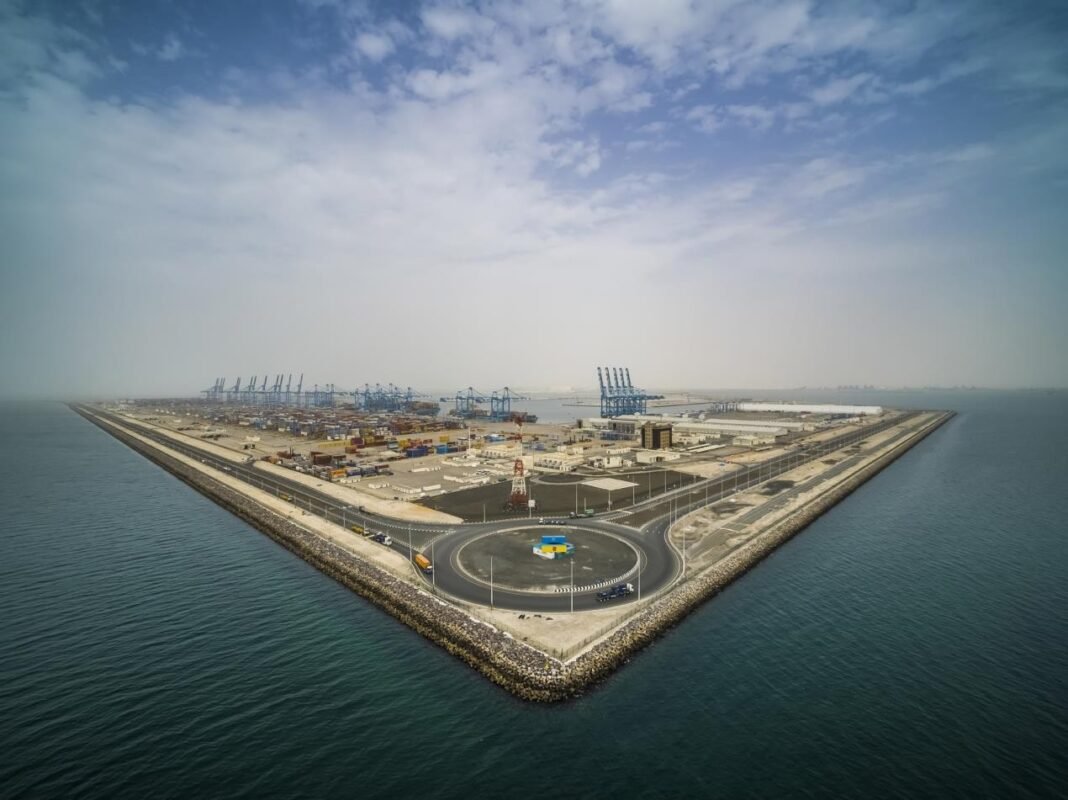
Abu Dhabi shipping operators are helping maintain trade through the Strait of Hormuz as major carriers avoid the waterway. Smaller feeder vessels now handle some container movements across the strait. These services connect Gulf markets with India and Pakistan. Meanwhile, international carriers continue using alternative routes. As a result, businesses face longer journeys and higher transportation costs.
Fujairah and Khor Fakkan have become important points in this developing network. Both ports sit outside the Strait of Hormuz on the UAE’s eastern coast. Smaller vessels can therefore connect Gulf cargo with international shipping routes. This arrangement allows larger carriers to remain outside the strait.
Shipping costs have increased sharply since the regional conflict began. Moving a loaded 40-foot container from China now costs more than $6,000. Before the conflict, similar shipments cost around $850. Consequently, companies face much higher costs when moving goods between Asia and Gulf markets.
Container crossings through Hormuz remain very limited. Weekly crossings involving non-Iranian vessels have stayed in the single digits. However, Abu Dhabi-linked operators continue providing services despite these restrictions. Their activity helps maintain connections between Gulf markets and overseas suppliers.
Several large shipping companies have changed their operating patterns. They now use ports in Oman and Saudi Arabia to serve Gulf markets. Cargo can then continue through feeder vessels or land transportation. Some shipments also reach Gulf markets through Turkey and Iraq.
However, alternative routes bring higher costs and logistical challenges. Longer journeys increase fuel expenses and handling requirements. They can also create additional transfer points within supply chains. Consequently, businesses may face less predictable delivery schedules.
The developing network highlights the importance of the UAE’s eastern ports. Fujairah and Khor Fakkan provide access to routes outside the strait. Their locations help regional operators maintain international trade links during the disruption.
The current shuttle activity does not represent a full return to normal trade. Crossings remain far below pre-conflict levels. Therefore, the network will depend on regional security and shipping conditions. If conditions improve, major carriers could restore more direct services.
For Gulf businesses, reliable transport connections remain essential. Manufacturers need imported materials, while retailers depend on regular Asian shipments. Meanwhile, exporters require dependable routes to international customers. Any disruption can increase costs and create delays.
Abu Dhabi shipping services are helping maintain limited container trade across the region. Their role remains important for connections with India and Pakistan. However, freight costs remain significantly higher than before the conflict. For now, operators continue adapting their networks around Hormuz.