



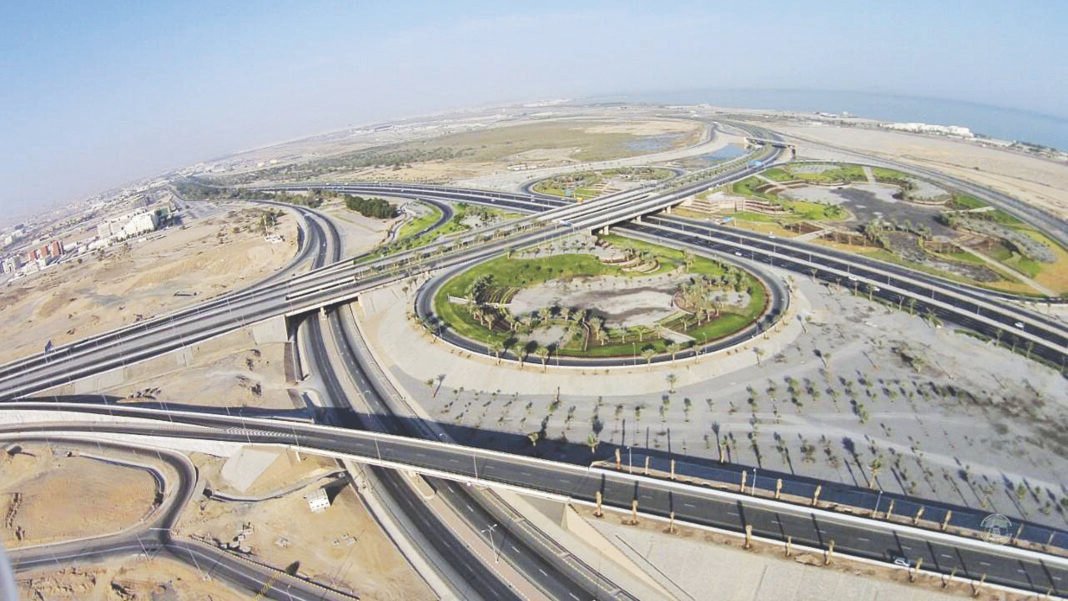
Oman’s Ministry of Transport, Communications, and Information Technology is finalizing the awarding process for the Muscat Expressway expansion project. The much-anticipated project aims to tackle heavy traffic congestion between Al Khoud and Qurum, especially during peak hours.
Currently, the Muscat Expressway operates with only two lanes for both trucks and light vehicles. As a result, the road faces significant bottlenecks at exits and intersections. Once completed, the expansion will dramatically improve traffic flow and safety.
Officials confirmed that the project comes under the government’s Tenth Five-Year Development Plan (2021–2025). The ministry coordinated with the Tender Board and the Local Content Authority to approve related development projects, including the Mawaleh Road and the section connected to 18th November Street.
According to Minister Eng. Saeed bin Hamoud Al Maawali, several key road projects are planned for 2025. These include the Muscat Expressway expansion, redesign of the Burj Al Sahwa Interchange, and widening of 18th November Street.
The Muscat Expressway expansion will add five lanes in each direction from Qurum to Al Khuwair. From Al Khuwair onward, six lanes in each direction will connect to the existing four-lane Al Batinah Expressway near Halban Interchange. The plan also includes a dual-lane overpass from Al Nahda Street heading west to the Muscat Expressway heading south.
Additionally, the project includes a double bridge crossing Wadi Adai and upgrades to Seih Al Maleh Roundabout. Authorities will replace the roundabout with a signalized intersection and widen the existing valley bridges. Improvements will also cover the Qurum Interchange, Seih Al Maleh area, and Al Qurum Heights Road.
Importantly, the project connects Sultan Haitham City directly to the Muscat Expressway. This new link will improve mobility between Nizwa and Sohar, ensuring free-flow traffic from Interchange 11 to Burj Al Sahwa Roundabout and smooth access from Interchange 12 to Al Khoud Junction.
Consultants supervising the project will ensure compliance with construction and safety standards. They will also monitor progress to guarantee timely delivery and traffic efficiency once the road opens.
The 54-kilometer Muscat Expressway runs parallel to Sultan Qaboos Street, stretching across the mountains away from the coast. It connects with the Al Batinah Expressway leading to the UAE border at Khatmat Malaha.
Since its official opening in 2010, the Muscat Expressway has become a vital route for urban and economic growth. It provides access to developing areas such as Irfan City, Boushar, Airport Heights, and the Rusayl Industrial Zone.
As part of the 18th November Street expansion, the government plans to add a third lane on both sides of the road from the Airport Bridge to Al Ishraq Roundabout near Al Seeb Beach. The plan also includes building a new bridge and four-way signals at Al Mouj Roundabout, along with an underpass and overpass at Al Bahja Roundabout.
The upgrades will transform Al Ishraq Roundabout into a three-lane signalized intersection, allowing smoother traffic flow toward Al Seeb Beach. The project will also add a third lane from Al Mouj to Al Mawaleh Bridge and two tunnels connecting 18th November Street to Al Mawaleh Bridge.
These developments reflect Oman’s vision for modern infrastructure and efficient transport connectivity. By expanding the Muscat Expressway and related roads, Oman is improving mobility, supporting trade, and enhancing safety for all road users.