



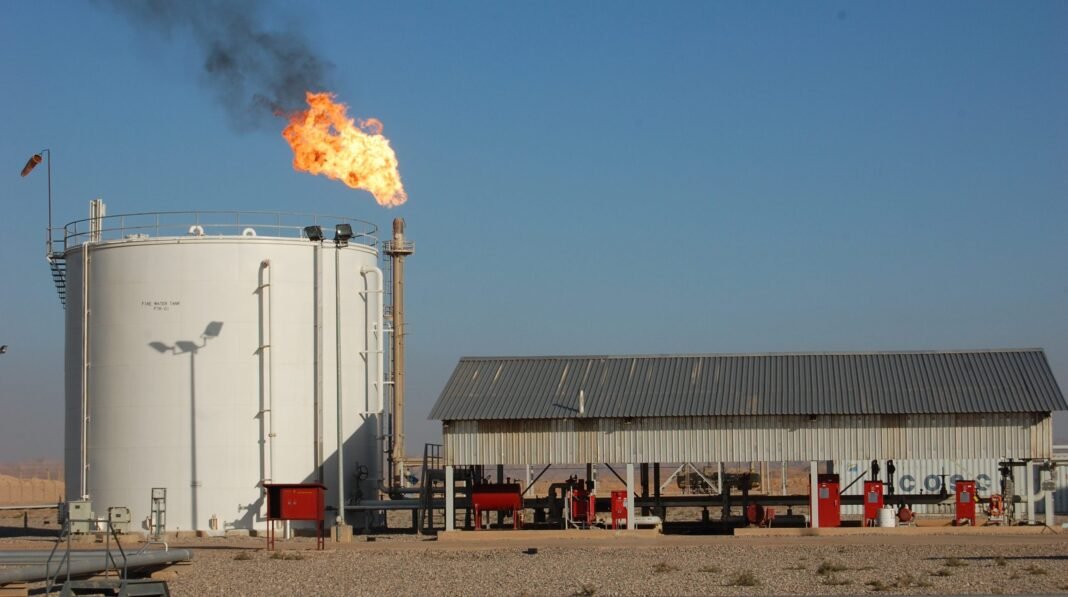
A drone attack struck the Khor Mor gas field in Sulaimani province, halting natural gas transfers and triggering major power outages. Consequently, the incident underscores ongoing security challenges in Iraq’s energy sector and threatens regional electricity supply.
Authorities confirmed that the attack occurred late Wednesday at 11:30 p.m., directly targeting the field’s infrastructure. Immediately, teams from the Ministry of Natural Resources, Ministry of Electricity, and Dana Gas responded to stabilize operations. Their goal is to restore gas flow quickly and prevent a total blackout.
The electricity ministry warned that the assault could cut 80 percent of the Kurdistan Region’s power supply. Therefore, officials prioritized sensitive government institutions to maintain essential services. As a result, more than 3,000 megawatts of electricity stopped flowing, affecting households and businesses across the region.
An engineer at the field explained that an NGL storage tank caught fire. Although flames initially burned intensely, authorities believe the fire will not spread unless another drone strikes. Fortunately, no casualties occurred during the attack.
Iraq’s Security Media Cell strongly condemned the assault, calling it a serious terrorist act. Furthermore, officials emphasized that it threatens Iraq’s security and economic stability, and they vowed to hold the perpetrators accountable.
Khor Mor gas field, located in Chamchamal district, operates under Pearl Petroleum, which includes UAE-based Dana Gas and Crescent Petroleum. The field has faced repeated assaults from Katyusha rockets and drones, with authorities attributing previous attacks to Iran-backed militia groups. Notably, a drone strike in April last year killed four workers and temporarily disrupted electricity supply.
Meanwhile, Sulaimani International Airport reported no impact on flight operations. In addition, authorities heightened vigilance after drone sightings earlier in the week triggered sirens at the facility.
The attack highlights persistent vulnerabilities in Iraq’s energy infrastructure and further underscores Khor Mor’s strategic role in regional power generation. Analysts warn that repeated assaults could undermine investor confidence and slow economic growth.
Officials now plan to reinforce security measures while ensuring uninterrupted gas supplies. Additionally, restoring full production at Khor Mor remains a top priority, alongside protecting critical infrastructure from future threats.
Overall, this incident serves as a stark reminder of security risks in Iraq’s oil and gas sector, emphasizing the urgent need for proactive protection and rapid response strategies.

