



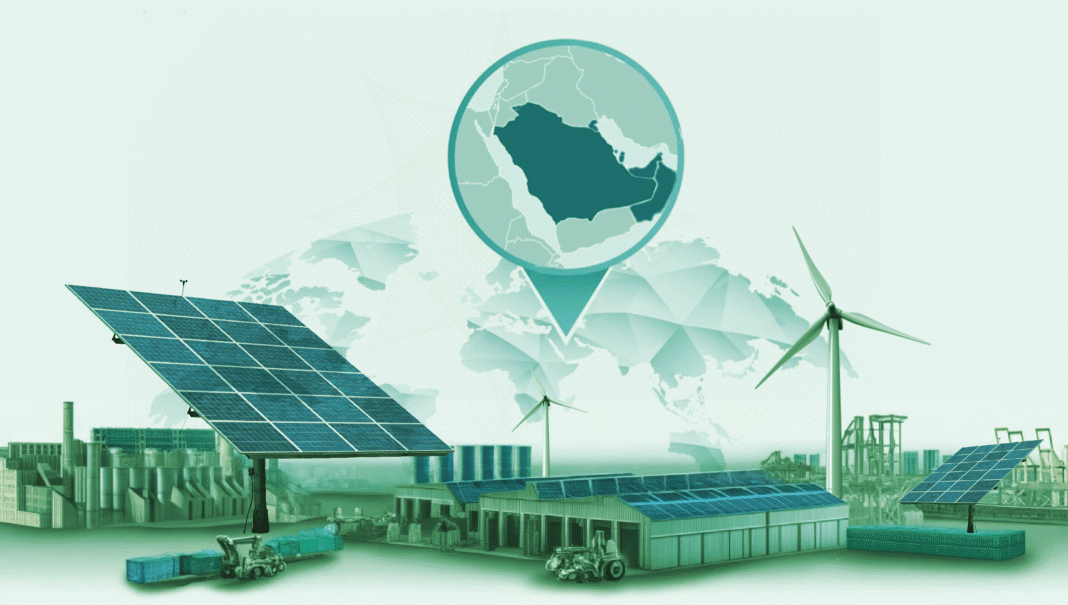
Gulf Cooperation Council (GCC) decarbonization efforts are gaining momentum as member states pursue cleaner energy solutions while managing oil-dependent economies. GCC decarbonization has become a central focus for policymakers seeking to balance economic growth with environmental responsibility.
The GCC countries have experienced remarkable economic expansion over recent decades but remain highly vulnerable to climate impacts. Studies indicate that per capita CO2 emissions in the region rank among the highest globally, with Qatar, Bahrain, and Kuwait leading in emissions intensity. Between 2003 and 2020, the region’s CO2 emissions doubled from 540 million tons to over 1,091 million tons, reflecting population growth, urbanization, and industrial activity.
Collectively, GCC nations produced around 17 million barrels of crude oil per day in 2023, representing more than 23% of global output. While oil has driven prosperity, it contributes significantly to greenhouse gas emissions. The energy sector alone accounts for 83% of emissions in the GCC, including 44% from power and heat generation.
Recognizing this, most Gulf states have set ambitious net-zero targets. The UAE and Oman aim to achieve net-zero by 2050, while Saudi Arabia, Kuwait, and Bahrain target 2060. The COP28 conference in Dubai in 2023 further encouraged the region to accelerate renewable energy adoption and carbon reduction initiatives.
Opportunities for GCC decarbonization include leveraging abundant solar and wind resources. Solar projects, such as Qatar’s Siraj1 facility, have achieved highly competitive tariffs, making solar the most cost-effective electricity source. GCC nations plan to expand solar PV and concentrated solar power capacity to 42.1 gigawatts, nearly eight times current levels. Wind energy also offers substantial potential, with favorable speeds across 75% of the region.
Energy efficiency and carbon capture technologies present further prospects. The region has over ten operational or planned CCUS projects, including Qatar’s Ras Laffan LNG facility, which captures 2.2 million tons of CO2 annually. Efficiency programs, like the UAE’s National Water and Energy Demand Management Programme, aim to boost energy productivity by 40% by 2050.
Financial strength provides GCC countries with an advantage. Sovereign wealth funds manage over $4.9 trillion, enabling large-scale investment in transition technologies. Funds are increasingly allocated to renewables, green hydrogen, and ammonia, which could generate $200 billion and one million jobs by 2050.
However, challenges remain. Hydrocarbon dependency exceeds 90% of revenues in some states, creating fiscal risks. High costs of CCUS deployment, technological gaps, energy subsidies, and workforce impacts also complicate the transition. Ensuring a just and inclusive shift will be critical to social stability.
In conclusion, GCC decarbonization is achievable but requires decisive action, policy alignment, and long-term commitment. The region can transform hydrocarbon dependence into a platform for global sustainable leadership.

