

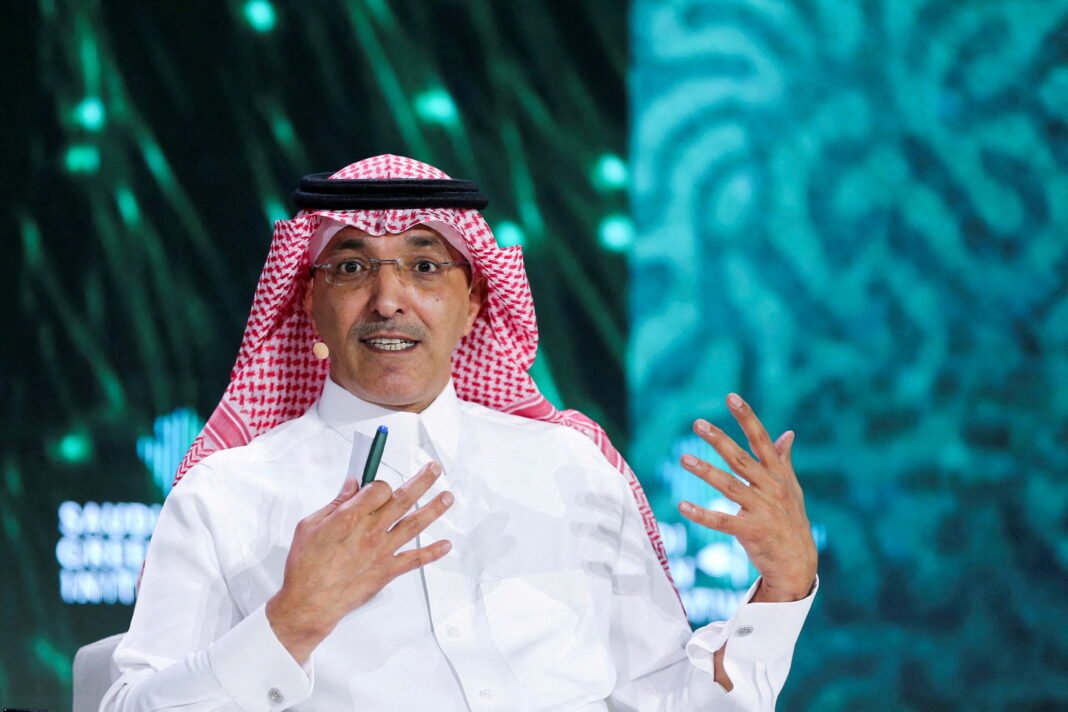
Saudi Arabia will continue its expansionary Saudi spending in 2026, Finance Minister Mohammed Al-Jadaan announced at a Riyadh press conference. Consequently, the government aims to strengthen stability, pursue medium-term planning, and improve public services for citizens.
Al-Jadaan said the government expects total expenditure to reach SR1.31 trillion ($348.9 billion) in 2026 and rise to SR1.41 trillion by 2028. Meanwhile, officials also anticipate revenue growth, driven by rapid economic expansion and non-oil sector contributions.
Furthermore, the minister emphasized that the government prioritizes essential services. Spending on education, healthcare, social programs, and municipal services will total SR533 billion in 2026. He added that maximizing impact begins next year and requires close coordination between public and private sectors.
In addition, Al-Jadaan highlighted that Crown Prince Mohammed bin Salman’s budget statement reflects achievements under Vision 2030. He reported that 93 percent of Vision 2030 performance indicators remain on track. Moreover, 85 percent of initiatives are complete or progressing as planned, and officials already met 299 indicators ahead of 2030.
The minister also reviewed the 2025 budget, which recorded expenditures of SR1.33 trillion, revenues of SR1.09 trillion, and a strategic deficit of SR245 billion. He explained that the government used the deficit to fund projects designed to generate long-term economic returns. Consequently, most spending will produce benefits over several years, especially in infrastructure and strategic development projects.
Saudi spending has, therefore, fueled strong growth in the non-oil economy, averaging five percent over the past five years. In particular, non-oil contributions now account for 55.4 percent of GDP, moving the Kingdom closer to Vision 2030 targets. Additionally, Al-Jadaan noted that micro, small, and medium enterprises grew from 500,000 to 1.7 million, creating around 1.2 million jobs.
The minister further stressed continued investments in technology, artificial intelligence, and government digitalization. He said Saudi spending develops revenues, enables private-sector growth, and supports long-term investments. Moreover, rating agencies recognized these efforts by maintaining or upgrading Saudi Arabia’s credit rating despite higher borrowing.
Looking ahead, Al-Jadaan projected real GDP growth of 4.4 percent by the end of 2025. He also expects nominal GDP to reach SR5.6 trillion by 2028. Overall, he emphasized that Saudi spending will continue to improve citizens’ quality of life, promote economic diversification, and maintain stability and prosperity, while steadily advancing Vision 2030 targets.