



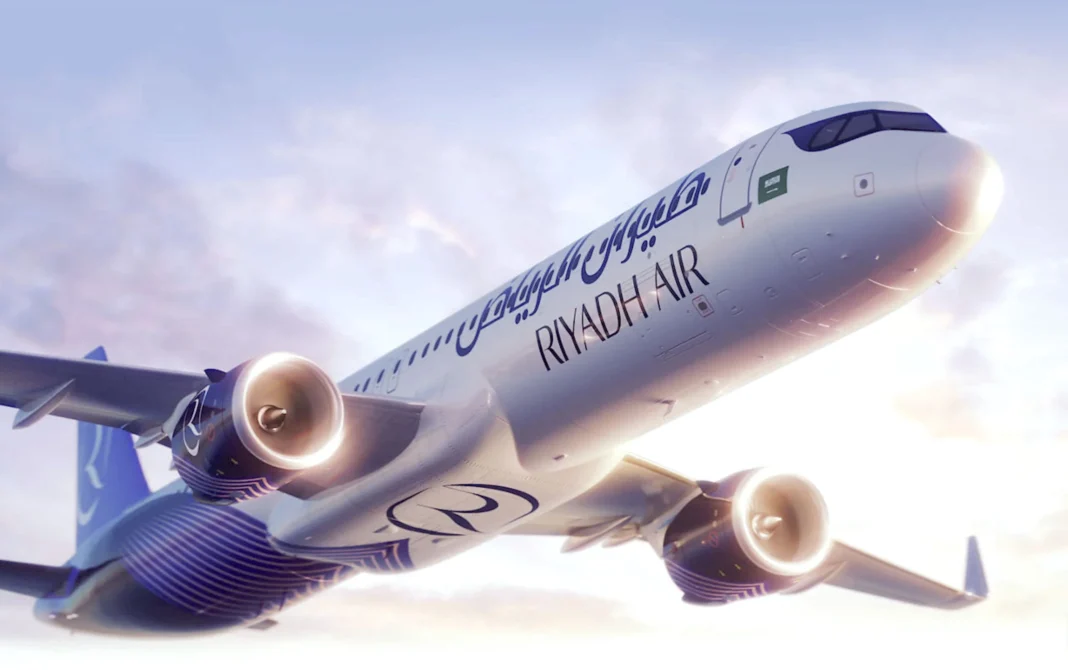
AI aviation future shaped a major milestone this week as Riyadh Air and IBM revealed the world’s first airline designed as a fully AI-native enterprise. The announcement highlighted a major shift in global aviation strategy and aligned closely with Saudi Arabia’s broader ambition for next-generation digital transformation.
Riyadh Air selected IBM Consulting to design a technology-first airline with no legacy systems. Moreover, the partners built every operational layer on AI-enabled platforms to improve efficiency, boost guest experience, and strengthen future growth. This strategy created a unified digital backbone that supports aircraft operations, crew management, and financial planning.
IBM Consulting coordinated 59 workstreams and assembled more than 60 global partners. The group included Adobe, Apple, FLYR, and Microsoft, which contributed specialized solutions for automation, analytics, and digital engagement. Additionally, the teams deployed IBM watsonx Orchestrate and IBM Consulting Advantage to support every stage of the airline’s early operations.
Riyadh Air already launched initial flights for testing, while commercial service will begin in early 2026. The three-year collaboration now enters a critical phase as the airline prepares for regional and international expansion. Furthermore, the airline continues to refine its technical environment through enhanced workflows and automated support systems.
Riyadh Air now embeds AI across all employee and customer touchpoints. For example, the airline introduced a digital workplace with AI agents that simplify HR tasks and daily workflows. It also deployed mobile tools that support proactive guest engagement and personalized inflight service. Additionally, AI-enabled voice bots and agent-assist tools improve call-center performance and reduce service delays.
On the operational side, IBM Consulting implemented an enterprise performance management suite. This system unifies financial, operational, and commercial data to support rapid analysis and precise forecasting. Consequently, leaders gain real-time insight into route planning, pricing decisions, and network growth opportunities.
The AI aviation future gained momentum as Riyadh Air confirmed its ambition to serve more than 100 destinations by 2030. The airline expects millions of travelers to benefit from its AI-native infrastructure, which eliminates traditional bottlenecks and increases service reliability. Moreover, the company hopes to create a blueprint for future airlines seeking digital transformation.
IBM executives said the partnership demonstrates how modern platforms can replace decades of outdated systems. Riyadh Air leadership emphasized that the airline chose innovation over legacy, ensuring long-term competitiveness in a rapidly evolving industry. Together, the two organizations delivered a structure built for continuous improvement, expanded automation, and future scalability.
Ultimately, the AI aviation future defines Riyadh Air’s identity and shapes its approach to global travel innovation. The airline now positions itself as a benchmark for digital aviation and prepares to influence industry standards for years ahead.