



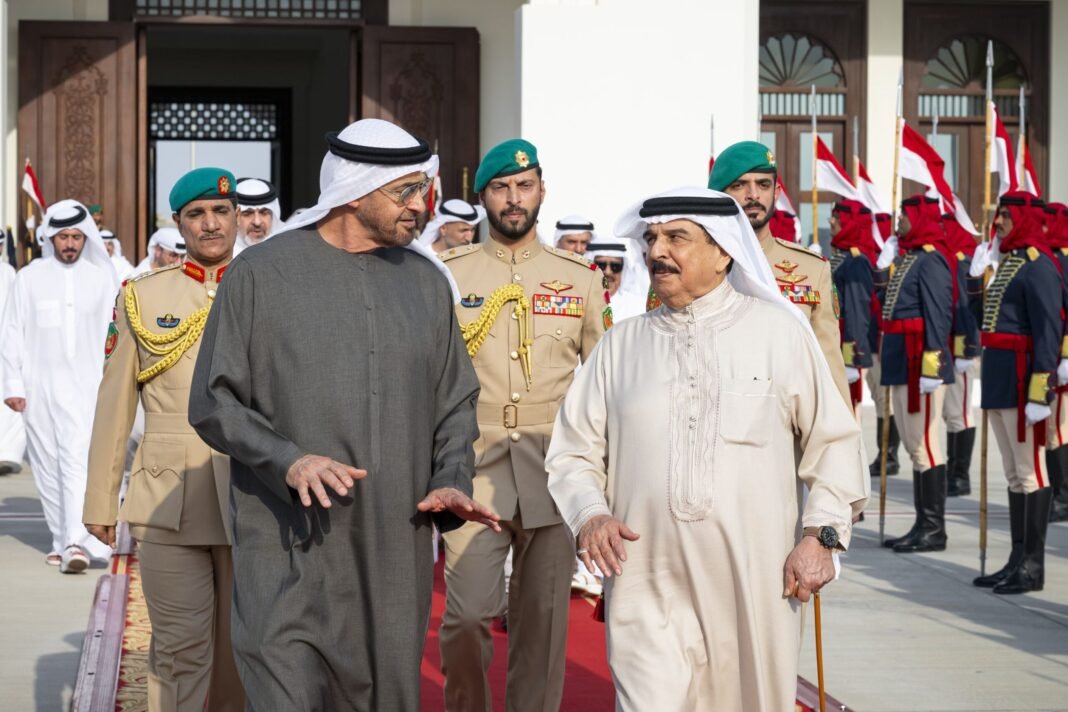
Bahrain-UAE cooperation received a major boost as Dr. Mohammed bin Mubarak Bin Daina, Minister of Oil and Environment, met Fahad Mohammed Salem Kardous Al Ameri, UAE Ambassador to Bahrain. The meeting took place on January 21, 2026, at the Mohammed bin Zayed Nature Reserve.
During the visit, the officials toured the reserve to review facilities and ongoing environmental protection projects. The Supreme Council for Environment leads efforts in wildlife conservation and biodiversity preservation. This tour allowed both sides to discuss collaboration opportunities in detail.
Dr. Bin Daina noted that King Hamad bin Isa Al Khalifa issued a royal order naming the reserve after UAE President Sheikh Mohammed bin Zayed Al Nahyan. He explained that this act reflects the deep ties between Bahrain and the UAE and strengthens cooperation in environmental protection.
Furthermore, Ambassador Al Ameri said the reserve’s name symbolizes the strong leadership ties and mutual commitment to preserving natural heritage. He emphasized the reserve’s role as a key environmental landmark in Bahrain. He also stressed the importance of expanding joint initiatives to support sustainability and ecological development.
The Mohammed bin Zayed Nature Reserve is among Bahrain’s most prominent environmental reserves. It actively contributes to wildlife protection, biodiversity conservation, and raising public awareness about environmental issues. The reserve also serves as a model for future collaboration between Bahrain and the UAE in conservation efforts.
Bahrain UAE cooperation continues to grow across multiple sectors, and this environmental partnership highlights the countries’ shared commitment to long-term sustainability. Both nations aim to expand joint programs, exchange expertise, and ensure biodiversity protection for future generations.
The meeting and reserve tour demonstrate tangible progress in environmental diplomacy and provide a platform for innovative projects supporting regional conservation goals.
In addition, the officials discussed opportunities for joint research in climate adaptation and renewable energy projects. They agreed to create programs for monitoring ecosystems and reducing environmental risks. These initiatives aim to strengthen regional knowledge sharing.
Both Bahrain and the UAE plan to host educational workshops and public awareness campaigns focused on wildlife conservation. They also intend to involve universities, research institutions, and local communities in practical conservation projects. This will ensure sustainability and wider engagement.
Finally, the visit highlighted long-term plans to integrate technology into environmental management. Bahrain and the UAE aim to use data-driven approaches, smart monitoring systems, and ecological mapping to enhance the reserve’s conservation impact. This demonstrates a commitment to innovation and sustainable development.