



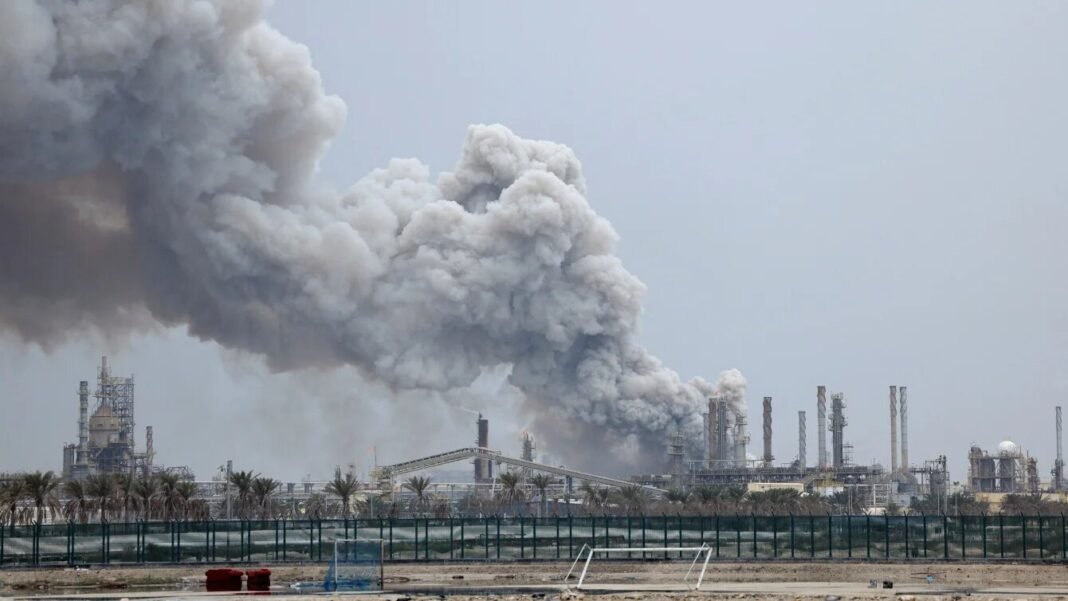
Global energy crisis concerns reached a breaking point Monday after Bahrain’s state-owned oil giant, Bapco, declared force majeure. This rare legal move follows a devastating aerial attack that ignited massive fires at the Sitra Island refinery complex. Government officials confirmed that the strike caused significant damage to the facility’s primary processing units and export infrastructure.
Consequently, the company has officially suspended its contractual obligations for international shipments until further notice. This declaration signals a massive disruption in the regional energy supply chain during a period of extreme volatility. Global energy crisis indicators suggest that these events could permanently alter the landscape of Middle Eastern fuel exports.
The assault on the refinery resulted in thirty-two casualties among Bahraini citizens, including a two-month-old infant and a teenager. Medical teams reported that at least four individuals remain in serious condition following the overnight drone and missile strikes.
Meanwhile, defense ministries in Saudi Arabia, Qatar, and the United Arab Emirates reported intercepting similar waves of incoming threats. Specifically, Saudi forces destroyed multiple drones targeting the Shaybah oil field to prevent further damage to their infrastructure.
These coordinated attacks highlight a dangerous escalation in the targeting of civilian and industrial assets across the Gulf. Such violence places immense pressure on regional leaders to bolster their domestic air defense systems immediately.
Transitioning to the financial fallout, international commodity markets reacted with immediate and historic price surges during early trading. Brent crude climbed sharply to $107.97 per barrel, representing a staggering 16.5 percent increase in a single day.
Similarly, the American benchmark reached $106.22 per barrel as investors feared a total blockage of the Strait of Hormuz. This narrow waterway currently handles twenty percent of the world’s daily oil supply, making it a critical global artery.
Therefore, any sustained interference in this region threatens to trigger a severe global energy crisis for major economies. Stock markets in New York and London also declined as traders moved their capital into safer haven assets.
Furthermore, the United States responded to the deteriorating security environment by ordering the evacuation of non-emergency government personnel. The State Department cited specific threats to diplomatic facilities in Saudi Arabia, Kuwait, and the United Arab Emirates as the primary cause. This diplomatic withdrawal underscores the severity of the current conflict and the high risk of further retaliatory strikes.
In Bahrain, the Bapco refinery recently expanded its capacity to 400,000 barrels per day to support the local economy. Management now focuses on meeting domestic fuel needs through contingency plans while they assess the long-term damage. The global energy crisis will likely deepen if diplomatic efforts fail to de-escalate the situation in the coming weeks.
Looking ahead, industry analysts remain deeply concerned about the vulnerability of critical energy infrastructure across the Middle East. Most experts agree that the recent shift toward targeting refineries marks a significant change in regional warfare tactics.
As a result, insurance costs for oil tankers operating in the Gulf have skyrocketed to record-breaking levels. Governments worldwide are now discussing the release of strategic petroleum reserves to stabilize the volatile global energy crisis.
For now, the focus stays on containing the fires and restoring basic operational safety at the Sitra facility. Traders will continue to monitor the situation closely for any signs of a permanent halt in regional production.