



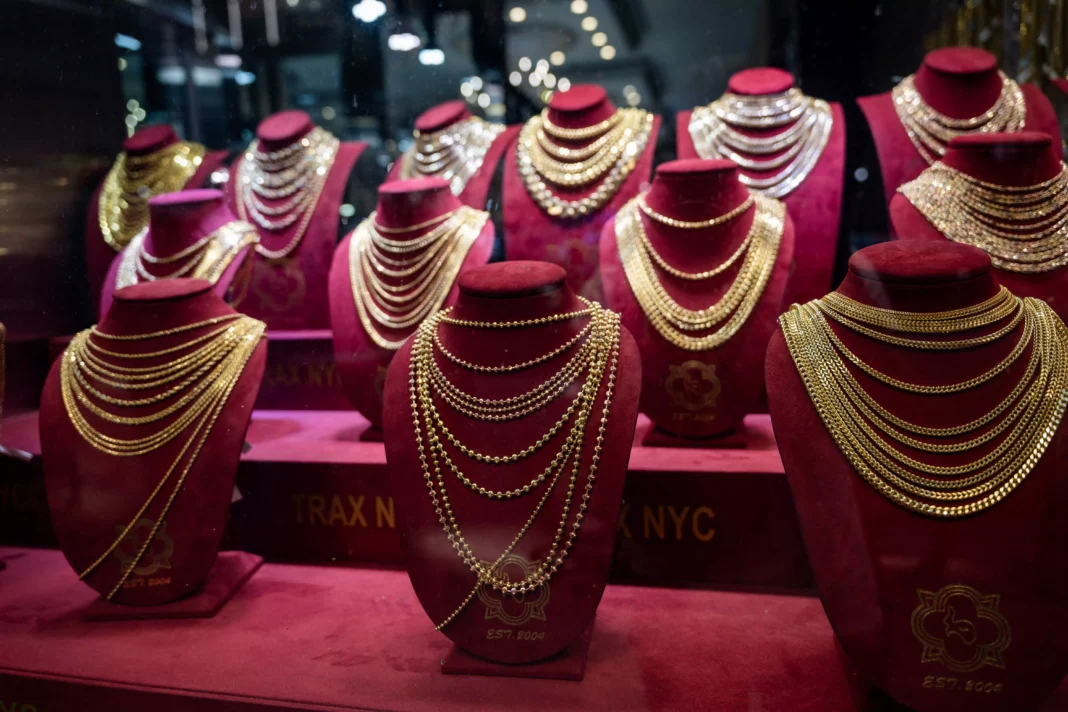
Baghdad/Erbil, February 4, 2026 – Iraq gold prices continued to climb on Wednesday, reaching 1.06 million IQD per mithqal in Baghdad and Erbil, continuing a steady upward trend amid growing local and regional demand.
In Baghdad, traders on Al-Nahr Street sold 21-carat gold, including Gulf, Turkish, and European varieties, at 1,073,000 IQD per mithqal. Buyers paid 1,069,000 IQD, marking a significant rise from Tuesday’s 1,035,000 IQD.
Meanwhile, 21-carat Iraqi gold traded at 1,043,000 IQD per mithqal, with buying prices at 1,039,000 IQD. Jewelry stores reported Gulf 21-carat gold prices ranging from 1,075,000 to 1,085,000 IQD, while Iraqi gold ranged between 1,045,000 and 1,055,000 IQD.
In Erbil, 22-carat gold sold for 1,163,000 IQD per mithqal, 21-carat gold reached 1,110,000 IQD, and 18-carat gold traded at 952,000 IQD. Analysts said the price increase reflects both strong local demand and global market trends.
Traders highlighted that Iraq gold prices often respond to investors seeking safe-haven assets amid currency fluctuations. Many buyers preferred gold over cash or other investments this week. This shift indicates growing caution among investors in Iraq’s current economic climate.
Additionally, jewelers reported strong interest in both Iraqi and Gulf gold varieties. This pattern shows that gold continues to be regarded as a reliable store of value by both investors and everyday consumers.
Experts predict Iraq gold prices continued to rise if regional uncertainties and global economic pressures persist. They also noted that upcoming government policies and central bank measures could directly influence pricing in Baghdad and Erbil.
Furthermore, financial advisors suggested that small-scale investors consider gradually purchasing gold to protect against currency depreciation. They emphasized that monitoring daily price fluctuations is essential for making informed investment decisions.
The ongoing rise in gold prices also reflects the global trend of precious metals attracting safe-haven demand. International economic volatility and oil market fluctuations have further supported higher gold values.
Local jewelry businesses noted increased sales this week, especially among customers buying gold for both investment purposes and upcoming cultural celebrations. This demand highlights gold’s dual role in Iraq as both an investment and a culturally significant commodity.
Market observers also pointed out that regional developments, including trends in Gulf and European markets, strongly impact Iraq gold prices. Traders said that shifts in international investor sentiment often translate quickly to Baghdad and Erbil markets.
As a result, investors, traders, and jewelers are closely monitoring daily changes. Gold remains a critical asset for Iraq’s financial and investment sectors, offering both stability and long-term value.

