



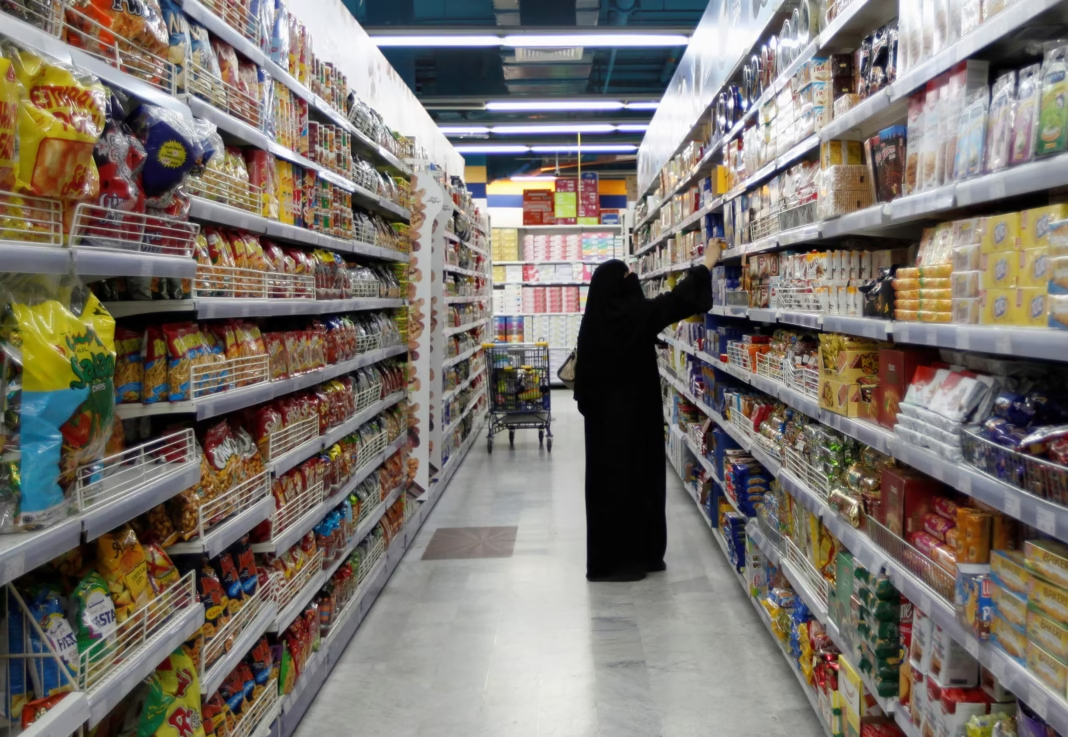
Grocery UAE households are changing shopping habits due to perceived high prices. Residents buy fewer grocery items and prefer budget stores. Moreover, they delay non-essential purchases.
Even though food inflation fell sharply, from 3.7% in early 2024 to 0.36% in 2025, many UAE shoppers still feel prices are high. Therefore, perception, budgeting, and value now shape spending decisions.
A new Blue Yonder 2025 Global Consumer Sentiment on Grocery Inflation Survey polled over 6,000 shoppers worldwide, including the Middle East. It found 85% of respondents remain concerned about grocery inflation. Consequently, anxiety is visible in UAE supermarket aisles.
Additionally, the survey revealed that 65% of consumers buy fewer grocery items. Additionally, 42% are switching to discount or wholesale stores. Furthermore, 36% pursue promotions, while 34% choose private-label brands to save money. This reflects a global shift in shopping behaviour.
In the UAE, families now buy smaller quantities, track weekend deals, and favour retailers with transparent pricing. Meanwhile, supermarket operators in Dubai and Abu Dhabi report spikes in foot traffic during price promotions. Customers are increasingly selective.
Import costs continue to influence grocery prices. Around 80% of the UAE’s agricultural products are imported. Therefore, shipping costs, tariffs, and currency fluctuations affect retail pricing. Shoppers remain aware of these factors.
The survey showed 49% of UAE consumers blame tariffs for rising grocery costs. Additionally, 42% cite increasing raw material prices, while 39% highlight higher labour expenses. In contrast, Europeans primarily blame raw material prices.
This perception shapes both shopping behaviour and trust in retailers. Shoppers increasingly prioritise value, promotions, and reliability. Consequently, UAE supermarkets are adjusting strategies to retain customers while maintaining margins.
Families continue to adapt, choosing stores that balance cost and quality. Moreover, digital platforms offering promotions see higher engagement. Retailers must combine transparency, affordability, and convenience to satisfy evolving demand.

