



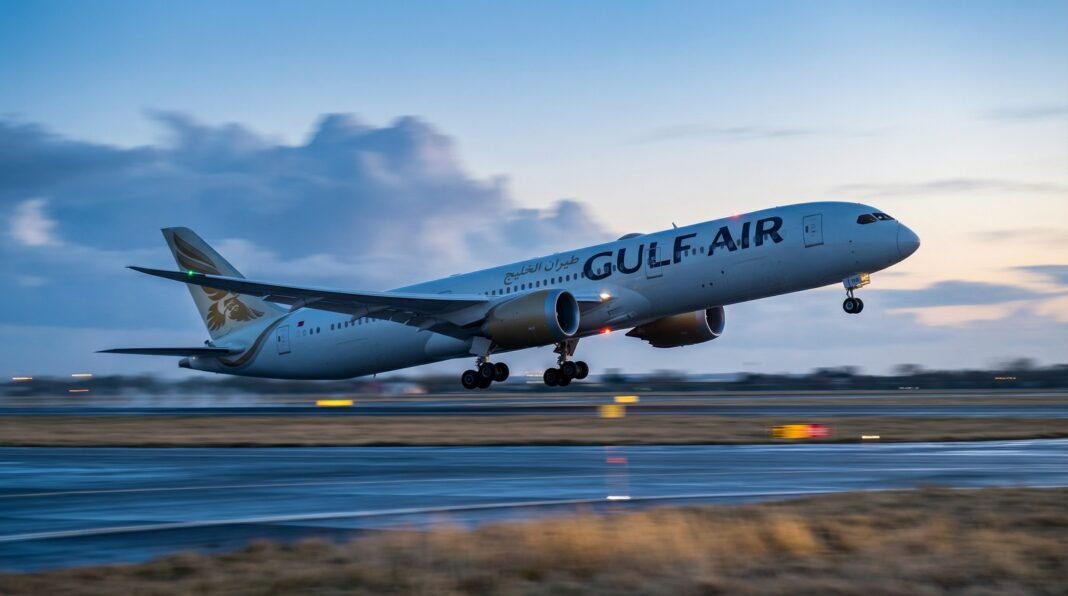
Gulf Air is rapidly expanding its operations in Saudi Arabia as Bahrain’s airport closure forces the airline to reshape its regional network. The move highlights how Gulf carriers are adapting quickly to maintain passenger and route connectivity during a period of prolonged airspace disruption.
The Bahraini national carrier has strengthened its temporary operating base at King Fahd International Airport in Dammam. This step allows the airline to keep flights running while Bahrain International Airport remains out of service.
Most recently, Gulf Air added Istanbul, Athens, and Thiruvananthapuram to its Dammam-based network. As a result, the airline now operates 13 routes from the Saudi airport. These routes include major destinations such as London, Cairo, and Manila.
The expansion comes after widespread regional air traffic disruptions began on February 28. Since then, airlines across the Middle East have adjusted schedules, rerouted aircraft, and shifted operations to alternative airports.
For Gulf Air, Dammam has become a critical operational fallback point. Its location near Bahrain gives the airline a practical base to support passenger movement and preserve key travel links. Therefore, the airport now plays a bigger role in Gulf Air’s short-term network planning.
The airline is also running a shuttle service to keep the Bahrain-Saudi travel corridor active. That service helps passengers move more easily between the two neighboring markets during the disruption. In turn, it supports both business travel and connecting international traffic.
This strategy matters because Gulf Air depends heavily on regional feed traffic and hub connectivity. When one central hub shuts down, airlines must act fast to avoid wider operational and financial disruption. Consequently, Dammam now serves as a temporary pressure valve for the carrier.
The route additions also show that Gulf Air is trying to protect both leisure and long-haul demand. Flights to Europe, South Asia, and the Middle East suggest the airline is prioritizing markets with steady passenger demand and strategic importance.
In addition, the temporary hub expansion may help reduce revenue losses caused by the Bahrain closure. By keeping aircraft active and routes open, Gulf Air can preserve market presence and customer confidence during an unstable period.
Aviation analysts often view this kind of operational flexibility as a major test for airlines in crisis periods. Gulf Air’s response may strengthen its resilience if regional instability continues longer than expected.
The airline will likely continue reviewing route performance and operational needs from Dammam. If restrictions remain in place, Gulf Air could further expand or adjust its temporary network to meet passenger demand.
For now, the Gulf Air hub in Dammam has become a vital lifeline for the airline. It is helping Bahrain’s national carrier stay connected, competitive, and operational during one of the region’s most difficult aviation periods.