



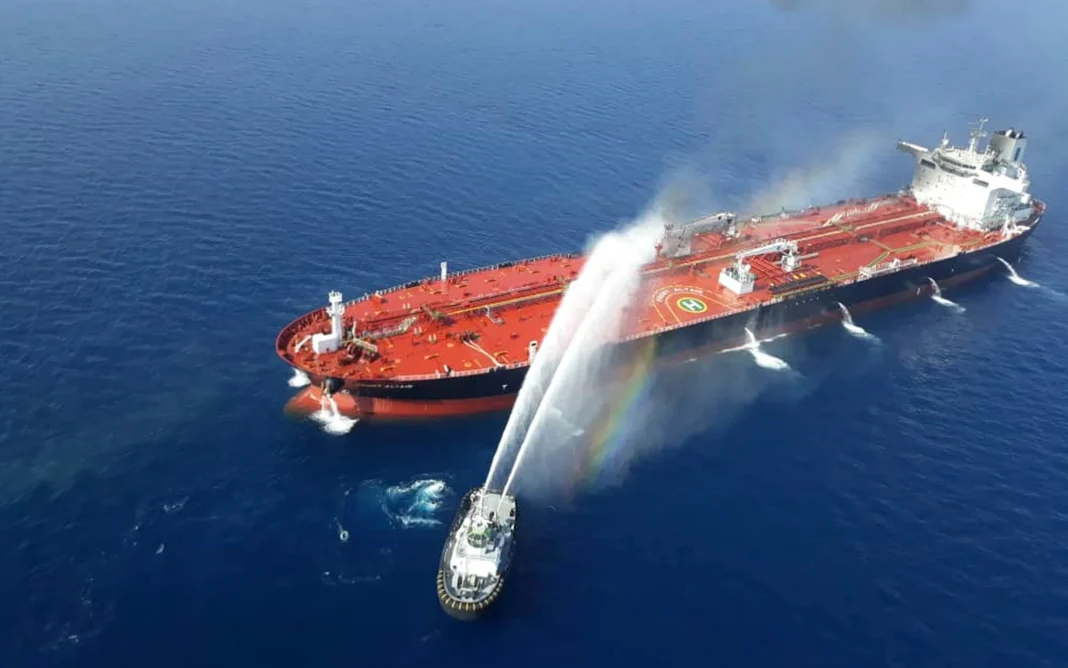
Rising tensions in the Middle East have pushed energy security into the spotlight as an Indian oil tanker sails home under naval protection. The escort highlights growing concerns about oil shipments moving through sensitive waters during the ongoing regional conflict.
An Indian Navy warship is currently escorting an Indian oil tanker through the Gulf of Oman toward India’s western coast. The tanker departed from Fujairah port in the United Arab Emirates while regional security risks remain high.
Officials familiar with the operation confirmed the mission on Monday. They explained that the naval escort aims to ensure the safe passage of vital energy cargo during a volatile period in the region.
The vessel, named Jag Laadki, carries about 80,800 metric tons of crude oil. It represents the third Indian-flagged fuel tanker traveling from the region to India since the conflict began.
Authorities expect the tanker to reach Mundra port on Tuesday. The port, located on India’s western coast, serves as a major gateway for crude imports and energy shipments.
Meanwhile, the Indian Navy continues to maintain a visible presence in the region. Officials confirmed that three Indian warships currently operate in the Gulf of Oman. These ships monitor maritime routes and provide protection to commercial vessels heading toward India.
Energy shipments moving through the Gulf region remain critical for India’s economy. The country imports a large share of its crude oil from the Middle East. As a result, any disruption in maritime routes could affect fuel supply and energy prices.
Importantly, the tanker avoided the Strait of Hormuz during its journey. The strategic waterway has become the center of military tensions during the current regional conflict. Many shipping companies now evaluate alternative routes to reduce risks.
Earlier reports indicated that the Jag Laadki was loading crude oil when a drone strike targeted the Fujairah oil terminal. Fortunately, the vessel remained unharmed during the attack. The tanker later departed the port safely under heightened security measures.
The incident raised fresh concerns about the vulnerability of energy infrastructure in the region. Fujairah serves as one of the key oil storage and export hubs in the Gulf. Any disruption there could affect regional supply chains.
Security analysts say naval escorts help reassure shipping companies and energy traders. When navies protect commercial vessels, they reduce the risk of attacks and maintain stable trade flows.
Moreover, the Indian government closely monitors maritime developments in the Gulf. Officials view the safety of Indian vessels and energy cargo as a national priority.
The Indian oil tanker escort also reflects broader geopolitical tensions across the Middle East. Conflicts and military operations continue to affect shipping routes, ports, and oil infrastructure.
However, India aims to keep energy supply lines stable despite the uncertainty. Naval patrols and coordinated monitoring allow authorities to protect commercial shipping.
Looking ahead, maritime security operations in the Gulf may expand if regional tensions persist. Governments and shipping companies will likely increase coordination to protect vital energy routes.
For now, the safe journey of the Indian oil tanker signals cautious confidence in naval protection efforts. Yet the situation in the region remains unpredictable, and energy markets continue to watch developments closely.