



Iraq’s oil exports produced an estimated $7.1 billion in revenues during August, according to the country’s oil ministry. The announcement highlights the critical role of crude sales in funding the federal budget and covering government obligations.
The ministry reported that Iraq exported over 104.8 million barrels during the month. Exports averaged 3.4 million barrels per day at an average price of $67.7 per barrel. The total included both crude oil and condensates. Officials noted that revenues surpassed $7.16 billion despite global price declines.
Oil remains Iraq’s primary income source. The federal government relies on oil revenues to finance salaries for civil servants and sustain essential services. Therefore, fluctuations in production and prices have direct consequences on fiscal stability and daily life.
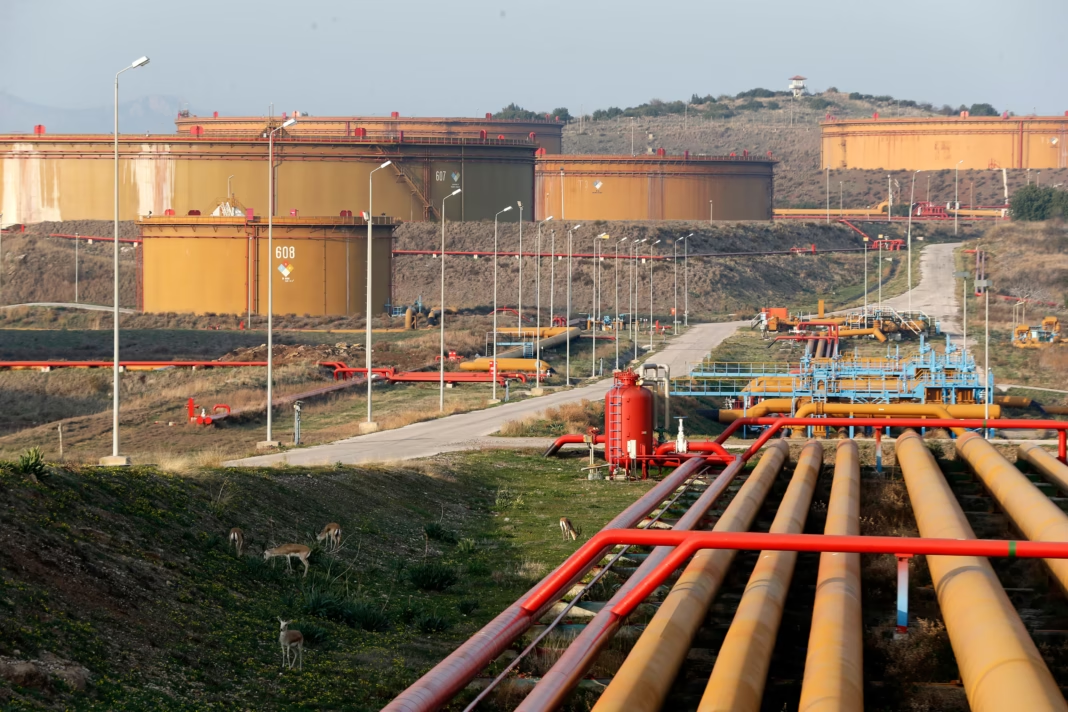
The announcement came shortly after the Kurdistan Region resumed exports through the Iraq-Turkey pipeline. Shipments restarted under an interim agreement reached between Baghdad, Erbil, and international oil companies. This development marked the first resumption of Kurdish exports in more than two years.
Oil exports from the Kurdistan Region had been suspended since March 2023. A Paris arbitration ruling had determined that Ankara violated a 1973 pipeline agreement by enabling independent exports from Erbil since 2014. The suspension disrupted revenue streams for both Baghdad and Erbil.
Iraq’s Oil Minister Hayyan Abdul Ghani confirmed that the Kurdistan Regional Government agreed to contribute 190,000 barrels per day to the State Oil Marketing Organization. In addition, Erbil will retain around 50,000 barrels per day for local use under the Ministry of Natural Resources.
Market analysts noted that oil prices fell on Monday as Kurdish exports returned to global markets. The decline also reflected expectations of additional OPEC+ production increases in November.
Industry experts believe that the renewed cooperation between Baghdad and Erbil could ease political tensions while stabilizing revenue flows. They argue that sustained coordination is vital for attracting investment and supporting broader economic recovery.
Looking forward, Iraq oil exports are expected to remain the backbone of the economy. However, officials continue to stress the importance of diversifying income sources to reduce reliance on oil and mitigate exposure to price volatility.