



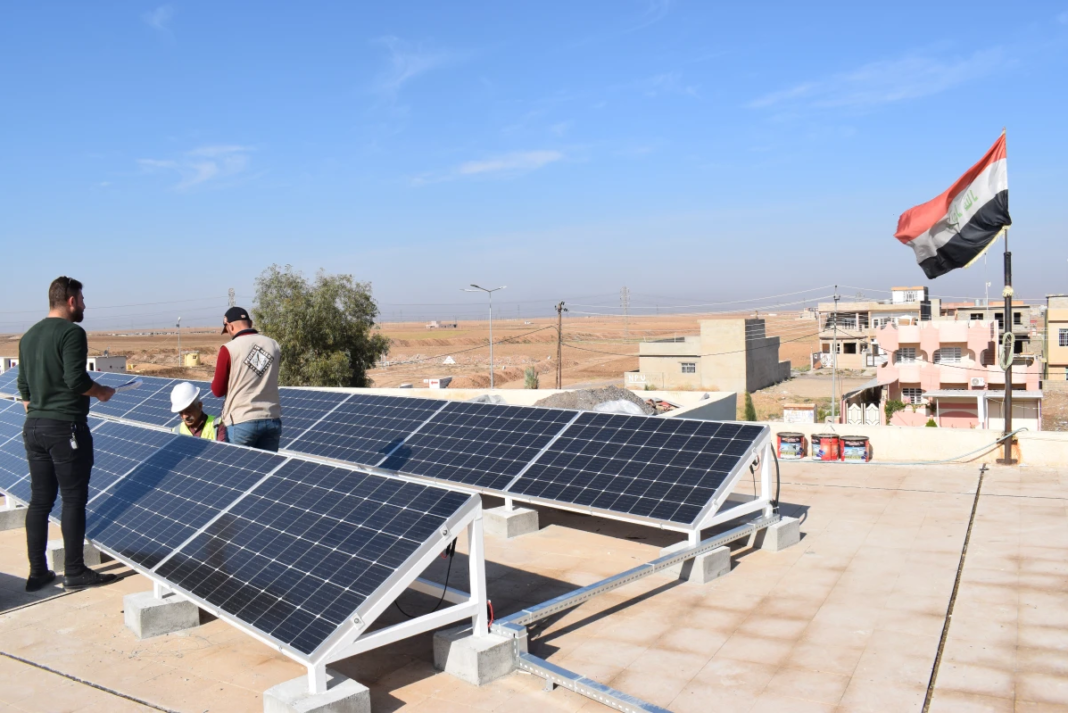
Iraq strengthens its housing and solar initiatives as the Central Bank announces expanded lending programs.
These programs aim to support residential development and promote renewable energy adoption nationwide.
The Central Bank of Iraq outlined key financing mechanisms on Sunday, confirming ongoing loans for housing projects within residential complexes.
Rafal Hussein, Director of Initiatives at the Central Bank, emphasized that these programs remain fully operational.
She noted that all loans follow each bank’s lending policy and comply with official instructions in force.
In addition, the Central Bank provides support to the Real Estate Bank, ensuring liquidity aligns with approved monetary policy.
This step guarantees that housing projects continue without interruptions, fostering long-term residential growth.
Moreover, the bank’s initiatives prioritize both urban planning and sustainable housing solutions.
For projects outside residential complexes, Hussein clarified that financing relies on recovered funds, limiting the total loan amounts.
However, once official allocations are announced, citizens can apply through the government’s “Ur” electronic platform.
This system ensures transparency and easier access for eligible applicants.
The programs also include dedicated loans for purchasing solar panels, integrating renewable energy into residential units.
By supporting solar adoption, the Central Bank encourages environmentally friendly solutions while reducing electricity costs for households.
These efforts complement Iraq’s broader renewable energy and sustainability strategies.
Officials explained that combining housing and solar programs strengthens financial inclusion and promotes smart residential planning.
Citizens benefit from improved access to credit while enhancing energy efficiency in their homes.
The initiatives also help drive private sector investment in construction and renewable energy supply chains.
Looking ahead, the Central Bank intends to expand the scope of lending programs while maintaining controlled, sustainable financing.
The goal is to ensure responsible loan distribution that aligns with national financial policies and economic stability.
Ultimately, Iraq’s housing and solar initiatives demonstrate a commitment to modernizing the residential sector while promoting renewable energy.
They highlight how financial innovation can directly improve citizens’ quality of life and national sustainability objectives.