



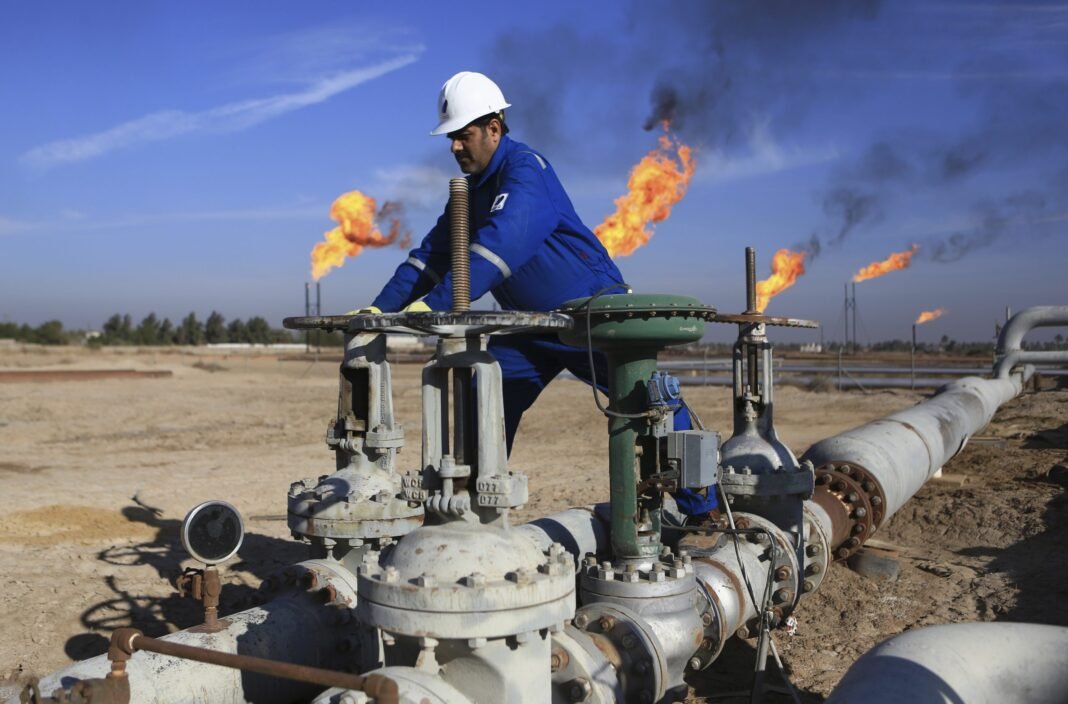
A sudden drop in crude shipments now threatens Iraq’s economic stability. The Iraq oil crisis has raised serious concern among economists and policymakers. Iraq oil crisis also highlights the country’s heavy reliance on oil revenue during regional conflict.
Regional fighting has disrupted key maritime routes that carry Iraqi crude to global markets. As a result, attacks on vessels and growing security fears slowed shipping traffic across the Gulf. Consequently, export activity from southern Iraqi terminals dropped sharply in recent weeks.
Mahmoud Dagher, a former senior official at the Central Bank of Iraq, warned about the scale of the disruption. He explained that Iraq may export only one million barrels of oil each day. In contrast, Iraq normally exports about 3.5 million barrels daily.
This sharp decline therefore threatens the country’s financial stability. Oil revenue provides almost 90 percent of Iraq’s government income. Because of this dependence, lower exports place strong pressure on public finances.
Government spending relies heavily on steady crude shipments. For example, public salaries, infrastructure projects, and social programs depend on oil revenue. If the disruption continues, officials may face difficult fiscal choices.
Security risks also increased after attacks targeted two oil tankers near the southern port of Faw. The strike killed one crew member and left several sailors missing. Soon after the incident, Iraqi authorities launched an investigation.
Officials at the Oil Ministry expressed serious concern about maritime safety. In response, they urged regional actors to protect international energy routes. The State Organization for Marketing of Oil also warned that further attacks could disrupt shipping operations.
The Strait of Hormuz remains central to the situation. In fact, the narrow waterway carries nearly one quarter of global oil shipments. Because of this strategic role, global markets watch every development in the corridor.
Energy traders quickly reacted to the tensions. As a result, oil prices climbed close to 100 dollars per barrel. Higher prices now affect fuel costs across many global economies.
Economic advisers in Baghdad are studying the financial timeline of the crisis. At present, Iraq still holds a short buffer before revenue losses fully appear. This happens because oil cargoes receive pricing only after export completion.
Officials estimate the government has about two months before major fiscal pressure emerges. If the disruption continues beyond that point, authorities may need to borrow funds to support spending. Such borrowing could increase debt risks for the national economy.
Analysts also point to a deeper structural challenge. Iraq’s economy still depends heavily on crude exports. Therefore, limited economic diversification increases vulnerability during geopolitical crises.
Policymakers now face pressure to protect export routes. Diplomatic coordination and stronger maritime security could reduce risks to shipping. Stable energy transport therefore remains vital for Iraq’s economic future.
The Iraq oil crisis now stands as a serious warning for policymakers and markets. If instability continues, Iraq oil crisis may reshape the country’s financial outlook in the coming months.

