



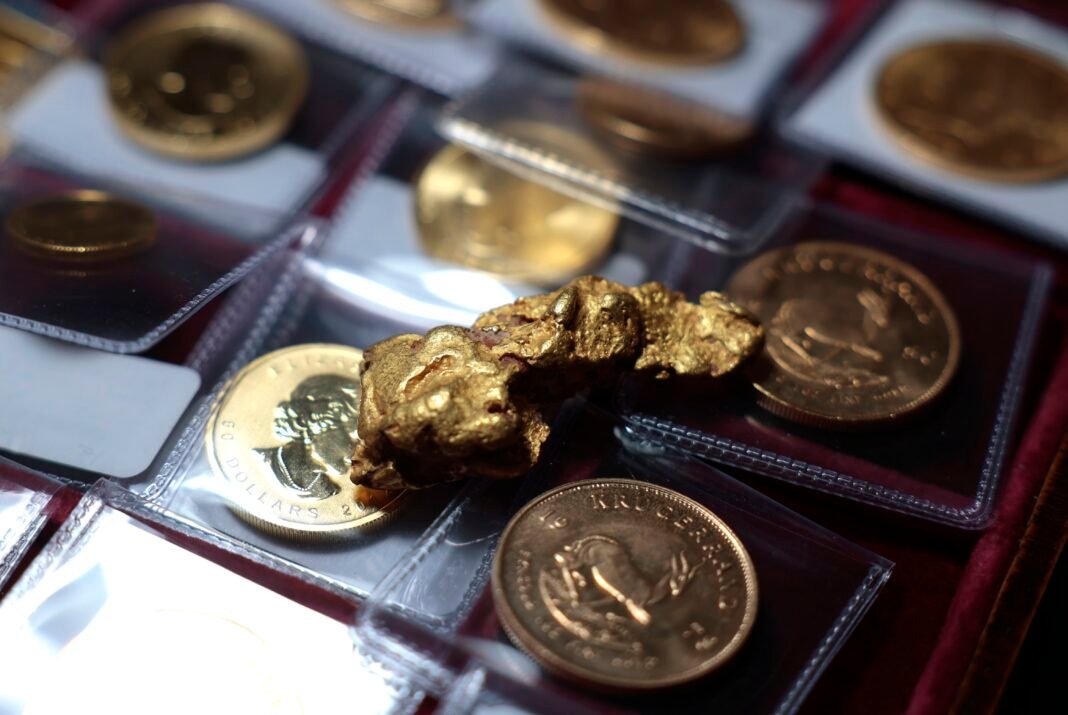
Iraq Gold Prices fell on Sunday, affecting both Baghdad and Erbil markets. This decline reflects shifting demand and market fluctuations. Traders reported a slight drop from Saturday’s rates, signaling a cautious trading environment.
In Baghdad, Al-Nahr Street gold sellers recorded a price of 920,000 IQD per mithqal for 21-carat Gulf, Turkish, and European gold. The buying price was 916,000 IQD. By comparison, the same gold sold for 925,000 IQD on Saturday, showing a minor decrease.
Similarly, 21-carat Iraqi gold sold at 890,000 IQD per mithqal, while buyers offered 886,000 IQD. In jewelry shops, 21-carat Gulf gold ranged between 920,000 and 930,000 IQD, while Iraqi gold sold between 890,000 and 900,000 IQD. These variations reflect ongoing price adjustments in the capital’s gold sector.
Experts also highlighted the impact of seasonal demand on Iraq Gold Prices. Traditionally, gold purchases rise during festivals and weddings, which could stabilize rates in the coming weeks. Therefore, traders are preparing for potential spikes while managing inventory carefully.
Financial advisors encouraged consumers to monitor exchange rates alongside gold prices. Currency fluctuations directly affect the cost of imported gold, especially Gulf and European varieties. Consequently, buyers may find more favorable opportunities if they track both markets closely.
Meanwhile, in Erbil, 22-carat gold reached 970,000 IQD per mithqal. Traders sold 21-carat gold at 927,000 IQD and 18-carat gold at 795,000 IQD. These levels demonstrate a similar downward trend, following Baghdad’s market movements.
Analysts noted that global market trends, local demand, and currency fluctuations influence Iraq Gold Prices. Furthermore, buyers and sellers are adjusting rates cautiously to balance supply and demand. The fluctuation may continue as traders monitor international gold prices.
For investors and jewelers, this price drop offers both opportunities and caution. While lower rates may attract buyers, sellers must carefully time sales to avoid losses. Additionally, fluctuations in Iraqi dinar values and regional market conditions will likely affect gold trading in the coming weeks.
Overall, Iraq Gold Prices continue to respond to both local market forces and global economic signals. Observers recommend close monitoring of daily trading activity, particularly in Baghdad and Erbil, to anticipate further changes.