



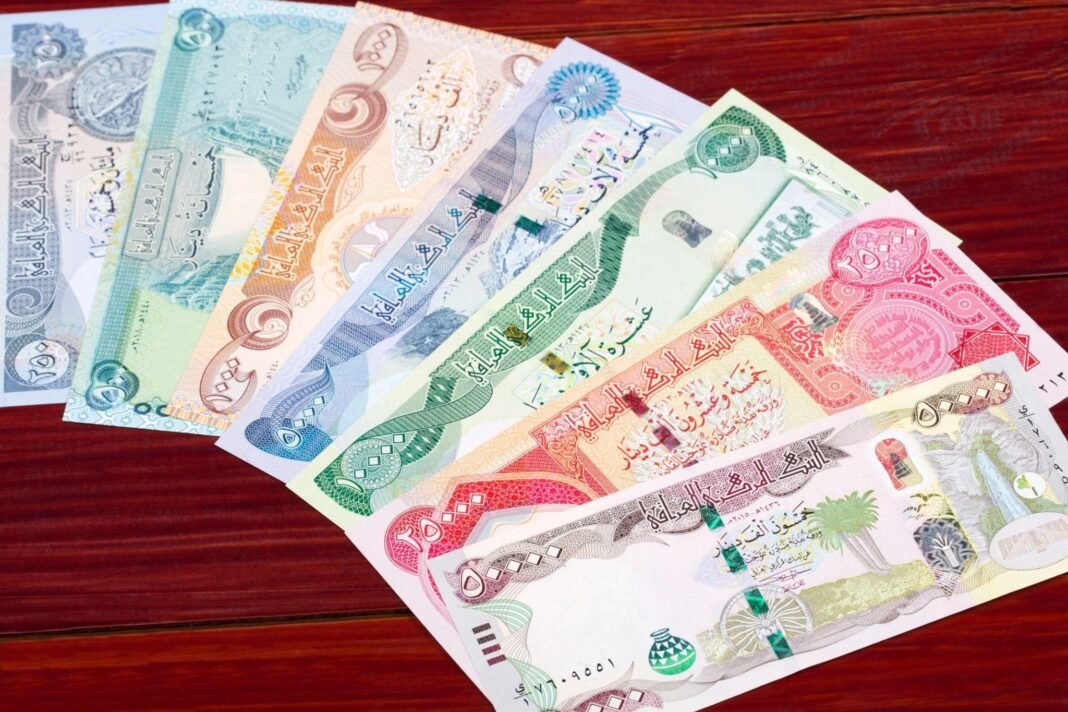
Iraq markets recorded strong gains during April as political developments improved investor confidence. As a result, market activity increased across several sectors despite ongoing regional uncertainty.
The Rabee Securities Iraq Stock Exchange Index advanced by 5 percent during the month. In addition, the index outperformed several regional exchanges as investors returned to fundamentally strong companies.
Banking and telecommunications shares led the market rally throughout April. Gains in Al-Mansour Bank, Asiacell, and National Bank of Iraq supported broader market growth. However, weaker trading in Baghdad Soft Drinks limited further upside.
Political progress also strengthened market sentiment during the month. Iraq’s parliament elected Nizar Mohammed Saeed Amidi as president in April. Shortly afterward, Ali al-Zaidi received the nomination to form the next government.
These developments increased optimism among local investors and market participants. Consequently, analysts noted that reduced uncertainty encouraged stronger trading activity across the exchange.
The RS Iraq Banking Index climbed by 3.7 percent during April. In particular, Al-Mansour Bank and National Bank of Iraq drove most of the increase. Investors continued to favor banking stocks due to stable earnings and strong financial performance.
Meanwhile, the RS Iraq Halal Companies Index jumped by 7.5 percent during the month. Asiacell delivered strong share performance, while Iraqi Islamic Bank also supported the index’s upward movement.
In addition, the RSISX Total Return Index rose by 6.6 percent during April. Dividend distributions further strengthened investor returns across the market.
National Bank of Iraq announced a cash dividend of IQD 0.25 per share. As a result, investors responded positively, as the dividend yield reached nearly 5 percent.
Similarly, Mansour Hotel approved a dividend payment during April. The company announced a cash payout of IQD 0.613 per share.
Trading volumes also increased during the month. Total trading activity rose by 2 percent compared with March, while trading value reached approximately $20.5 million.
The banking sector dominated market activity, accounting for nearly 70 percent of total trades. At the same time, industrial companies contributed 13 percent, while telecommunications represented more than 10 percent.
Services, agriculture, and tourism also supported overall market performance. However, over-the-counter trading activity declined sharply during the same period.
Market breadth remained positive across the exchange. In total, 28 listed companies recorded share price gains during April, while 16 companies rose by more than 5 percent.
Moreover, 10 companies posted gains above 10 percent. Iraqi Middle East Investment Bank delivered the strongest performance, with its share price surging by 66.7 percent.
Al-Wiaam for Financial Investment followed with a 53.3 percent increase. Investors continued to target companies with strong fundamentals and stable growth prospects.
Despite strong market performance, economic risks still influenced sentiment. Moody’s recently revised Iraq’s outlook from stable to negative due to regional tensions and energy security concerns.
At the same time, the International Monetary Fund projected a 6.8 percent contraction this year. The IMF linked this outlook to regional instability and pressure on oil exports.
However, forecasts for 2027 remain positive. The IMF expects the economy to rebound strongly, with growth potentially exceeding 11 percent.
Iraq markets continue to attract investor attention despite geopolitical risks. Looking ahead, analysts expect political stability and domestic demand to support further market activity.

