



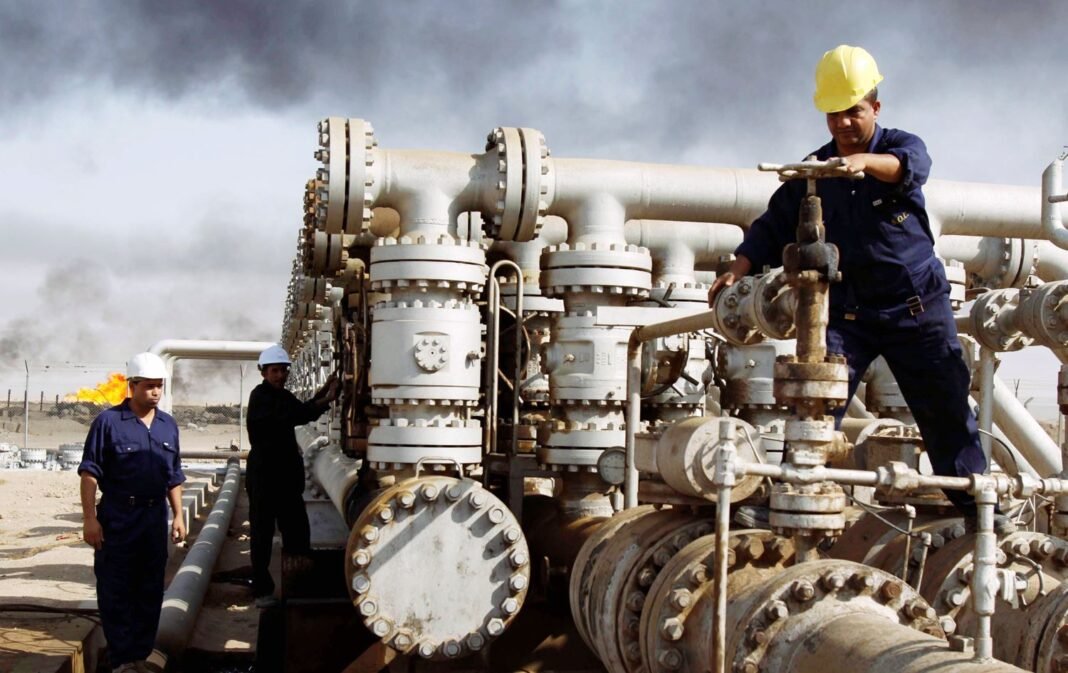
Iraq oil revenues climbed close to $7 billion in February, highlighting the country’s continued reliance on crude exports. The Ministry of Oil released official figures that confirm steady export activity despite market challenges.
According to the State Organization for Marketing of Oil, Iraq exported 99,872,220 barrels during the month. As a result, total earnings reached $6.81 billion. These figures reflect stable demand and consistent production levels.
Most exports came from central and southern oil fields. In fact, these regions contributed over 93 million barrels to total shipments. Therefore, they remained the backbone of Iraq’s oil sector and revenue generation.
Meanwhile, the Kurdistan Region exported 5,551,610 barrels through Turkey’s Ceyhan port. This flow continues to play a key role in maintaining overall export volumes. In addition, it supports coordination between Erbil and Baghdad on energy policy.
The strong Iraq oil revenues underline the importance of crude exports to the national budget. Oil income still accounts for the vast majority of government funding. Consequently, any fluctuation in exports or prices directly affects public spending.
At the same time, Iraq continues efforts to stabilize production and secure long-term revenue streams. Officials aim to maintain export levels while adapting to global market conditions. Moreover, they work within OPEC agreements to balance supply and demand.
Analysts note that global oil prices and geopolitical factors remain critical to Iraq’s outlook. For instance, shifts in demand or supply disruptions could quickly impact revenue performance. Therefore, policymakers continue to monitor international trends closely.
Iraq plans to strengthen its oil infrastructure and improve export efficiency. As a result, the country hopes to sustain Iraq oil revenues and reduce financial risks. These efforts will remain essential as Iraq navigates a changing energy landscape.
In addition, Iraq seeks to attract foreign investment into its energy sector. Officials believe new partnerships could enhance production capacity and modernize facilities. Therefore, the government continues to promote investment-friendly policies.
Furthermore, expanding export routes remains a key priority for policymakers. New pipelines and upgraded terminals could reduce bottlenecks and improve delivery speed. As a result, Iraq aims to secure more stable access to global markets.
At the same time, experts stress the need for economic diversification. Heavy reliance on oil leaves Iraq vulnerable to price volatility. Consequently, authorities have started exploring alternative sectors to support long-term growth.
=February’s performance reflects resilience in Iraq’s oil sector. However, future stability will depend on both market conditions and strategic reforms. Therefore, Iraq must balance short-term gains with long-term economic planning.