



Kuwait’s energy transition policies now shape long-term development and environmental responsibility. The government treats energy reform as a strategic state priority rather than a sectoral adjustment.
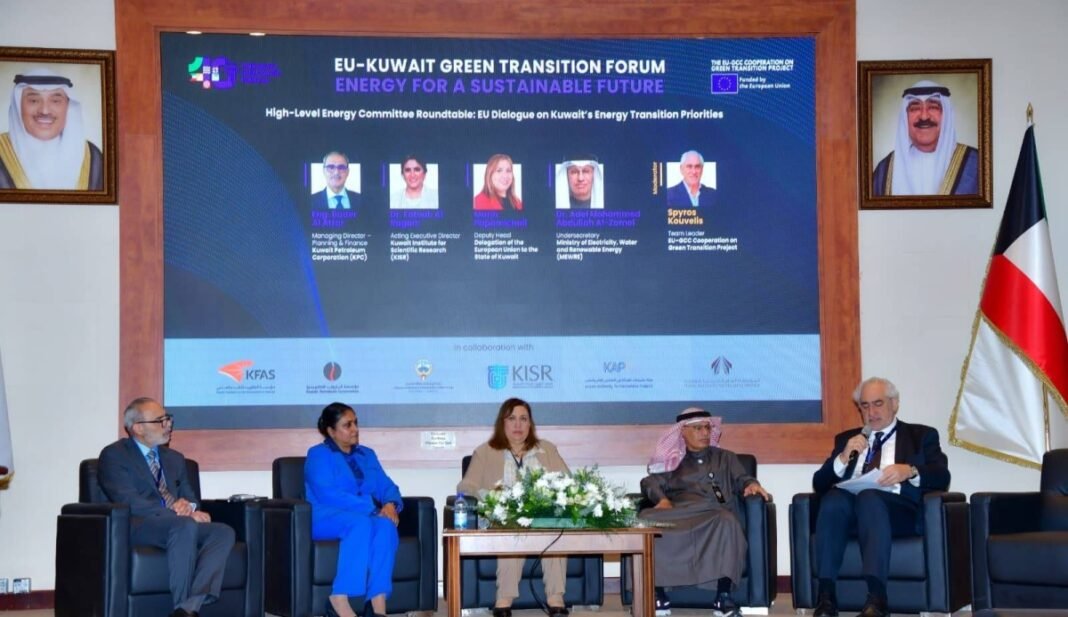
The Minister of Electricity, Water, and Renewable Energy, Dr. Sabeeh Al-Mukhaizeem, reaffirmed this direction during a strategic forum with the European Union. Kuwait hosted the Green Transition Forum in cooperation with the EU-GCC Green Transition Project.
Kuwait stressed that energy policy now supports national security, sustainable growth, and environmental protection together. As a result, the country applies an integrated national framework aligned with long-term planning.
The energy transition remains a core pillar of Kuwait Vision 2035. This vision focuses on sustainability, economic diversification, and future resilience. Therefore, energy reform plays a central role in national development goals.
Kuwait follows a unified national approach under the Supreme Energy Committee. This structure strengthens coordination between the energy, water, and climate sectors. It also improves policy consistency and execution.
Kuwait balances global clean energy trends with its role as a major energy producer. Officials emphasized that the transition must remain realistic and gradual. Policymakers therefore prioritize efficiency, resilience, and long-term economic value.
International cooperation remains essential for managing transition challenges. The forum created opportunities to deepen cooperation with the European Union. Kuwait seeks to benefit from European expertise in regulation, innovation, and planning.
At the same time, Kuwait shares regional experience and strategic perspectives. The European Union highlighted strong relations with Kuwait during the forum. Notably, the event marked forty years of diplomatic ties.
The EU expressed interest in forming a bilateral strategic partnership with Kuwait. This partnership would expand cooperation across energy, sustainability, and technology sectors.
Kuwait’s energy transition plans include ambitious renewable targets. The country aims to achieve carbon neutrality by 2060. It also plans to generate 50 percent of electricity from renewables by 2050. Solar energy plays a central role in this strategy.
Scientific expertise supports the transition. The Kuwait Institute for Scientific Research leads applied research and system planning. It emphasizes data-driven decisions and realistic assessments.
Without these elements, long-term goals risk remaining theoretical. KISR supports efficiency programs, renewable integration, carbon capture, and sustainable buildings. It also works closely with national and international partners.
Overall, Kuwait’s energy transition reflects cooperation between science, policy, and global partners. Ultimately, the country aims to secure a stable, sustainable, and resilient energy future.