



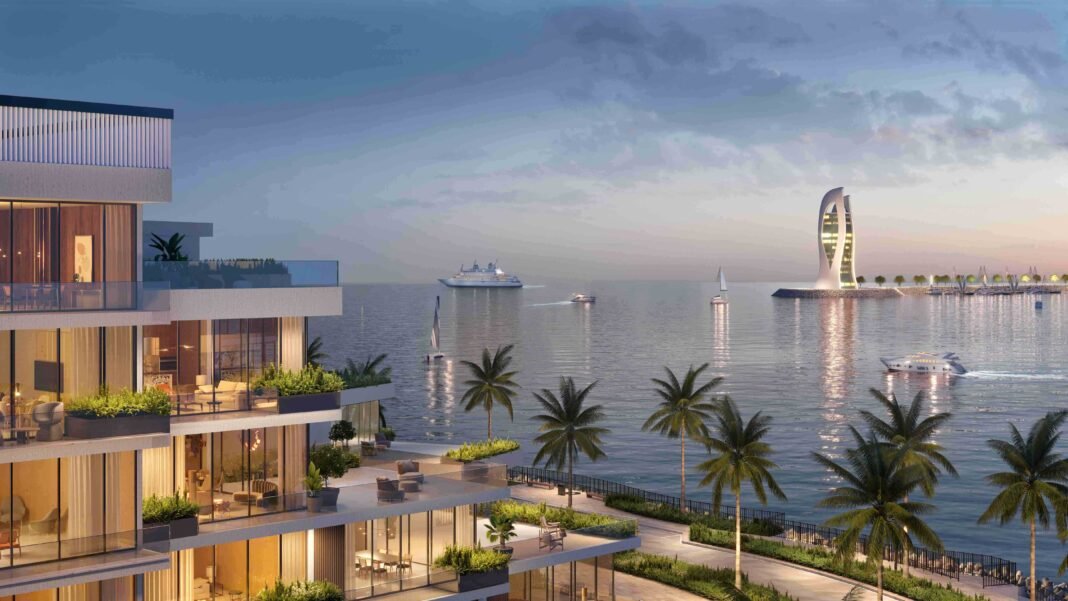
Qatar’s real estate market recorded strong growth in November 2025, with total transaction value reaching QR2.261 billion. This highlights the sector’s growing contribution to the national economy and the success of Qatar’s economic diversification strategy.
According to the Real Estate Registration Department at the Ministry of Justice, 530 real estate deals were completed during November. Compared to October, the number of properties sold fell by 7.73 percent. However, the total transaction value rose by 7.43 percent. Meanwhile, the index of traded areas dropped by 4 percent. These numbers show a market focusing on value over volume.
Al Rayyan Municipality led transactions in terms of financial value, recording QR798 million. Doha followed with QR689 million, and Al Wakrah reached QR342 million. In terms of the number of properties sold, Al Rayyan accounted for 27 percent, Doha 24 percent, and Al Wakrah 1 percent. Similarly, Al Rayyan dominated in deal area with 39 percent, followed by Doha at 19 percent and Al Wakrah at 15 percent.
The ten most valuable properties sold also reflected this distribution. Six were in Al Rayyan, three in Doha, and one in Al Wakrah. This confirms strong investor interest in prime locations and urban hubs.
During the first nine months of 2025, Qatar recorded 3,597 real estate transactions worth QR14.618 billion. This represents a 35 percent rise in transaction volume and a 40 percent increase in value compared to the same period in 2024, when 2,586 deals totaled QR10.819 billion. This trend underscores the sector’s resilience and growing investor confidence.
The Real Estate Regulatory Authority – Aqarat continues to enhance the sector by improving governance, addressing challenges, and protecting stakeholders’ rights. These initiatives align with Qatar’s Third National Development Strategy, which emphasizes economic diversification for sustainable growth.
Experts note that the real estate market’s growth reflects broader urban development trends and rising demand for quality residential and commercial properties. Analysts predict steady growth, supported by ongoing reforms and infrastructure investments.
Looking ahead, Qatar’s real estate market will play a key role in achieving the country’s diversification goals. Investors and developers can expect improved transparency, stronger governance, and a competitive property environment.
Furthermore, the market is likely to attract international investors seeking high-value opportunities. In addition, innovative urban planning and sustainable projects will support long-term growth.

