



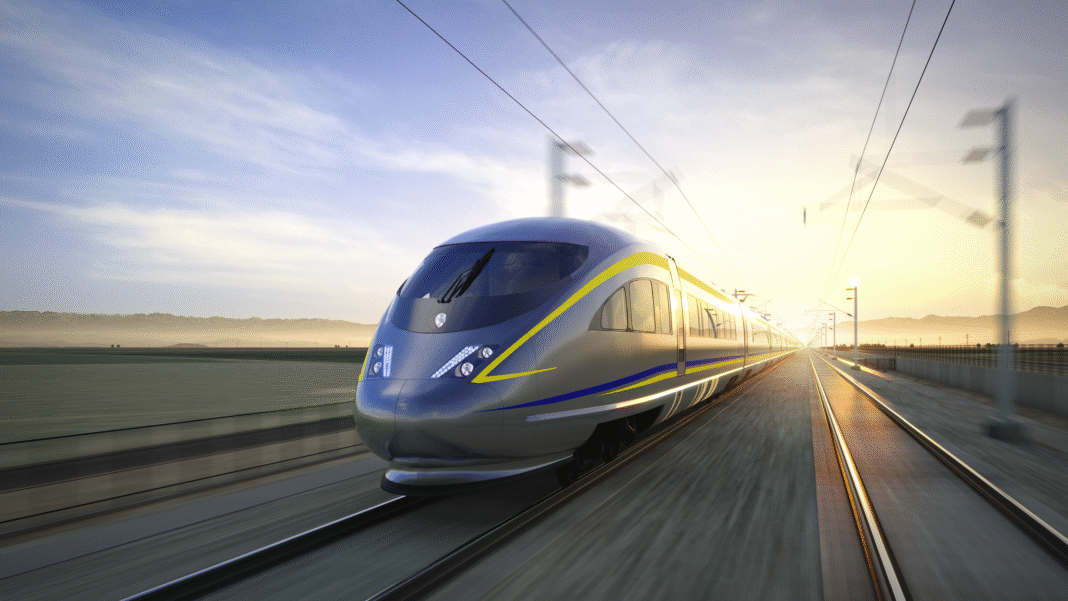
The Qiddiya rail project has entered its registration phase, as authorities invite companies to implement the first phase under a public-private partnership model. Consequently, the initiative aims to strengthen Riyadh’s transport links and enhance urban mobility.
The Royal Commission for Riyadh City (RCRC), in partnership with the National Center for Privatization & PPP and Qiddiya Investment Company, officially announced the Expression of Interest phase for the high-speed rail. This announcement marks a major step in realizing the Kingdom’s broader transport infrastructure ambitions.
The rail project will connect King Salman International Airport, King Abdullah Financial District, and Qiddiya City in less than 30 minutes. Trains will reach speeds of up to 250 kilometers per hour, thus making it a central component of Riyadh’s modern transport network.
Residents have warmly welcomed the news. Thamr Alotaibi, a local resident, said the initiative will usher in a new era of smart mobility. He added that the rail line will provide faster, traffic-free commuting while efficiently connecting major landmarks.
Furthermore, the project complements Riyadh’s recently launched public transport system, thereby creating an integrated urban mobility experience. In addition, it aligns with RCRC’s strategy to collaborate with private-sector partners to expand the city’s transport infrastructure.
Under Vision 2030, Saudi Arabia aims to become a global logistics hub. Therefore, the initiative promotes sustainable urban growth, improves residents’ quality of life, and encourages private investment in advanced transport systems.
The National Transport and Logistics Strategy (NTLS) also guides the rail project. It establishes governance across transport modes, improves connectivity, and ensures efficient engagement among logistics services.The strategy provides a roadmap to enhance operational efficiency across Saudi Arabia’s transport network.
Officials further highlighted that the Qiddiya project will set a benchmark for future infrastructure initiatives. By introducing high-speed connectivity, the Kingdom can reduce congestion, improve commuting times, and enhance Riyadh’s competitiveness as a modern city.
The Expression of Interest phase indicates that the Qiddiya rail project is ready to move from planning to implementation. Subsequent steps include selecting qualified partners, finalizing construction plans, and integrating the rail line into Riyadh’s broader transport framework.
The project exemplifies Saudi Arabia’s commitment to sustainable, high-tech urban infrastructure. By combining strategic investment, private-sector collaboration, and innovative transport solutions, the Kingdom moves closer to achieving its long-term mobility goals.

