



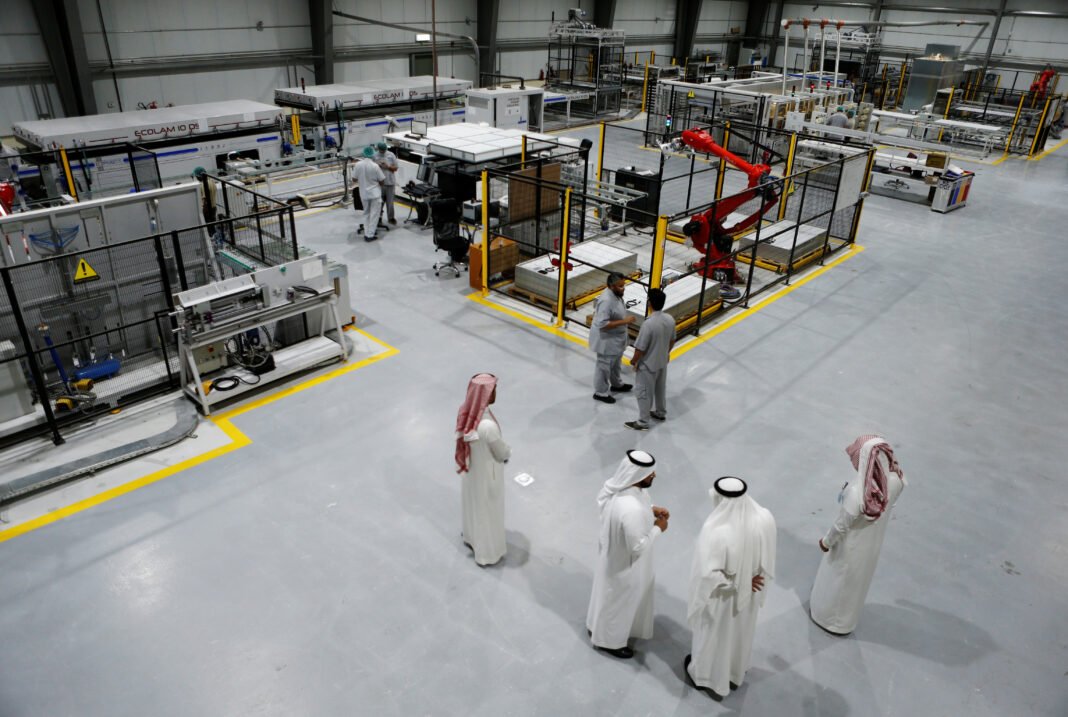
Saudi Arabia approved a new law to boost industrial development across GCC member states. The law exempts industrial projects from customs duties on imports required for production. Furthermore, it harmonizes industrial policies and strengthens economic integration across the Gulf.
The legislation follows unified rules for tax-free industrial inputs agreed upon by GCC countries. In addition, each state authority can offer industrial establishments a range of incentives. These benefits comply with national regulations and respect the World Trade Organization’s commitments.
Officials say the law regulates the industrial sector, encourages investment, and raises manufacturing’s contribution to national income. It also deepens industrial linkages, supports national development programs, and improves competitiveness in the region.
Moreover, the law promotes active cooperation among GCC states in industrial affairs. It encourages innovation, adoption of advanced technologies, and localization of production methods to enhance efficiency. Authorities emphasized that industrial projects will prioritize qualified national workforces in line with national regulations.
The law also drives the digital transformation of industrial facilities and upgrades production technologies. It integrates Fourth Industrial Revolution tools, including environmental and knowledge-based systems, to foster smart manufacturing. Additionally, industrial projects must comply with safety, health, and environmental standards while using energy-efficient machinery.
Authorities can participate in industrial projects or industrial cities through capital contributions or in-kind stakes. This participation must comply with local laws. In Saudi Arabia, the Ministry of Industry and Mineral Resources will oversee implementation and guide all industrial operations.
The Saudi Cabinet will set minimum and maximum administrative fines and penalties based on the ministry’s recommendations. Officials with judicial enforcement powers will monitor compliance, and the Cabinet will issue executive regulations to ensure the law works effectively.
The law builds on GCC initiatives endorsed at the 43rd Supreme Council summit in Riyadh in 2022. Consequently, it strengthens regional cooperation, encourages investment, and drives sustainable Industrial Development across GCC states.
Experts note that the legislation positions Saudi Arabia and its GCC partners as leaders in industrial modernization. They expect the law to accelerate innovation, increase production efficiency, and reinforce economic integration in the Gulf.

