



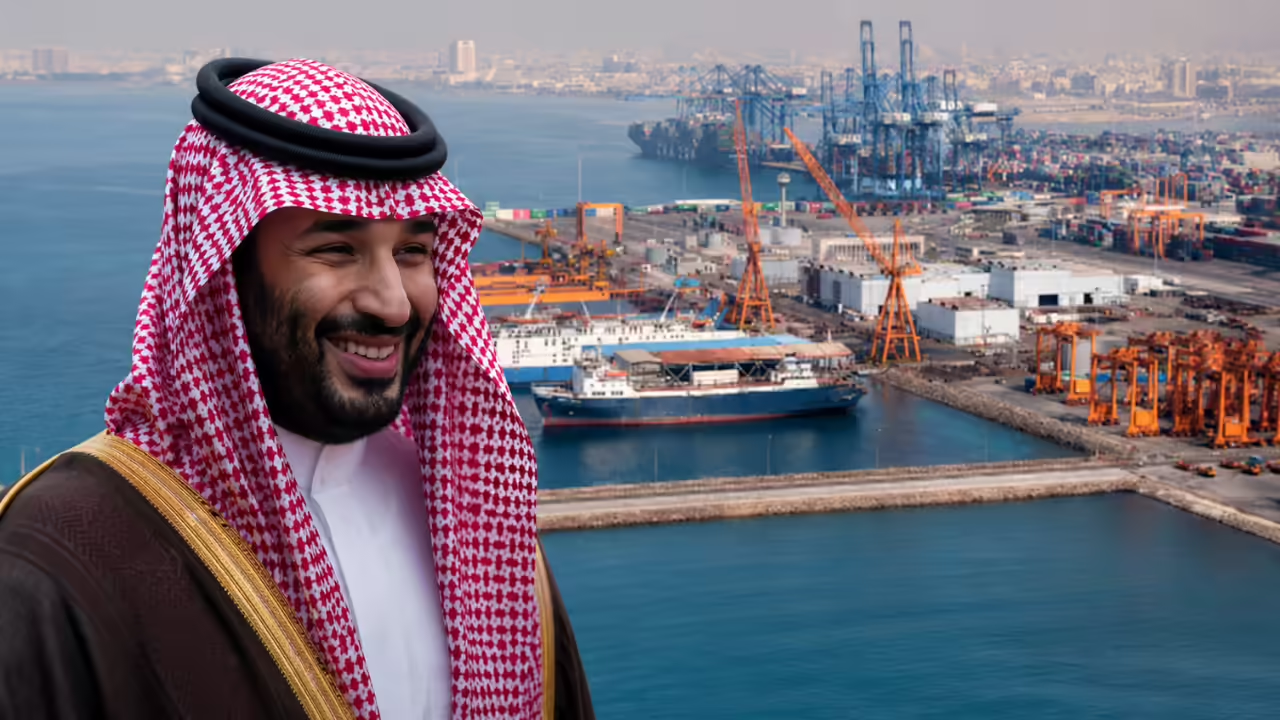
The closure of the Strait of Hormuz continues to create major challenges for regional trade, energy exports, and global supply chains. As Gulf countries seek alternative routes, Saudi Arabia has strengthened its logistics network to maintain the flow of imports and exports across the region.
Saudi Arabia has developed an integrated transport system that connects the eastern and western coasts of the Kingdom. Goods arriving at the eastern port city of Dammam can move quickly by rail to Riyadh. From there, trucking networks transport cargo to Jeddah on the Red Sea coast.
As a result, Saudi authorities have reduced what was once a lengthy logistical process to only three days. In addition, the Kingdom introduced a two-month exemption from storage fees to encourage companies to use the alternative route and reduce transportation costs.
Furthermore, Saudi ports have increased their role as strategic logistics hubs during the ongoing disruption in Gulf shipping. The country’s extensive infrastructure allows cargo to bypass the Strait of Hormuz while maintaining access to international markets through Red Sea ports.
Saudi Arabia’s railway network plays a key role in this strategy. The rail connection between Dammam and Riyadh improves cargo movement, reduces transit times, and supports uninterrupted trade operations. Consequently, businesses can continue importing and exporting goods despite regional shipping challenges.
Moreover, Saudi ports provide additional flexibility for companies facing delays in traditional maritime routes. Logistics operators can redirect cargo through the Kingdom’s transport corridors and avoid bottlenecks caused by the closure of the strategic waterway.
The initiative also supports neighboring Gulf countries that rely on regional trade networks. Therefore, Saudi Arabia has positioned its ports and transport infrastructure as a source of logistical security for the wider region.
Industry experts note that efficient transport corridors have become increasingly important as global markets face uncertainty. Meanwhile, governments and businesses continue searching for reliable alternatives to maintain supply chains and support economic activity.
Saudi Arabia’s investment in railways, ports, and road networks aligns with its broader economic diversification strategy. Additionally, these projects strengthen the Kingdom’s role as a major logistics and trade center linking Asia, Europe, and Africa.
As regional challenges persist, Saudi ports continue facilitating cargo movement and supporting commercial activity. The country’s transport system demonstrates how infrastructure investment can help maintain trade flows during periods of geopolitical uncertainty.