



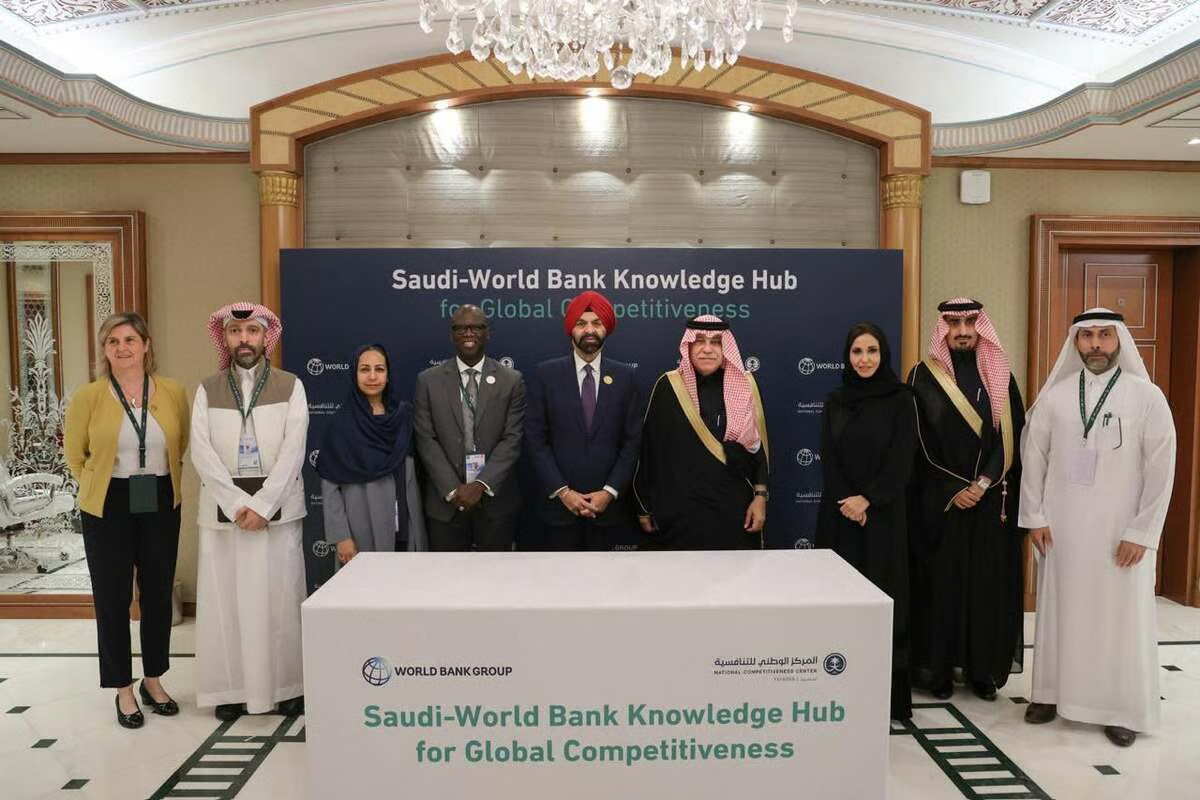
Saudi World Bank partnership is helping turn policies into real economic opportunities. Furthermore, it supports job creation and human capital development across Saudi Arabia.
Dr. Mamta Murthi, World Bank Group Vice President for the People Vice Presidency, spoke at the Global Labor Market Conference in Riyadh. She emphasized the role of data-driven policies.
She noted that workforce systems must adapt to rapid global economic changes. Additionally, the private sector is crucial for inclusive and sustainable job growth.
The partnership highlights several initiatives, including an annual labor-market academy. Moreover, a global advisory committee of experts has been formed to guide workforce strategies.
Practical guides will support short-term interventions targeting workforce challenges. As a result, businesses can better implement reforms and address skills gaps efficiently.
Dr. Murthi also announced that the World Bank will publish a report on Saudi Arabia’s labor market reforms. This report will track progress in skills development and employment policies.
The partnership reflects a broader strategy to combine evidence-based policies with economic action. Consequently, businesses of all sizes can access new growth opportunities in the kingdom.
Officials and experts attending the Riyadh conference discussed workforce transformation and private-sector engagement. Furthermore, they highlighted lessons from global best practices in labor market development.
Saudi Arabia aims to strengthen human capital and expand workforce capacity. In addition, the partnership supports long-term economic competitiveness and sustainable growth in key sectors.
The collaboration also serves as a model for other countries seeking to link policy reform with economic impact. Moreover, it demonstrates the benefits of international partnerships in driving inclusive growth.
Looking ahead, continued monitoring and advisory support will ensure Saudi World Bank initiatives remain responsive. Consequently, the kingdom expects measurable gains in employment and workforce readiness.
Overall, the Saudi World Bank partnership illustrates how targeted interventions and strategic collaboration can turn policies into concrete economic benefits, fostering innovation, growth, and job creation nationwide.