



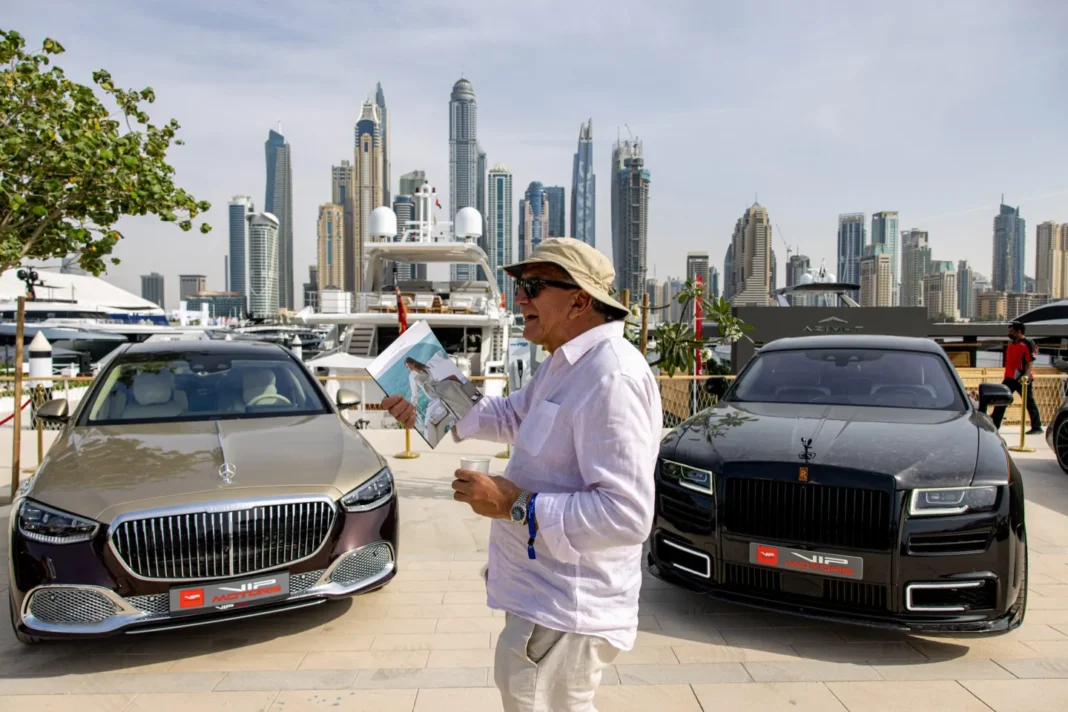
Luxury carmakers are facing a serious setback as the Iran war disrupts one of their most profitable markets. The Gulf has long delivered strong earnings for premium brands. However, showroom closures, weaker demand, and delayed deliveries are now threatening that advantage.
Dubai and the wider Gulf region play a major role in the global luxury auto business. Although the region represents less than 10% of total sales for many brands, it generates exceptionally high margins. Wealthy buyers in the Gulf often order highly customized vehicles, pushing prices far beyond standard showroom models.
That premium business model now faces new pressure. Since the conflict began on February 28, luxury dealerships across the Gulf have reported weaker foot traffic. As a result, automakers are reassessing their regional outlook while monitoring market conditions closely.
The Gulf luxury market has become especially important as other major regions slow down. Demand in China and Europe has weakened sharply in recent months. Meanwhile, tariff uncertainty has also complicated business in the United States, which remains another key market for premium carmakers.
Therefore, the Middle East has become one of the few dependable profit centers for several global brands. That is why the current disruption matters far beyond the region itself. It affects pricing power, delivery schedules, and revenue confidence across the wider luxury auto industry.
Rolls-Royce recently highlighted its deep ties to Gulf buyers by showcasing a bespoke Phantom model for a Dubai customer. The special edition featured Arabian-inspired design elements and high-end interior finishes. Such projects often bring far more profit than standard vehicle sales.
Similarly, brands such as Bentley, Ferrari, Lamborghini, Porsche, Jaguar Land Rover, and Maserati have built strong relationships with Gulf collectors. These buyers often request limited-edition models, rare materials, and unique design details. Consequently, each sale can generate substantial returns for manufacturers and dealers alike.
However, the bespoke business has now slowed sharply. Industry executives say wealthy clients are currently focused on regional uncertainty rather than luxury purchases. This shift has interrupted a high-margin segment that usually performs strongly even when broader markets soften.
In Dubai, luxury dealer activity has already shown visible strain. Some showrooms closed temporarily after the conflict escalated, while several brands paused deliveries. Although many outlets have reopened, the pace of walk-in business remains lower than normal.
One major luxury dealership in Dubai reported that business dropped by around 30% after reopening. Even so, demand for ultra-high-end cars above $1.4 million has shown more stability. In addition, international sales outside the UAE have helped cushion part of the slowdown.
This contrast highlights an important trend. The very top end of the market remains more resilient than entry-level luxury segments. Even during regional instability, ultra-wealthy buyers often continue purchasing, although they may delay decisions or move transactions abroad.
Still, the wider outlook remains fragile. Luxury carmakers are already under pressure from slowing global demand and rising uncertainty in key markets. Therefore, any prolonged weakness in the Gulf could force companies to rethink sales targets and production plans.
Some executives have already acknowledged the risk publicly. Industry leaders have warned that the Middle East will likely feel a clear impact if the war continues. Moreover, if disruptions last several more weeks, manufacturers may need to revisit output levels and delivery schedules.
The broader concern goes beyond simple unit sales. Gulf customers often buy special editions with expensive finishes such as rare wood trims, mother-of-pearl inlays, and gold leaf details. These extras can double or even triple the value of a vehicle, making the region highly profitable.
That is why this market matters so much. A single Gulf sale can deliver profits equal to several standard transactions elsewhere. As a result, even a modest regional slowdown can have an outsized effect on earnings for luxury automakers.
Much will depend on how quickly regional stability returns. If confidence improves, pent-up demand could support a rebound in high-end auto sales. However, if uncertainty persists, luxury brands may face one of their toughest years in a decade.
For now, the Gulf luxury market remains open but under pressure. Carmakers are still selling, yet the pace has clearly slowed. In a year already marked by global weakness, the region’s slowdown has become a serious warning sign for the luxury auto sector.