



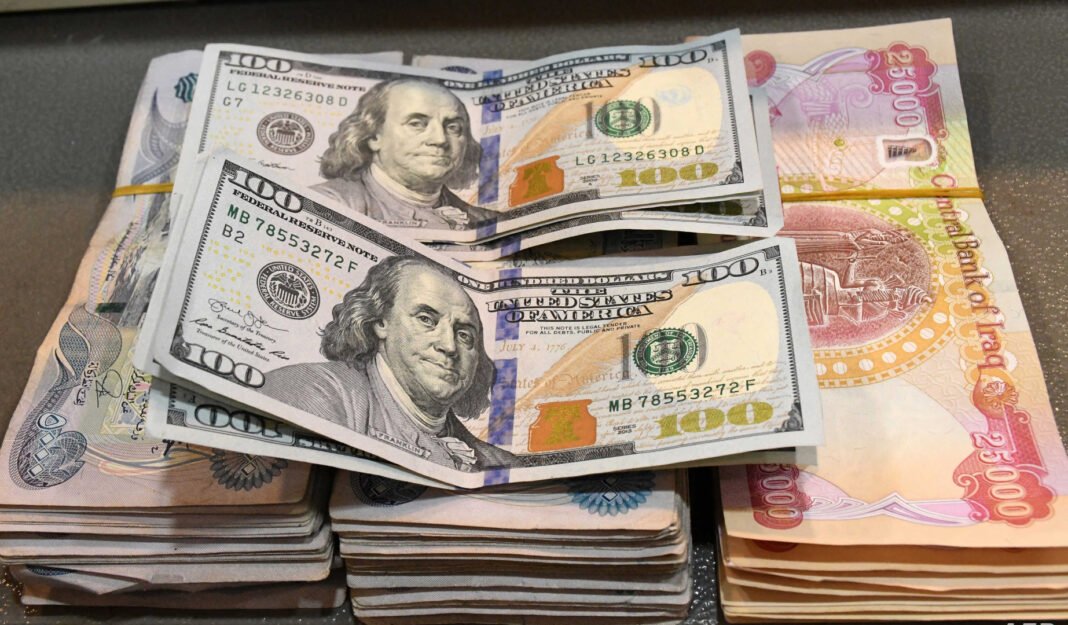
The dollar rate surge continued in Iraq on Wednesday, pushing the currency above 150,000 dinars per 100 dollars. This movement highlights rising demand and volatility in local currency markets.
A Shafaq News survey revealed that the dollar opened trading higher across Baghdad and Erbil. In Baghdad, the US dollar reached 150,100 dinars per 100 dollars in Al-Kifah and Al-Harithiya exchanges. This marked an increase from Tuesday’s close of 149,000 dinars.
Moreover, exchange shops in Baghdad sold the dollar at 150,500 dinars and bought it at 149,500 dinars. Meanwhile, Erbil markets saw selling prices at 150,150 dinars and buying prices at 150,000 dinars. Consequently, investors and residents experienced tighter spreads and higher costs for foreign currency.
Analysts note that the dollar rate surge reflects both domestic demand pressures and broader regional currency fluctuations. Furthermore, geopolitical factors and trade activity continue to influence currency movements in Iraq. Therefore, businesses relying on imports face increased costs, while exporters may benefit from stronger dollar receipts.
Market watchers also highlight the importance of closely monitoring daily rates. In particular, the Baghdad and Erbil markets often set the tone for other cities in Iraq. As a result, traders and financial institutions adjust pricing strategies daily to remain competitive and manage liquidity.
The dollar market surge also affects small businesses and daily consumers. Many shops and service providers have started adjusting prices for imported goods. This trend increases the cost of living and highlights the need for careful budgeting among households.
The rising dollar encourages some investors to seek short-term gains through currency trading. Banks and exchange houses report higher transaction volumes, reflecting heightened market activity. This behavior underscores the interconnectedness of Iraq’s currency markets with regional and global financial trends.
In addition, some experts suggest that government policies and central bank interventions could affect the dollar’s trajectory in the coming weeks. They emphasize that the surge underscores the need for strategic planning for businesses and households holding or exchanging foreign currency.
Looking ahead, the dollar rate surge is likely to remain a key factor shaping Iraq’s financial landscape. Investors, traders, and policymakers will continue to track movements closely to mitigate risks and take advantage of potential opportunities.