



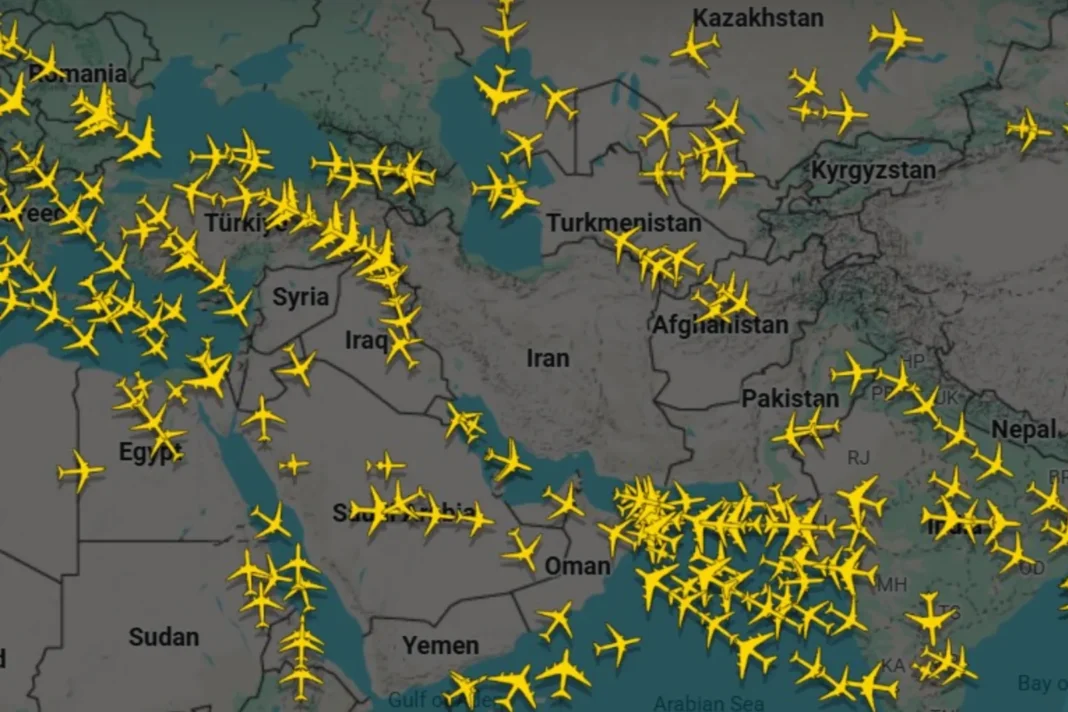
Iran has closed its airspace to flights from Iraq amid rising tensions in the Middle East. Consequently, regional and international aviation faces disruptions.
Officials cited increased security risks and potential military escalation as reasons for restricting flights from Iraq. Therefore, the move aims to safeguard civil aviation.
As a result, airlines using this corridor for transit must adjust routes immediately, which could lead to delays and higher operational costs.
The Iranian airspace closure follows heightened political and military friction in the region. Moreover, analysts warn that this action may complicate commercial air traffic.
Additionally, international airlines were instructed to seek alternative routes to bypass Iranian airspace. This rerouting could increase fuel consumption and flight times.
Meanwhile, the UK announced it would evacuate diplomatic staff from Tehran on Wednesday. Officials stressed safety concerns as the primary reason for this evacuation.
Security experts said the closure underscores regional instability. Furthermore, such measures typically signal governments’ caution during volatile political climates.
The Iranian Ministry of Civil Aviation did not specify how long the closure would last. Meanwhile, airlines continue monitoring the situation and coordinating with authorities for updates.
Regional analysts noted that airspace restrictions could disrupt trade and tourism, while also affecting diplomatic travel and international engagement between Iraq and Iran.
The US, European, and Middle Eastern airlines are reviewing contingency plans. Consequently, they aim to minimize disruption while ensuring passenger safety remains the top priority.
Experts believe the Iranian move reflects growing concern over escalation risks. Therefore, further airspace restrictions could follow if tensions continue to rise.
Global aviation organizations are tracking the closure. In addition, they warn that prolonged restrictions could have broader economic consequences for airlines and the energy sector.
Authorities in Iraq confirmed they are in contact with neighboring states and international aviation bodies. Accordingly, they are exploring measures to maintain safe flight operations.
Moreover, analysts predict the closure may prompt airlines to increase flight insurance and enhance security precautions. The measure may remain until the regional situation stabilizes.
As developments unfold, international travelers and airlines must stay informed. Meanwhile, route changes, travel advisories, and security updates remain crucial for planning.