



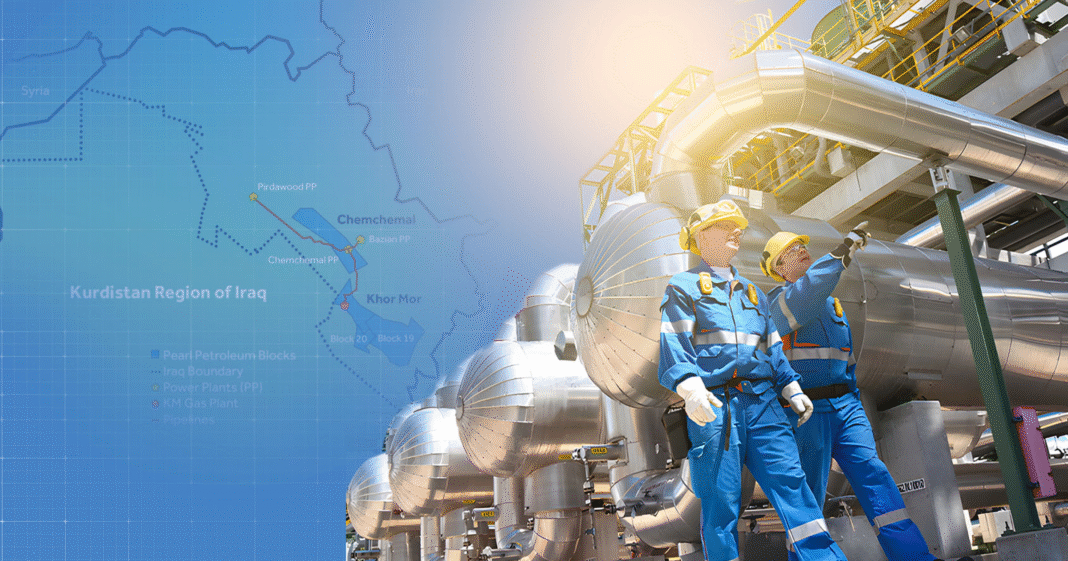
Kurdistan’s gas strategy is transforming Iraq’s energy sector, signaling a shift in regional influence and investment patterns. It also highlights new deals that enhance energy security and reduce reliance on imports
The Kurdistan Region plays an outsized role in the country’s oil and gas landscape. Recently, new long-term gas agreements at the Chemchemal field have attracted global attention. These deals involve Dana Gas, Crescent Petroleum, and international partners including Austria’s OMV, Hungary’s MOL, and Germany’s RWEST.
Under the agreement, the companies will supply up to 142 million standard cubic feet of gas per day to cement and steel producers. The supply will continue for ten years, beginning in the second half of 2027. To support the plan, a dedicated 40-kilometer pipeline will connect Chemchemal directly to the Bazian industrial zone.
The project follows last year’s $160 million investment in drilling, infrastructure, and extended testing facilities. These developments prepare the field for full-scale production while supporting Kurdistan’s broader energy goals.
Nearby, the Khor Mor gas field has also expanded, increasing processing capacity to 750 million cubic feet per day. Currently, Khor Mor generates over 80 percent of the Kurdistan Region’s electricity, underlining its critical role.
Despite progress, security threats persist. Recent rocket and drone attacks have targeted the fields, causing temporary power outages. Officials suggest some attacks aim to pressure Kurdistan and maintain external energy dependence.
The Kurdistan’s gas strategy also attracts Western investment. For example, the United States recently resumed purchasing Kurdish oil, signaling confidence in regional stability. At the same time, Russian companies have reduced stakes in key pipeline assets, shifting influence toward Western-backed firms.
Experts note that the Kurdistan Region holds vast gas reserves. Proven deposits total around 25 trillion cubic feet, with additional potential of up to 198 trillion cubic feet. This wealth positions the region as a strategic hub for Iraq’s energy independence.
Looking ahead, expanding gas production may reduce Iraq’s reliance on imports from neighboring countries. It will also encourage further foreign investment while strengthening national infrastructure.
In conclusion, Kurdistan gas strategy reflects more than energy development. It represents a pivotal step in shaping Iraq’s economic and geopolitical future.