


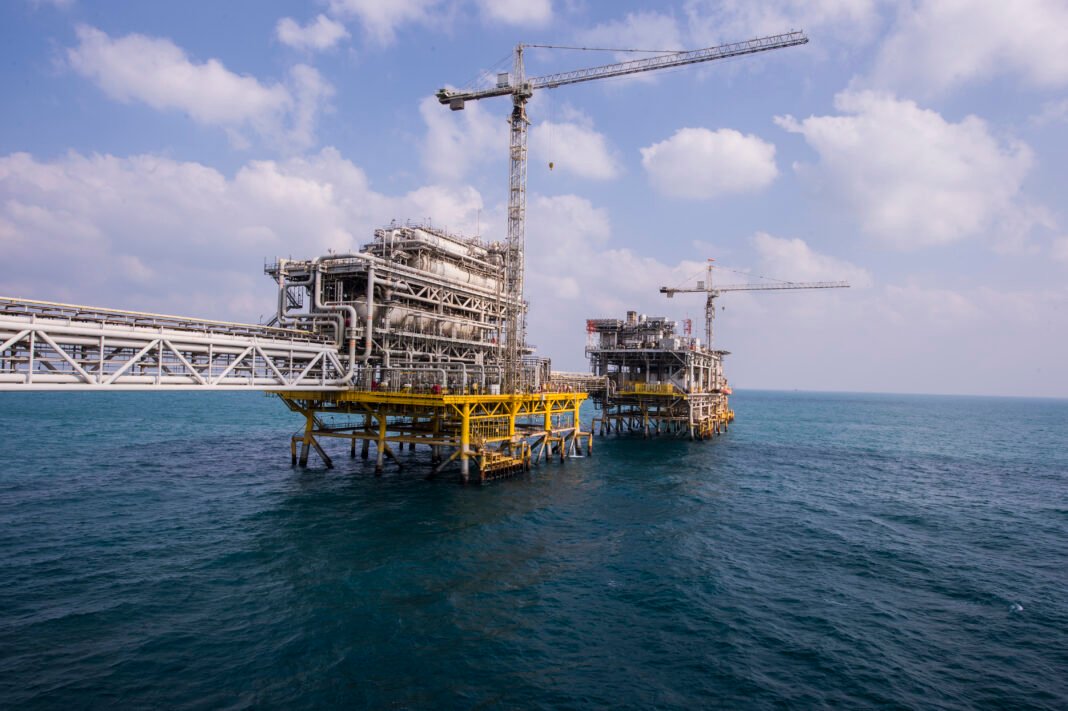
Global supply shock risks surged Tuesday as Saudi Aramco shuttered four of its most productive offshore oilfields. The state-owned giant suspended operations at Safaniya, Marjan, Zuluf, and Abu Safa due to immediate security threats. Safaniya alone holds the title of the world’s largest offshore field, with over 30 billion barrels in proven reserves.
Together, these closures remove an estimated 2 to 2.5 million barrels per day from the international market. This drastic measure follows a series of regional attacks that have made offshore operations increasingly hazardous. Consequently, the global supply shock is reaching unprecedented levels as Saudi Arabia joins its neighbors in curbing output.
The decision comes after several direct strikes on energy infrastructure across the Gulf region this month. Earlier in March, Aramco closed its Ras Tanura refinery after an Iranian drone strike caused a fire at the facility.
Furthermore, an incident on a customer-operated platform on March 7 affected Borr Drilling’s Arabia III rig. While crews safely evacuated the rig, the event highlighted the extreme vulnerability of offshore platforms during active hostilities.
Therefore, Aramco has now reduced staffing levels across its remaining rigs in Saudi, UAE, and Qatari waters. These safety protocols aim to protect personnel while the company monitors the rapidly evolving security environment.
Market analysts warn that these shutdowns will trigger a severe global supply shock for the foreseeable future. International oil prices reacted with extreme volatility, with Brent crude futures surging toward $120 per barrel earlier this week. Although some reports suggest prices dipped slightly Tuesday on news of potential U.S. intervention, the underlying supply gap remains.
Saudi Arabia traditionally acts as the world’s “swing producer,” using its spare capacity to stabilize global markets. However, the current blockade of the Strait of Hormuz prevents the Kingdom from moving this crude to its usual customers. As a result, the global supply shock is now a physical reality rather than just a market fear.
In response to the crisis, Saudi Arabia has diverted significant volumes through its East-West pipeline to the Red Sea. Exports from the western port of Yanbu reached record highs of 2.3 million barrels daily this month. Despite these efforts, the pipeline cannot replace the massive volumes typically handled by the eastern offshore fields.
Industry experts note that the G7 and the International Energy Agency (IEA) are now preparing a massive release of strategic stocks. This coordinated global effort intends to fill the void left by the missing Saudi, Kuwaiti, and Iraqi barrels. Without a swift reopening of the Gulf shipping lanes, the global supply shock could lead to long-term energy rationing in many developed economies.
Looking ahead, the technical challenges of restarting these mega-fields could delay a full recovery for months. Offshore facilities require constant maintenance to manage pressure and prevent corrosion in the harsh marine environment. While the rigs remain under contract and insured, prolonged inactivity poses a significant risk to the integrity of the subsea infrastructure.
Aramco continues to coordinate with regional partners and international security forces to establish a safe “blue corridor” for tankers. Until such a corridor exists, the world must brace for a period of sustained high prices and energy uncertainty. Ultimately, the resolution of this global supply shock depends on the successful de-escalation of the regional military conflict