



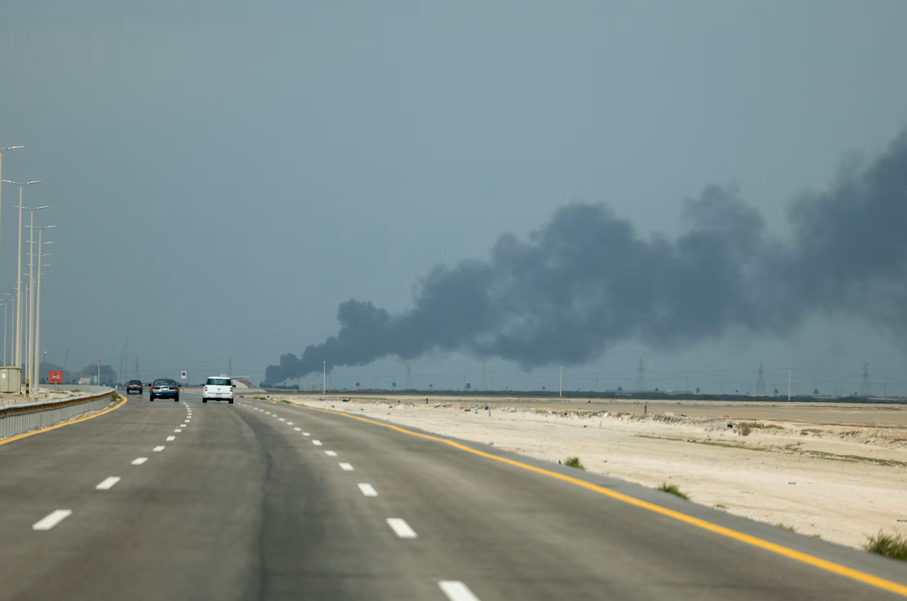
Iran hits Qatar refinery in a major escalation of the regional conflict, raising immediate concerns over energy security and regional stability. The attack has already caused damage to critical infrastructure and triggered strong reactions from global markets.
Analysts warn that if Iran hits Qatar refinery again, the consequences could be far more severe. Such a move could disrupt global energy supplies, push oil prices higher, and deepen uncertainty across international markets.
QatarEnergy reported extensive damage at Ras Laffan Industrial City. The facility is one of the most important energy hubs in the region. Meanwhile, Saudi Arabia said it intercepted four ballistic missiles targeting Riyadh. It also stopped a drone attack aimed at a gas facility in the east.
As tensions rise, global energy markets have reacted quickly. Oil prices jumped nearly 5 percent, reaching close to $110 per barrel.
At the same time, stock markets declined due to growing uncertainty. Investors now fear prolonged disruption to global energy supplies. The conflict has already halted key shipping routes in the region. Therefore, concerns about long-term supply shortages continue to grow.
In Washington, U.S. officials warned that Iran still has the capacity to strike regional and international targets. This assessment comes despite reports of internal damage within Iran.
Furthermore, rising oil prices have started to impact consumers. In the United States, diesel prices have climbed above $5 per gallon.
U.S. leaders are now preparing new measures to control fuel costs. Officials said they will announce actions within the next two days.
Iran has also issued direct threats against major Gulf energy facilities. These include sites in Saudi Arabia, the UAE, and Qatar. In addition, Tehran warned that these locations could face immediate strikes. It urged evacuations to avoid further damage.
The Strait of Hormuz remains a major concern for global markets. Iran has already closed the route, which carries about 20 percent of global oil and gas supplies.
As a result, energy security has become a top priority for global powers. European officials have called for safe navigation and diplomatic solutions. Israel has intensified its military operations. Airstrikes in Beirut caused major destruction in central areas of the city.
At the same time, Israeli forces targeted senior Iranian officials. These actions have further increased tensions between both sides.
Iran has responded with missile attacks on Israeli cities. It also targeted U.S. military bases across the region. Civilian casualties continue to rise across multiple countries. Thousands have reportedly died since the conflict began in late February.
The situation remains highly unstable. Therefore, analysts warn that further escalation could severely impact global energy markets.
Looking ahead, governments are closely monitoring developments. Any additional strikes on energy infrastructure could push oil prices even higher.

