



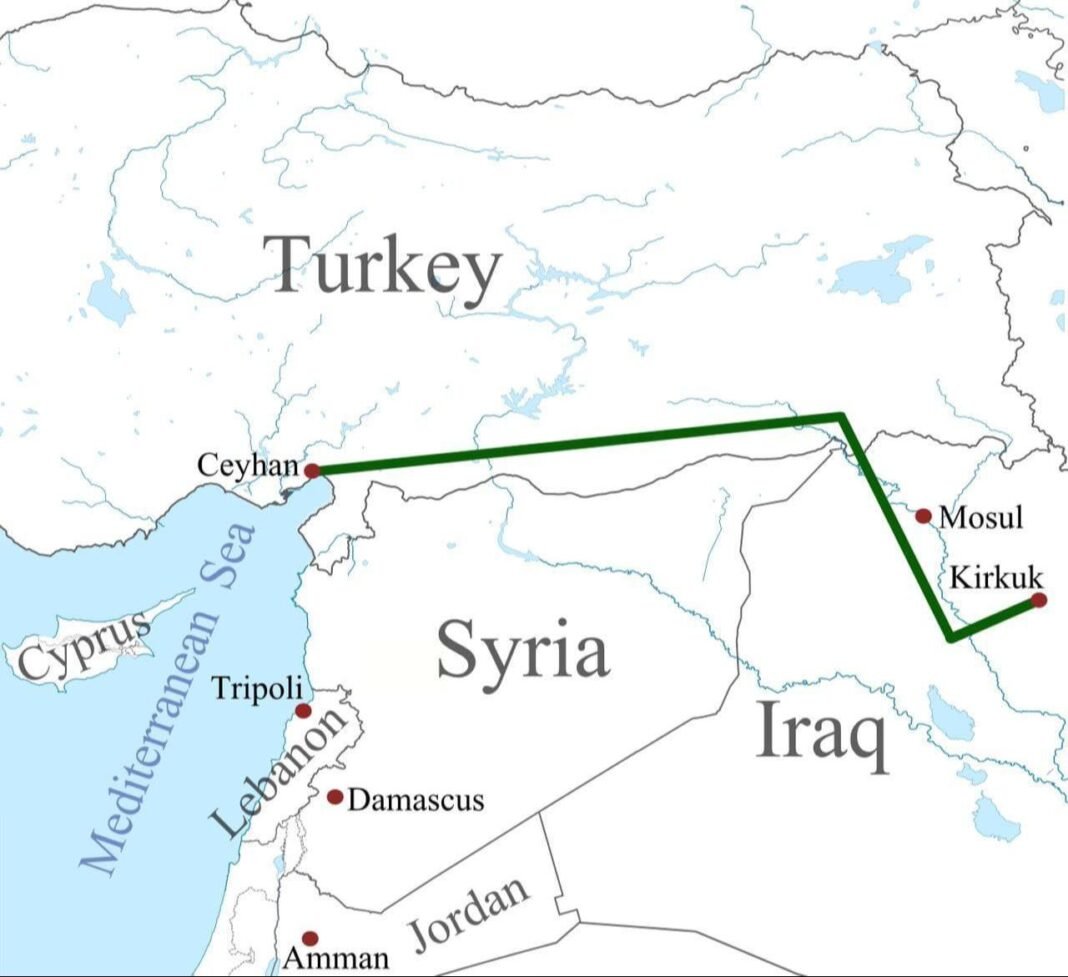
Turkey has proposed a new plan to extend the Kirkuk pipeline to Basra. The move aims to strengthen Iraq’s oil export capacity.
The proposal comes as Iraq faces major disruptions in Gulf shipping routes. As a result, the country is seeking alternative export solutions. Turkey’s Energy Minister, Alparslan Bayraktar, said the project would reduce reliance on the Strait of Hormuz. The route has faced severe disruptions since the conflict began on February 28.
Meanwhile, Iraq’s oil exports have dropped sharply. Exports have fallen by nearly one-third from earlier levels of around 1.4 million barrels per day. To address this, Baghdad has resumed northern exports. The government reached an agreement with the Kurdistan Regional Government to restart flows from Kirkuk to Ceyhan.
However, the pipeline currently operates below capacity. It carries about 250,000 barrels per day, despite a maximum capacity of 1.5 million barrels. Therefore, Turkey believes the Kirkuk pipeline to Basra extension could transform Iraq’s export system. It would allow southern oil from Basra to reach Mediterranean markets.
In addition, Iraq produces around 3 million barrels of oil daily. Experts estimate that up to half could move through the expanded network. As a result, Iraq could reduce its dependence on Gulf routes. This shift would improve export stability during regional tensions.
Moreover, the plan reflects broader geopolitical changes. Countries are adapting energy strategies to manage rising risks. Analysts say the project could boost Iraq’s long-term energy security. It would also help protect national revenues from supply disruptions.
At the same time, regional cooperation remains critical. Iraq and Turkey must coordinate closely to implement the project. In addition, the extension could attract foreign investment into Iraq’s energy sector. Investors often favor projects that improve export reliability and reduce geopolitical risk.
Furthermore, the project may create new economic opportunities along the pipeline route. Local communities could benefit from construction, maintenance, and related services. The Kirkuk pipeline to Basra proposal may become a key infrastructure project. If completed, it could reshape regional energy flows and strengthen Iraq’s position in global markets.