



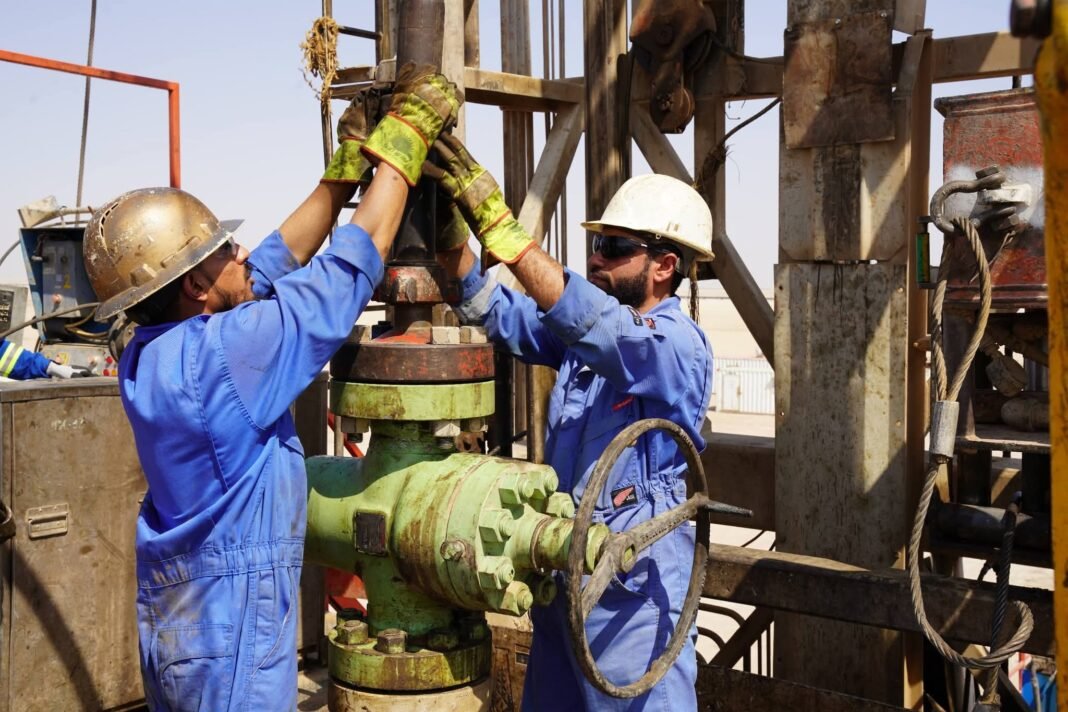
Iraq has reduced crude production by 3.6 million barrels per day due to the ongoing Iran war. This cut leaves the country struggling to supply domestic refineries and maintain exports. The reductions highlight the vulnerability of Iraq’s oil infrastructure amid regional conflict.
Currently, about 1 million bpd flows to domestic refineries. Another 250,000 bpd moves through the northern pipeline system to Turkey. Officials emphasize these cuts respond directly to the Strait of Hormuz closure.
Several Iraqi oil authorities say the reductions can be quickly reversed. They also warn that logistical challenges complicate maintaining current production and exports. Infrastructure limitations may affect long-term reservoir health.
Analysts note the cuts have global market implications. Iraq is a major oil supplier, and any production changes influence prices. Traders are watching refinery utilization and pipeline throughput closely.
The government continues monitoring field operations to optimize output. Emergency measures aim to safeguard both domestic supply and limited exports. Authorities are coordinating with international partners to manage risks.
Production declines are also causing revenue pressure for Iraq’s national budget. Oil accounts for most government income, so lower exports affect fiscal planning. Officials are revising forecasts to reflect the current crisis.
Logistical bottlenecks in southern Basra fields hinder maintenance and drilling schedules. Workers face limited access due to safety and security concerns. Repairs are slower, increasing operational risks at major oil installations.
Iraqi refineries are operating near maximum capacity despite limited crude supply. Authorities are prioritizing essential domestic fuel consumption. Power generation and local transportation remain heavily reliant on these outputs.
Export limitations add pressure on the northern pipeline infrastructure. Continuous monitoring ensures safe operation despite lower throughput. Authorities plan maintenance to prevent unexpected disruptions during this wartime period.
International energy experts warn that Iraq’s production cuts could amplify regional instability. Prolonged reductions may influence OPEC policies and global oil pricing. Coordination with neighboring producers is crucial for stability.
Looking ahead, Iraq hopes the Strait of Hormuz reopens soon. Restoring full exports would relieve production pressures and stabilize regional oil flows. Investors remain cautious as geopolitical tensions persist.
Iraq has reduced crude production by 3.6 million barrels per day due to the ongoing Iran war. This cut leaves the country struggling to supply domestic refineries and maintain exports. The reductions highlight the vulnerability of Iraq’s oil infrastructure amid regional conflict.
Currently, about 1 million bpd flows to domestic refineries. Another 250,000 bpd moves through the northern pipeline system to Turkey. Officials emphasize these cuts respond directly to the Strait of Hormuz closure.
Several Iraqi oil authorities say the reductions can be quickly reversed. They also warn that logistical challenges complicate maintaining current crude production and exports. Infrastructure limitations may affect long-term reservoir health.
Analysts note the cuts have global market implications. Iraq is a major oil supplier, and any production changes influence prices. Traders are watching refinery utilization and pipeline throughput closely.
The government continues monitoring field operations to optimize output. Emergency measures aim to safeguard both domestic supply and limited exports. Authorities are coordinating with international partners to manage risks.
Production declines are also causing revenue pressure for Iraq’s national budget. Oil accounts for most government income, so lower exports affect fiscal planning. Officials are revising forecasts to reflect the current crisis.
Logistical bottlenecks in southern Basra fields hinder maintenance and drilling schedules. Workers face limited access due to safety and security concerns. Repairs are slower, increasing operational risks at major oil installations.
Iraqi refineries are operating near maximum capacity despite limited crude supply. Authorities are prioritizing essential domestic fuel consumption. Power generation and local transportation remain heavily reliant on these outputs.
Export limitations add pressure on the northern pipeline infrastructure. Continuous monitoring ensures safe operation despite lower throughput. Authorities plan maintenance to prevent unexpected disruptions during this wartime period.
International energy experts warn that Iraq’s production cuts could amplify regional instability. Prolonged reductions may influence OPEC policies and global oil pricing. Coordination with neighboring producers is crucial for stability.
Iraq hopes the Strait of Hormuz reopens soon. Restoring full exports would relieve production pressures and stabilize regional oil flows. Investors remain cautious as geopolitical tensions persist.