


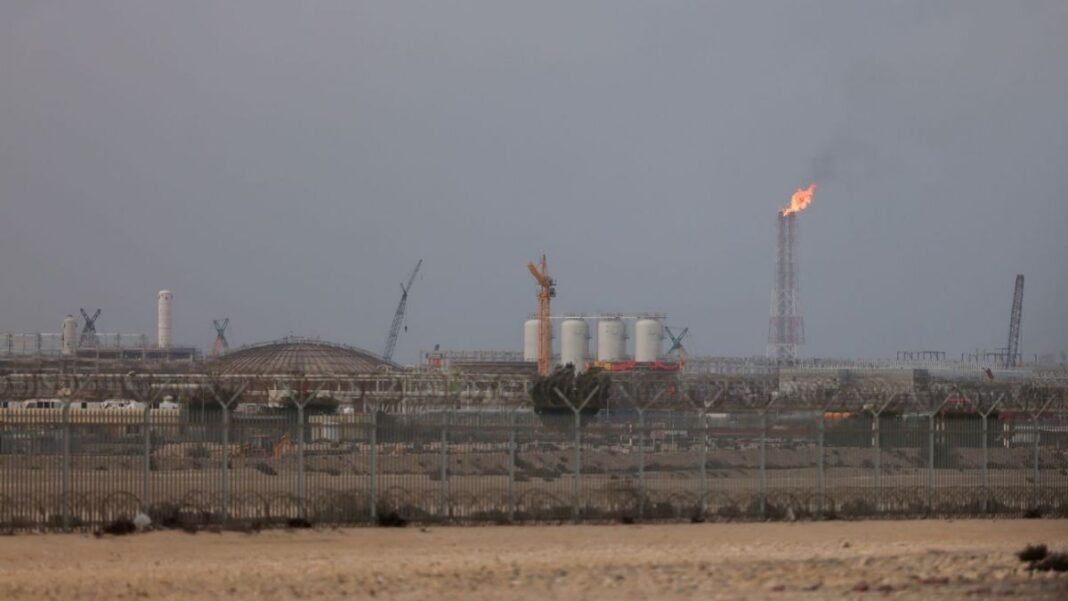
QatarEnergy declared force majeure after an LNG supply disruption caused by Iranian missile strikes on its Ras Laffan Industrial City facilities. This LNG supply disruption immediately affects global energy markets and delays millions of tons of LNG exports to Asia and Europe. The attack highlights the vulnerability of energy infrastructure in the Middle East during ongoing regional tensions.
The company suspended long-term LNG contracts with South Korea, Italy, Belgium, and China, forcing buyers to face sudden shortages. QatarEnergy stated that it will resume shipments only after the damaged facilities are fully repaired and safety is ensured. Consequently, governments and energy firms must adjust supply plans to mitigate impacts on power generation and industrial use.
Iran launched missile strikes on March 18 and 19 targeting LNG production lines and gas-to-liquids (GTL) facilities at Ras Laffan. The assault caused a loss of about 12.8 million tons annually, roughly 17 percent of Qatar’s total export capacity. CEO Saad al-Kaabi said full restoration could take three to five years, warning that the country could face substantial revenue losses, estimated at $20 billion.
Two of Qatar’s 14 LNG production lines and one gas liquefaction facility suffered severe damage. Repair crews are working under tight security, coordinating closely with government authorities. Meanwhile, QatarEnergy is rerouting some shipments from operational lines to partially offset supply shortages, yet overall exports remain below normal levels.
Analysts warn that the LNG supply disruption could ripple through global markets, pushing LNG prices higher and increasing volatility. Countries heavily reliant on imports, such as South Korea and European nations, face immediate energy supply challenges. Energy strategists emphasize the urgent need for alternative sourcing and strategic reserves to maintain stability.
The incident underlines the fragility of global energy security in conflict zones. Investors are closely monitoring geopolitical developments while energy companies assess risk and adjust contracts. QatarEnergy also plans to enhance infrastructure resilience, including contingency strategies and faster repair protocols, to reduce future vulnerabilities.
Ras Laffan remains central to global LNG trade. The ongoing LNG supply disruption may continue to affect both short-term contracts and long-term energy planning. Meanwhile, countries and businesses dependent on Qatar’s LNG will need flexible strategies to manage supply uncertainty.