



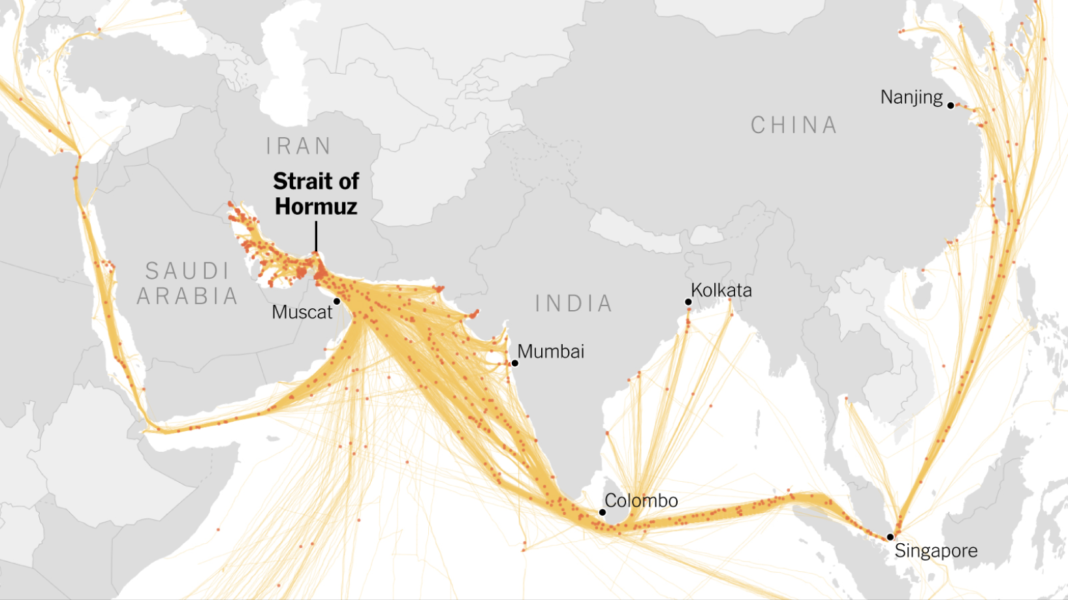
Global Trade Chokepoints remain central to current geopolitical and economic discussions. The Strait of Hormuz has drawn increased attention in recent months. Developments involving United States, Israel, and Iran have highlighted its importance. Governments and industries continue to monitor the situation closely.
The Strait of Hormuz connects the Arabian Gulf to the Gulf of Oman. It is relatively narrow, yet it carries a large share of global shipments. About 20 percent of the world’s oil moves through this route annually. In addition, vessels transport fertiliser and helium through the same passage. These goods support several essential sectors worldwide.
At the same time, global supply chains rely on efficiency and speed. This structure leaves limited flexibility during disruptions. When a key chokepoint faces instability, trade flows may slow or shift. Previous events, including the COVID-19 pandemic and the Suez Canal blockage 2021, demonstrated these vulnerabilities.
Control of strategic waterways also carries political significance. Iran considers the Strait of Hormuz an important geographic advantage. This position allows influence over regional shipping conditions during periods of tension. As a result, major powers often approach the area with caution.
Historical incidents reflect these risks. During the Iran-Iraq War, attacks affected oil shipments and commercial vessels. Both the United States and the Soviet Union became involved in protecting maritime routes. These events underscored the strategic value of such waterways.
Other regions present similar concerns. The Strait of Malacca serves as a major route for global trade. It is particularly important for China, which depends on it for energy imports and exports. Any disruption there could affect multiple industries.
The Taiwan Strait remains a sensitive transit route. It carries a significant portion of global shipping between East Asian markets. Ongoing tensions between China and Taiwan add to uncertainty. Changes in this area could influence global trade patterns.
Global Trade Chokepoints also shape national economic strategies. Countries have explored ways to reduce reliance on limited routes. The United States has increased domestic energy production over time. However, global market shifts still affect pricing and supply.
In Europe, policymakers continue to evaluate risk exposure. Some governments support stronger international coordination to address these challenges. This approach aims to maintain stability in trade and energy markets.
Global Trade Chokepoints continue to influence international systems. These routes remain essential for the movement of goods and resources. Their stability plays a key role in supporting global economic activity.

