



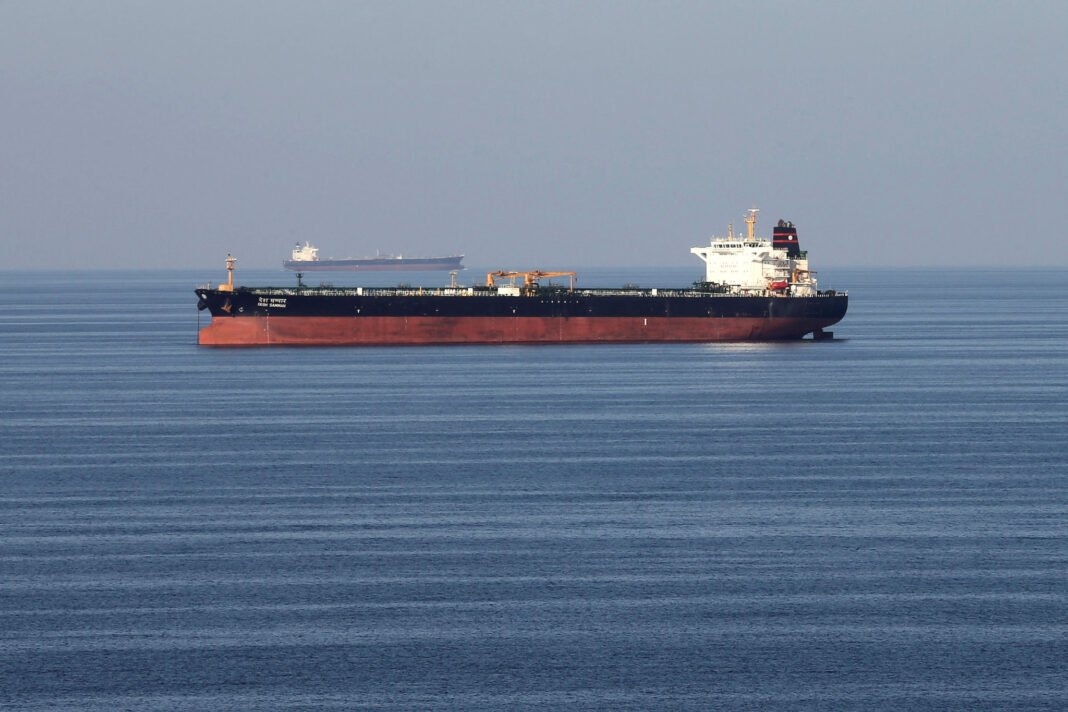
Hormuz oil tankers carrying Iraqi and Emirati crude exited the Strait of Hormuz despite rising regional tensions and ongoing shipping disruptions linked to the Middle East conflict.
Shipping data showed that three supertankers crossed the strategic waterway last week. The vessels switched off tracking transponders during transit. This reduced detection risks in an unstable maritime environment.
One tanker carried Basrah Medium crude from Iraq and headed toward Vietnam. It had attempted to leave the strait twice before, but heightened security risks delayed earlier passages.
Another vessel transported Upper Zakum crude loaded by ADNOC. It later discharged its cargo in Fujairah, a UAE port outside the Strait of Hormuz. Fujairah has also faced security concerns linked to regional tensions.
The third tanker continued carrying Iraqi crude through regional waters. Its final destination remains unconfirmed. Analysts are still tracking its route due to ongoing maritime uncertainty.
Hormuz oil tankers remain under pressure as tensions continue to disrupt international shipping. Intelligence reports show dozens of vessels still stranded near the strait. Security concerns and operational restrictions continue to slow movement.
Earlier this month, authorities reported around 42 container ships near the corridor. Only a limited number of vessels managed to exit safely. Iranian forces also seized two ships during the same period.
One crude tanker later reached South Korea after passing through Hormuz. The Malta-flagged Odessa delivered around one million barrels to Daesan port. It became one of the few successful long-distance shipments since tensions escalated.
Some ships secured passage after financial arrangements linked to regional authorities. However, most vessels still face delays and routing uncertainty.
Hormuz oil tankers play a critical role in global energy supply. The strait handles a large share of global crude oil and LNG flows. Any disruption quickly affects prices and shipping costs worldwide.
India remains highly exposed to these disruptions. Reports show more than 40 India-bound vessels remain stranded in the Persian Gulf. Nearly half carry oil or energy products.
Analysts warn that prolonged instability around Hormuz could tighten global supply conditions further. Asian importers continue monitoring the situation closely due to heavy reliance on Gulf crude.
Oil markets remain volatile as investors react to shipping risks and regional developments. Every new disruption in maritime routes increases pressure on global energy pricing.
Gulf producers continue exploring alternative export routes. However, the Strait of Hormuz remains the most important energy corridor in the region.
Hormuz oil tankers continue operating under strong security pressure. The situation remains central to global energy stability and international supply chains.

