



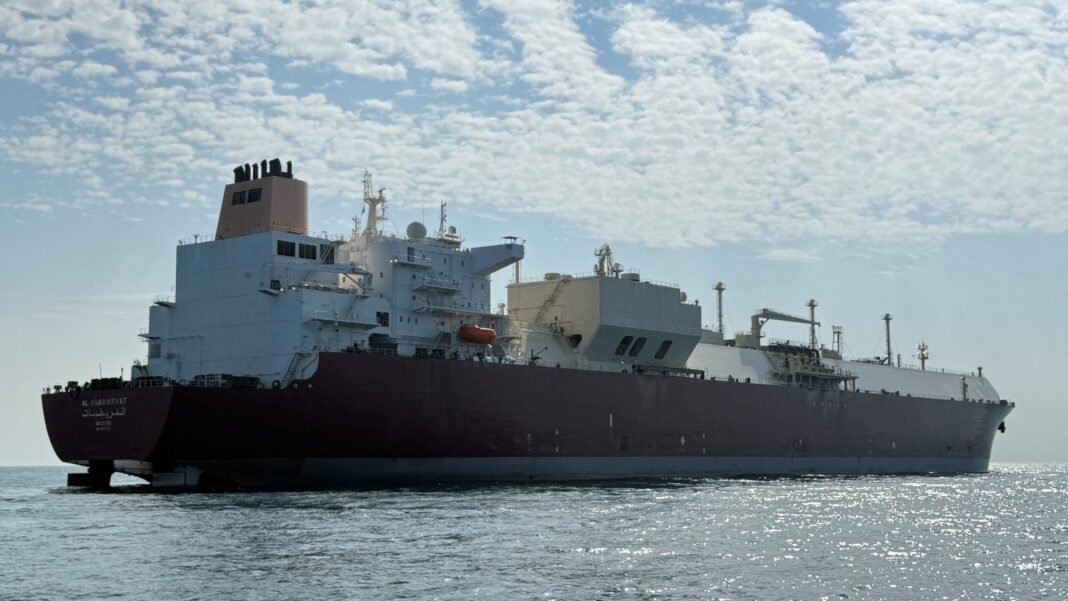
Qatari LNG shipments have resumed limited movement through the Strait of Hormuz. Pakistan has emerged as the first confirmed destination for cargoes since regional conflict disrupted maritime energy flows. However, analysts warn that a full recovery of LNG trade remains uncertain.
The LNG carrier Al Kharaitiyat completed a transit through the Strait of Hormuz and arrived at Port Qasim in Pakistan. It loaded more than 209,000 cubic metres of LNG at QatarEnergy’s Ras Laffan terminal. In addition, another vessel, Mihzem, also crossed Hormuz and is scheduled to deliver cargo to Pakistan, reinforcing early signs of restored but selective shipping activity.
Shipping data indicates that both vessels operated under heightened security conditions during transit. Moreover, tracking systems showed that AIS transponders were switched off during parts of the journey, reflecting ongoing risk concerns in the Strait of Hormuz amid regional instability.
The Mihzem initially loaded LNG at Ras Laffan in early March. Later, it received an additional cargo top-up before completing its transit. This staged loading reflects flexible supply strategies used during periods of maritime disruption.
Industry monitoring groups expect additional QatarEnergy vessels to follow similar routes. Furthermore, at least two more LNG carriers remain positioned in the Gulf, suggesting that controlled shipments to Pakistan may continue under special arrangements.
Pakistan has become a key destination for these early LNG flows. The country has faced rising energy pressure due to reduced import volumes since the escalation of conflict in the region. As a result, LNG discharges have fallen significantly compared with normal monthly averages.
Pakistan typically receives around eight LNG cargoes each month. However, this figure has dropped sharply since February. In addition, growing summer demand is expected to further strain domestic gas supply systems.
Energy analysts note that Pakistan’s arrangements for Qatari LNG cargoes appear linked to diplomatic negotiations involving regional stakeholders. Moreover, reports suggest that government-level coordination has influenced tender outcomes and shipping schedules during the disruption period.
Despite these developments, the broader LNG market recovery remains unclear. Asian buyers continue to face supply uncertainty, while forecasts indicate a potential decline in regional LNG imports in 2026. Consequently, analysts expect continued price volatility across global energy markets.
Experts also warn that not all buyers may secure similar shipping arrangements. Furthermore, QatarEnergy has extended force majeure measures, meaning exports remain partially dependent on political conditions rather than purely commercial contracts.
Market intelligence providers report that several LNG vessels in the Gulf have reduced tracking visibility. In addition, analysts suggest that shipping behaviour reflects precautionary routing rather than a full return to normal trade flows.
LNG shipments through Hormuz signal a partial reopening of energy corridors. However, uncertainty continues to dominate expectations for broader market stability and long-term supply security.