



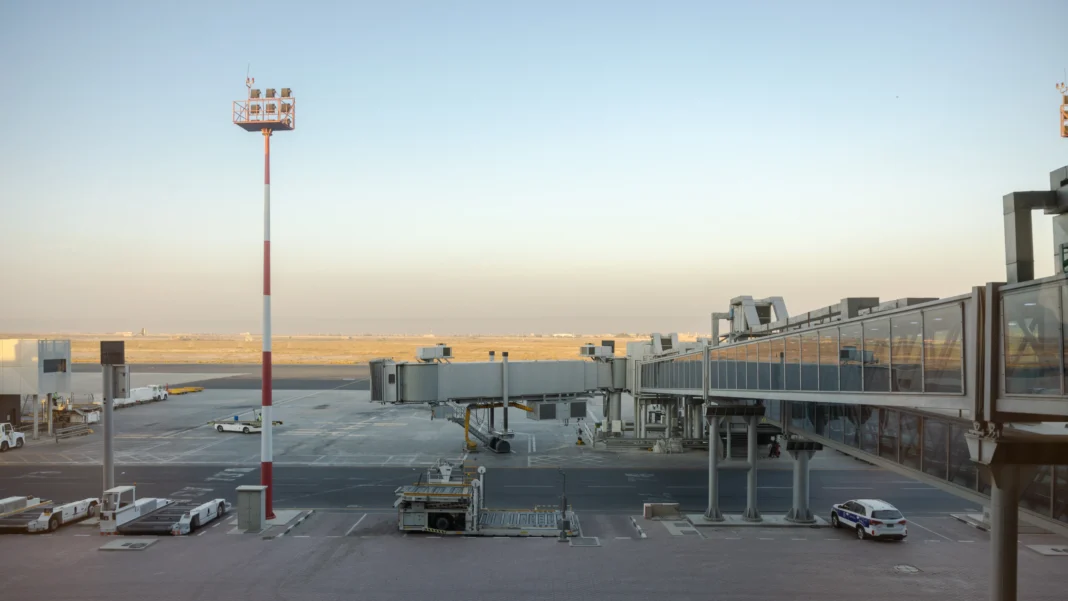
Kuwait’s main international airport could face a lengthy recovery period after recent strike damage affected Terminal 1. Industry officials believe repairs may take at least a year because of the scale of the destruction.
The warning came from the International Air Transport Association during the 82nd Annual General Meeting and World Air Transport Summit in Rio de Janeiro. The assessment followed recent missile and drone attacks that damaged key airport infrastructure in Kuwait.
Following the incident, Kuwaiti authorities suspended flights and activated emergency response plans. Officials continue assessing the damage while preparing a strategy to restore normal airport operations.
Kamil Alawadhi, IATA’s Regional Vice-President for Africa and the Middle East, said early images indicate significant structural damage. He explained that authorities still need time to complete a full evaluation of the affected facilities.
According to Alawadhi, the visible destruction suggests a lengthy reconstruction process. He noted that the airport terminal suffered extensive damage, including the loss of large sections of the roof structure.
Although Kuwait has not announced an official repair timeline, aviation experts expect the restoration process to require substantial work. As a result, the airport may face operational challenges for an extended period.
The incident marks a major escalation in regional tensions. Furthermore, it highlights the growing impact of the ongoing conflict on transportation infrastructure across the Gulf region.
Airlines, airports, and aviation authorities continue monitoring developments closely. Many industry stakeholders remain concerned about the potential effects on passenger traffic, cargo operations, and regional connectivity.
The conflict has already disrupted several aspects of aviation activity across the Middle East. In addition, airlines face challenges related to airspace restrictions, route adjustments, and higher operating costs.
Industry experts also warn that fuel supply systems and airport infrastructure could face additional pressure if regional instability continues. Consequently, airlines may encounter higher expenses and operational delays.
The aviation sector plays a vital role in connecting Gulf economies with international markets. Therefore, prolonged disruptions at major airports could affect tourism, trade, and business travel throughout the region.
Meanwhile, carriers continue adjusting schedules and operational plans to maintain services wherever possible. Airport authorities across the Gulf have also strengthened contingency measures to support safe and efficient operations.
Despite current challenges, aviation leaders remain focused on maintaining connectivity and minimizing disruption for passengers. They continue working with governments and airport operators to address emerging risks.
The situation at Kuwait International Airport demonstrates how regional conflicts can affect critical transportation infrastructure. Industry observers expect authorities to provide further updates once engineers complete detailed damage assessments and recovery planning.