



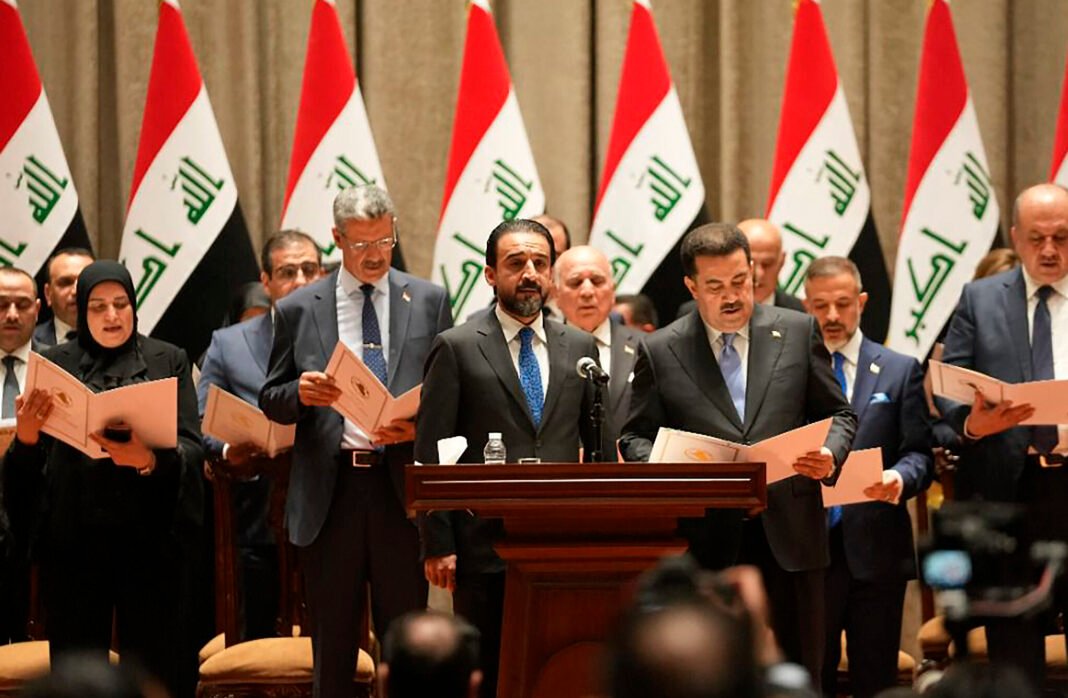
Iraq has introduced an Investment Project Freeze as part of broader efforts to control public spending and improve budget management. The decision affects investment contracts across ministries, independent government institutions, and provincial administrations. Moreover, it reflects the government’s focus on managing financial resources more efficiently during a challenging economic period.
The Council of Ministers approved the measure after reviewing recommendations from the Ministerial Council for the Economy. Specifically, officials proposed suspending new investment project contracts to reduce pressure on public finances. Therefore, government entities must halt new investment agreements until further notice.
The decision aims to improve spending efficiency and strengthen oversight of public funds. In addition, authorities want government agencies to reassess existing financial obligations and prioritize essential expenditures. As a result, institutions will face stricter controls when planning future projects.
Furthermore, the new measures extend beyond newly proposed projects. Authorities will also limit certain additional purchases connected to existing contracts. These include spare parts, supplementary equipment, and extra components that fall outside the original project scope. Consequently, institutions must justify any additional spending more carefully.
The government will also review projects that experienced substantial cost increases. In particular, officials will examine cases where additional expenses exceed 25 percent of the original contract value. Through this approach, authorities hope to reduce unnecessary spending and improve financial discipline.
Meanwhile, companies holding approved contracts must select from several available options. First, contractors may postpone project activities until the government allocates sufficient funding. In that case, authorities will provide further guidance once financial conditions improve.
Alternatively, companies may agree to delay implementation without submitting financial claims during the suspension period. This option allows projects to remain active while reducing immediate pressure on government finances. Therefore, both parties can maintain cooperation until funding becomes available.
A third option allows businesses and government entities to terminate contracts through mutual agreement. Under this arrangement, companies will not receive compensation. Nevertheless, the option provides a legal framework for ending projects that cannot continue under current financial conditions.
The Investment Project Freeze applies across all government institutions. Consequently, contractors working in infrastructure, construction, transportation, and public services may experience delays. In addition, many businesses may need to revise operational plans and investment schedules.
However, officials describe the measure as a temporary financial management tool rather than a long-term policy. They believe the decision will help preserve public resources while ensuring that critical government functions continue without disruption. Moreover, authorities intend to focus available funds on priority sectors.
The move comes as Iraq continues balancing development ambitions with fiscal responsibility. While public investment remains essential for economic growth and infrastructure development, policymakers must also protect financial stability. Therefore, spending controls have become increasingly important.
Industry analysts expect ministries and government agencies to review ongoing projects carefully. As a result, officials will likely prioritize initiatives that generate the greatest economic and social benefits. Meanwhile, lower-priority projects could remain suspended for an extended period.
The Investment Project Freeze highlights Iraq’s commitment to stronger financial management. Furthermore, it demonstrates the government’s intention to align spending with available resources while maintaining economic stability.
Looking ahead, authorities will continue monitoring budget conditions and funding availability. Once financial circumstances improve, the government may gradually resume investment activity. Until then, businesses must work closely with public institutions and adapt to evolving funding requirements. Ultimately, the Investment Project Freeze represents a significant step in Iraq’s efforts to manage public finances more effectively.