



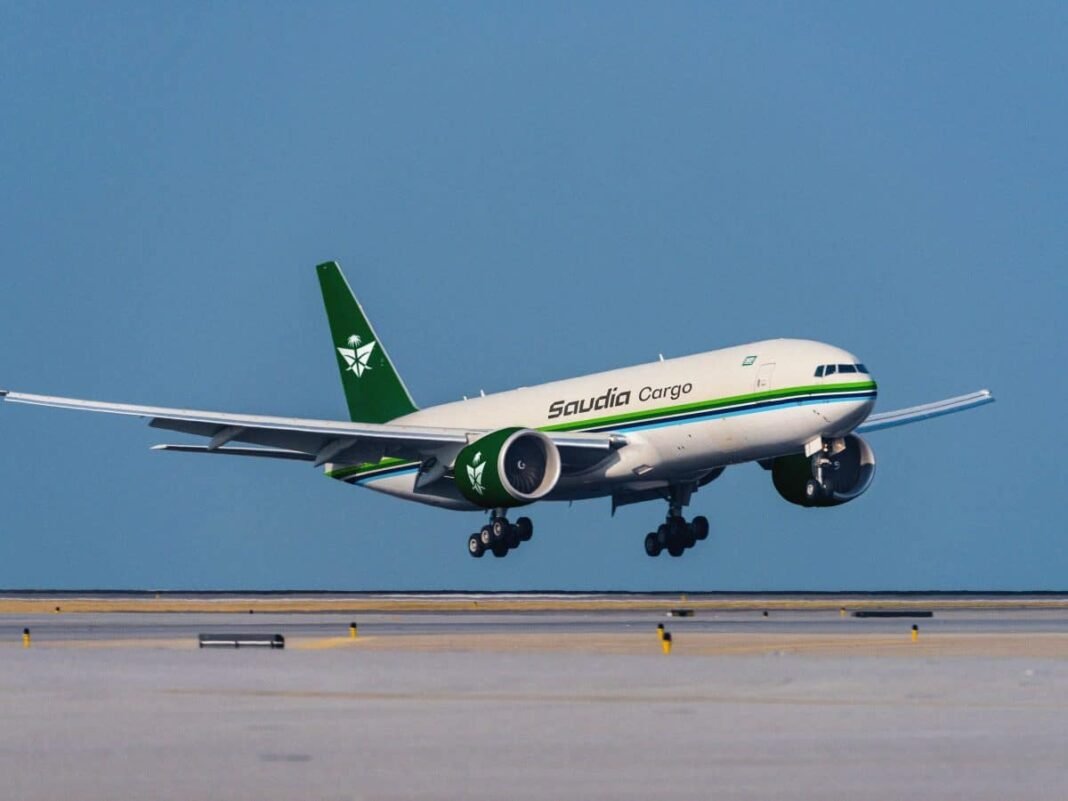
Middle Eastern airlines recorded a sharp decline in air cargo activity during May as regional conflict disrupted aviation networks. Freight demand fell significantly across the region, reflecting operational challenges, airspace restrictions, and weaker trade flows. As a result, security concerns continued affecting airlines despite stronger performance across much of the global market.
The International Air Transport Association (IATA) reported that Middle East air cargo demand declined 8.9 percentin May compared with the same month in 2025. Meanwhile, available cargo capacity decreased by 9.2 percent year-on-year.
Regional airlines adjusted schedules because of ongoing security risks and changing flight paths. Consequently, many carriers reduced operations across several important Gulf routes to ensure passenger and cargo safety.
The conflict involving the United States, Israel, and Iran has disrupted aviation since late February. As tensions intensified, several countries temporarily closed their airspace, forcing airlines to suspend or reroute both passenger and cargo flights.
Major aviation hubs in Dubai, Abu Dhabi, and Doha also experienced operational disruptions during the conflict. Nevertheless, airlines continued modifying schedules to maintain essential services while minimizing delays.
Although many flights gradually resumed, restrictions and security concerns continued affecting regional aviation throughout June. Therefore, freight operators faced additional challenges while transporting goods across key trade corridors.
In contrast, global air cargo activity continued expanding during May. Worldwide cargo demand increased 6 percentcompared with the same period last year. International freight traffic also recorded healthy growth of 6.5 percent.
Global cargo capacity increased by 1.9 percent, while international capacity expanded by 2.8 percent. Furthermore, the worldwide cargo load factor rose to 46.3 percent, indicating stronger aircraft utilization.
Meanwhile, Middle Eastern airlines achieved a cargo load factor of 46.5 percent. Although freight demand weakened, carriers maintained relatively stable aircraft utilization by carefully adjusting available capacity.
Industry officials remain cautiously optimistic about the second half of the year. Manufacturing activity and international trade continue supporting long-term freight demand despite ongoing geopolitical uncertainty.
Higher cargo yields and improved aircraft utilization have also helped airlines offset rising operating costs. However, carriers continue facing financial pressure from volatile fuel prices and regional security concerns.
Several major trade corridors linked to the Middle East experienced notable declines. Freight traffic between Europe and the Middle East fell 19.8 percent compared with May 2025. Likewise, cargo demand between the Middle East and Asia declined 16.5 percent.
Elsewhere, international trade routes recorded stronger performance. Freight demand between Asia and North Americaincreased 19.9 percent, while Africa–Asia traffic grew 14.1 percent. Intra-European cargo also expanded by 11.5 percent, and Europe-to-Asia routes continued showing steady growth.
African airlines delivered the strongest regional performance during May. Cargo demand increased 13.3 percent, while capacity grew 1.3 percent. North American carriers also achieved strong results, with demand rising 10.5 percent.
Asia-Pacific airlines reported 8 percent demand growth alongside increasing capacity. European airlines also recorded healthy improvements in both freight demand and available cargo space.
Global trade remained resilient throughout the month. Manufacturing activity continued expanding, supporting demand across several international markets. However, export growth remained uneven between different regions.
Jet fuel prices declined compared with April, providing some relief for airline operating expenses. Even so, fuel remained significantly more expensive than during the same period last year.
Looking ahead, air cargo markets are expected to remain resilient despite regional disruptions. Nevertheless, geopolitical tensions will likely continue influencing airline operations, supply chains, and freight capacity across the Middle East. As conditions evolve, carriers will continue adapting their networks to maintain reliable cargo services while responding to changing global trade patterns.

